How Do Stem Cells Know Where to Repair? Understanding the Homing Effect in Stem Cell Therapy
How Do Stem Cells Know Where to Repair? Understanding the Homing Effect in Stem Cell Therapy
5 Key Takeaways
- The Homing Effect is a biological mechanism that allows Mesenchymal Stem Cells (MSCs) to respond to signals released by injured or damaged tissues.
- Stem cells do not “know” where they need to go. Instead, the body sends biochemical signals that help guide their movement.
- Current research suggests that MSCs may act primarily by communicating with other cells through Paracrine Signaling rather than directly replacing damaged cells.
- Although the Homing Effect has been widely studied, it does not mean that every stem cell will reach the intended target or guarantee a particular clinical outcome.
- Understanding both the potential and the limitations of Stem Cell Therapy is essential for making treatment decisions based on scientific evidence.
How Do Stem Cells Know Where to Repair?
When people talk about Stem Cell Therapy, one common explanation is:
“Stem cells travel to areas where the body has a problem and help repair damaged tissues.”
This often leads to several questions:
How do stem cells know where they need to go?
If they are administered intravenously, how do they find the knee, skin, brain, or another organ that may be affected?
Do they have a navigation system similar to GPS?
These are among the most frequently asked questions about Stem Cell Therapy, and they are also the source of considerable misunderstanding.
In reality, stem cells are not capable of thinking, choosing, or independently identifying damaged areas. They do not function as though they have an intelligent navigation system.
What actually happens is that the body sends out “distress signals” when inflammation or tissue damage occurs. Mesenchymal Stem Cells, or MSCs, may then respond to these signals through a process known as the Homing Effect.
This mechanism has been studied extensively in the field of Regenerative Medicine and is one of the major reasons MSCs have attracted significant interest in regenerative medicine research worldwide.
However, the Homing Effect does not mean that every stem cell will reach the intended target. It also does not mean that stem cells can automatically repair every organ. The process depends on multiple biological factors, many of which are still being investigated.
What Is the Homing Effect?
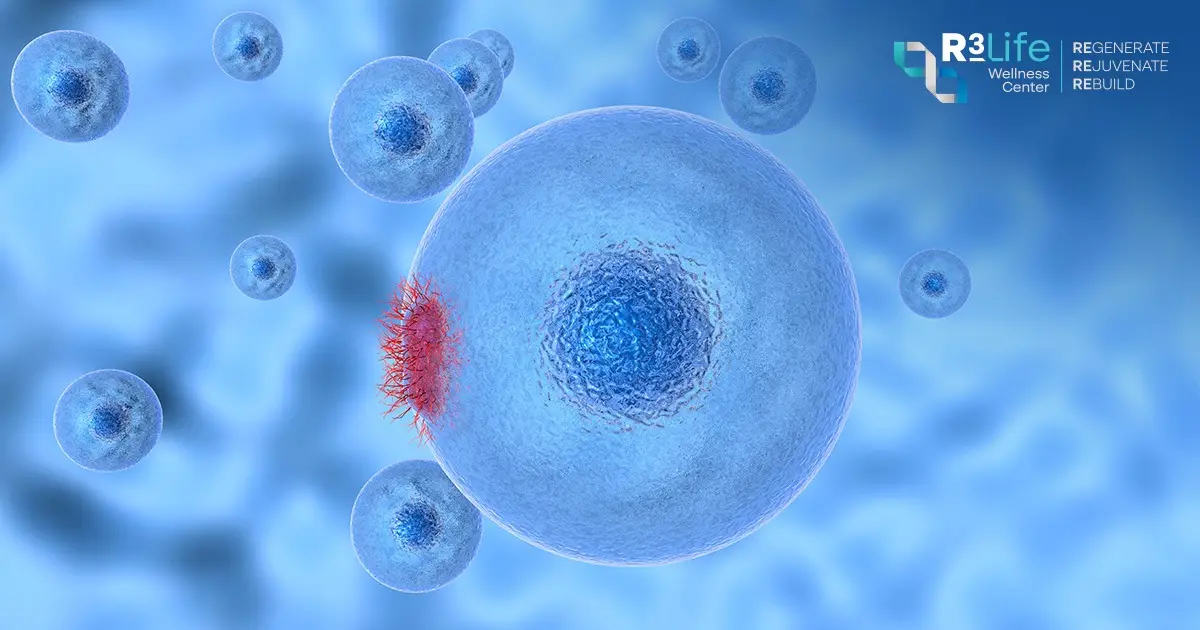
The Homing Effect refers to the ability of certain cells to respond to biological signals produced within the body, particularly in areas affected by inflammation, injury, or tissue damage.
In the case of Mesenchymal Stem Cells, including Cord Tissue MSCs and Amnion MSCs, current research suggests that these cells may respond to signals released by damaged tissues and, to some extent, migrate toward those areas through the homing process.
The term “homing” does not mean that stem cells are conscious or capable of independently selecting their destination. Instead, it refers to their response to biological and chemical signals released by the body when inflammation or injury occurs.
In other words: The body sends the signal, and the stem cells respond to it.
It is not that stem cells “know” where they should go.

How Does the Body Signal Stem Cells?
When tissue is injured, inflamed, or exposed to cellular stress, the body begins releasing various biological molecules, including:
- Chemokines
- Cytokines
- Growth Factors
These molecules act like “distress signals.” They create a difference in chemical concentration, known as a chemical gradient, around the damaged area. This gradient may attract cells involved in the repair process, including Mesenchymal Stem Cells.
MSCs have receptors on their surface that can detect these signals. When the appropriate signals are present, the cells may move through the bloodstream toward areas of inflammation or injury.
SDF-1 and CXCR4: One of the Most Widely Studied Navigation Systems
One of the most extensively studied mechanisms involved in the Homing Effect is the interaction between SDF-1, or Stromal Cell-Derived Factor-1, also known as CXCL12, and its receptor CXCR4.
When tissue is damaged, the body may increase the production of SDF-1, creating a chemical concentration gradient around the affected area.
Mesenchymal Stem Cells that express the CXCR4 receptor may detect and respond to this signal. This interaction is believed to be one of the mechanisms that helps attract MSCs toward areas of inflammation.
Although SDF-1 and CXCR4 are not the only factors involved in stem cell homing, they are among the best-supported and most widely studied mechanisms in current scientific research.
How Does the Homing Effect Occur?
The Homing Effect can be summarized in four main stages.
1. Tissue Damage Occurs
Inflammation, injury, or cellular stress triggers the body to begin sending distress signals.
2. The Body Releases Biological Molecules
Chemokines, cytokines, and growth factors are released to attract cells involved in the body’s repair and recovery processes.
3. Stem Cells Respond to the Signals
MSCs detect these signals through receptors on their cell surface and may begin moving through the bloodstream.
However, before entering the tissue, the cells must pass through several stages, including:
- Rolling
- Adhesion
- Transmigration
These processes allow the cells to slow down, attach to the blood vessel wall, and migrate through the vessel into the surrounding tissue.
4. Supporting the Body’s Repair Processes
Once MSCs reach the affected area, they may release various biological substances that communicate with nearby cells.
These signals are believed to play potential roles in:
- Regulating inflammation
- Modulating immune system activity
- Supporting a tissue environment that may be more favorable for repair
However, these mechanisms remain the subject of ongoing scientific research.

Do Stem Cells Actually Replace Damaged Cells?
In the past, stem cells were commonly believed to work mainly by transforming into new cells and directly replacing damaged tissue.
However, current research increasingly suggests that the primary role of Mesenchymal Stem Cells may not be to transform directly into the specialized cells of a particular organ.
Instead, MSCs may exert much of their activity by releasing biological substances such as:
- Growth Factors
- Cytokines
- Extracellular Vesicles, or EVs
- Exosomes
These substances allow MSCs to communicate with surrounding cells through a mechanism known as Paracrine Signaling.
Many researchers believe that Paracrine Signaling may be one of the key mechanisms behind the potential role of MSCs in Regenerative Medicine. Rather than directly replacing damaged cells, MSCs may help create an environment that supports the body’s own repair processes.
Will Every Stem Cell Reach the Intended Area?
The answer is:
No, not all of them.
Although the Homing Effect has been demonstrated in scientific research, this does not mean that every stem cell will successfully reach the intended tissue.
Factors that may influence stem cell homing include:
- The level of inflammation
- The severity of the injury
- The tissue microenvironment
- The quality and viability of the stem cells
- The method used to administer the cells
Research has also found that after MSCs are administered intravenously, a proportion of the cells may become temporarily trapped or retained in organs such as the lungs, liver, or spleen.
This phenomenon is known as the First-Pass Effect and may reduce the number of cells that eventually reach the intended tissue.
For this reason, the outcomes of Stem Cell Therapy may vary between individuals. Treatment decisions should therefore be based on a comprehensive assessment by a physician with relevant knowledge and experience.

