Prediabetes Symptoms and What Your HbA1c Result Means
Key Highlights
- Prediabetes means blood sugar is higher than normal but below the diabetes range, and most people who have it feel no clear symptoms.
- The CDC estimates that about 115 million American adults have prediabetes, and many of them do not know they have it.
- An HbA1c result between 5.7% and 6.4% falls in the prediabetes range, while 6.5% or higher falls in the diabetes range.
- HbA1c can be skewed by iron deficiency, recent blood loss, kidney disease or hemoglobin variants, so one borderline result needs context.
Quick Summary
An energy crash after lunch, or a mid-afternoon pull toward something sweet, is familiar to most busy adults. Many people searching for prediabetes symptoms start there, yet these feelings have many everyday causes.
World Diabetes Day on November 14 carries the theme "Early Action on Diabetes", a good moment to understand the tests. Read on for the signs people report, what an HbA1c result means, and when testing makes sense.
What Prediabetes Is and Why Most People Don't Notice It
Prediabetes is a stage where blood sugar runs higher than normal but not high enough for a type 2 diabetes diagnosis. It often reflects insulin resistance, where cells respond less efficiently to insulin and the pancreas works harder to keep blood sugar steady.
Because the change is gradual, most people feel nothing unusual. In Thailand, the International Diabetes Federation estimates that about 1 in 10 adults aged 20 to 79 live with diabetes, and about a third of those cases are undiagnosed.
Signs of Prediabetes People Often Report
Signs of prediabetes that people sometimes describe include:
- Energy dips and sugar cravings a short while after meals
- Weight gathering around the middle
- Darker, thicker, velvety skin patches on the neck, underarms or groin
The skin change is called acanthosis nigricans, which NIDDK describes as a physical sign of insulin resistance. Energy dips and cravings are far less specific, often reflecting short sleep, stress or skipped meals. Increased thirst, frequent urination or blurred vision are more typical of higher blood sugar and are a reason to see a doctor soon.
None of these signs is specific to prediabetes, and only a blood test can confirm it.
How Prediabetes Is Tested and What the Ranges Mean
Each blood sugar test looks at a different time window.
HbA1c and the Prediabetes Range
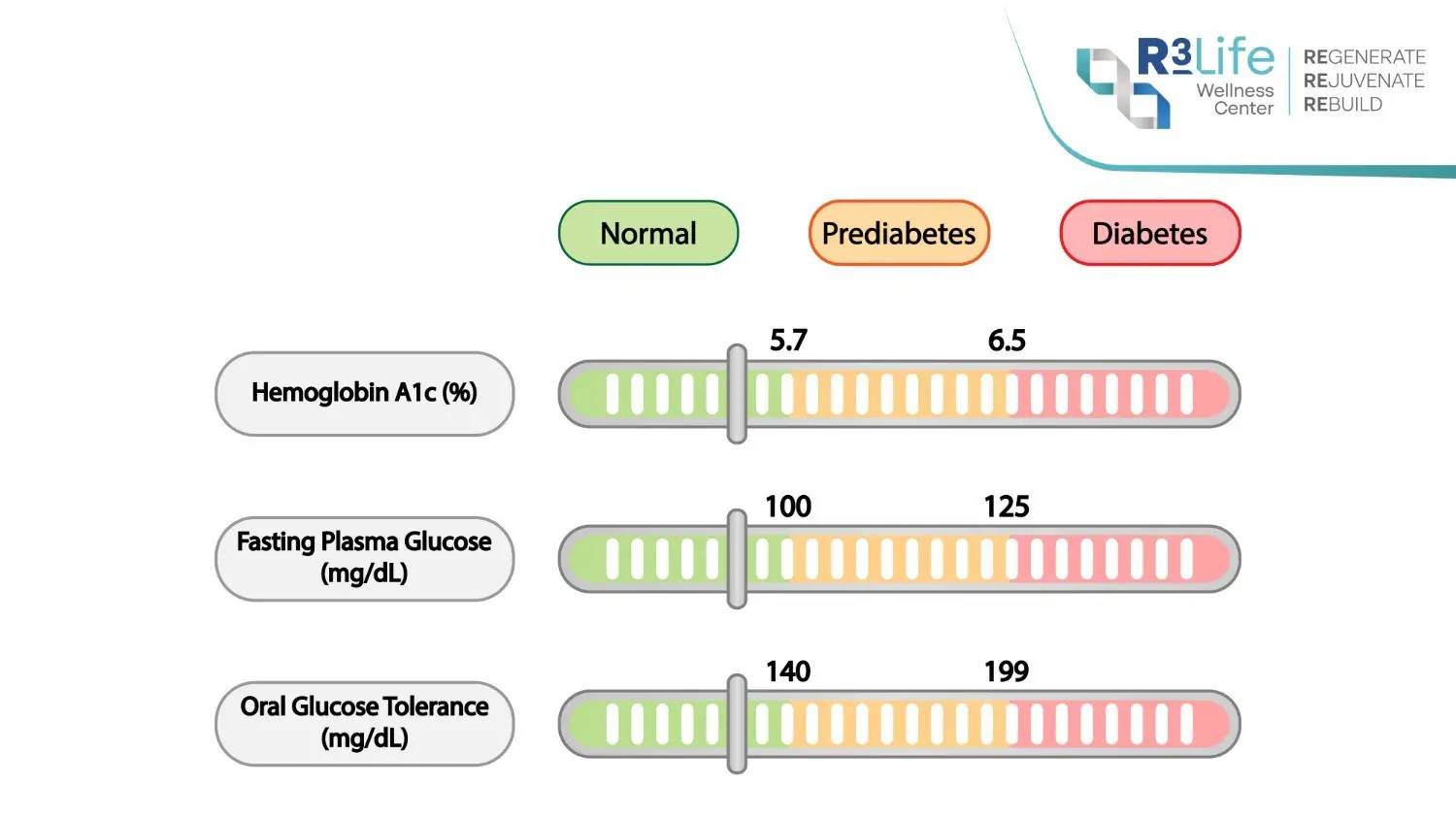
What is HbA1c? It measures how much sugar is attached to hemoglobin in red blood cells, reflecting average blood sugar over roughly three months. According to NIDDK and the American Diabetes Association (ADA), the HbA1c normal range is below 5.7%, the prediabetes range is 5.7% to 6.4%, and 6.5% or higher is in the diabetes range.
Fasting Blood Sugar, Insulin and Fructosamine
Fasting blood sugar (FBS) of 100 to 125 mg/dL is in the prediabetes range, and 126 mg/dL or higher is in the diabetes range. Fasting insulin shows how much insulin the body releases while fasting; it has no standard diagnostic cutoff, so a physician weighs it alongside glucose results. Fructosamine reflects average blood sugar over a shorter window of about two to three weeks.
Why One Borderline Result Needs Context
According to NIDDK, HbA1c can be falsely high with very low iron. It can also be less reliable after recent blood loss or a transfusion, with kidney failure or liver disease, and with hemoglobin variants common in people of Southeast Asian descent and in families with thalassemia. Iron results can therefore matter when reading HbA1c.
At R3 Life Wellness Center, the Diabetes Profile can be ordered à la carte and includes HbA1c, fasting insulin, fasting blood sugar (FBS) and fructosamine. The Universe Health Check Up is a convenient blood-based check of liver, kidney, heart, blood sugar and lipid markers. Tests go to an outside lab, and Ferritin and Serum Iron can be added when iron status matters.
Who Should Test Earlier and What Early Action Involves
The ADA recommends testing for adults of any age with overweight or obesity plus at least one risk factor, such as a family history of type 2 diabetes or high blood pressure, and for everyone from age 35.
Early action centers on everyday habits:
- Regular movement, building toward at least 150 minutes a week
- Consistent, sufficient sleep
- Meals built around vegetables, fiber and whole foods, with fewer sugary drinks
The CDC reports that its lifestyle change program, built around 5% to 7% weight loss and regular activity, can lower type 2 diabetes risk by 58%.
At R3 Life Wellness Center, early action goes beyond a blood test. Whether you are testing for the first time or already have results that are borderline, creeping upward or simply on your mind, a physician can read them with you, assess your risk factors and build a personalized metabolic health plan. Alongside diet, activity and sleep, that plan may include the Sugar Metabolism IV drip, which may support insulin sensitivity and balanced blood sugar. Outcomes differ among individuals.

Frequently Asked Questions About Prediabetes Symptoms
Q: Do prediabetics have symptoms?
A: Most people with prediabetes have no clear symptoms. Some notice energy dips, cravings or darker skin patches, but these prediabetes symptoms are not specific, and only a blood test confirms it.
Q: What is a normal HbA1c level?
A: An HbA1c below 5.7% is normal, and 5.7% to 6.4% is the prediabetes range. A physician reads it alongside your history and results such as iron status.
Q: Can blood sugar return to normal after a prediabetes result?
A: For some people, blood sugar returns to the normal range after early lifestyle changes such as modest weight loss and regular activity. The CDC reports that its lifestyle change program can lower type 2 diabetes risk by 58%. Outcomes differ among individuals, so follow-up testing helps track progress.
Conclusion
Prediabetes symptoms are often faint or absent, so a blood test is the clearest way to know where your blood sugar sits. Knowing early gives you more room to act, and small, steady changes can support healthier blood sugar over time.
Whether you are checking for the first time or want a second look at results you already have, a physician at R3 Life Wellness Center can interpret them, assess your risk and plan personalized care, with follow-up testing to track your progress.
Care at R3 Life Wellness Center is led by a physician board-certified in anti-aging and regenerative medicine (ABAARM).
To check your blood sugar or talk through your existing results with a physician, visit r3lifewellness.com or message us on WhatsApp at +66 88 689 8888.

 Anti-aging Before Your Cells Deteriorate: When Lifestyles Accelerate Aging!