Why Two PRP Knee Injections Can Give Different Results
Key Highlights
- PRP is not a standardized product, and two injections described by the same name can contain markedly different preparations.
- Platelet dose has emerged as the variable that appears to matter most, ahead of the leukocyte question that occupied the field for a decade.
- Preparation method, blood volume drawn, centrifuge protocol, and individual platelet counts all affect what is ultimately delivered.
- Evidence suggests the most effective protocol may differ depending on how advanced the osteoarthritis is.
- Reported outcomes vary widely between studies, and much of that variation is explained by preparation differences rather than by whether PRP works.
Quick Summary
Two people have PRP for the same knee, at similar stages, with similar expectations. One describes meaningful relief lasting months. The other felt very little and concluded the whole thing is overrated.
The usual explanation is that PRP either works or it does not, and one of them got lucky. That framing misses what is actually going on. PRP is a category rather than a product, and what ends up in the syringe depends on decisions made before the injection that clients are rarely told about.
This article explains what varies between preparations, what the evidence now points toward, and what to ask before agreeing to a course.
What PRP Is
Starting with the basic mechanism makes the variation easier to follow.
What Platelets Release
Platelets are best known for clotting, but they also carry storage granules packed with signalling proteins. When platelets activate, those granules release their contents into the surrounding tissue.
The released proteins include a range of growth factors involved in tissue repair, along with compounds that influence the local inflammatory environment. Concentrating platelets from your own blood and delivering them into a joint is an attempt to raise the local concentration of those signals well above what circulation would normally supply.
The important qualifier is that this describes a plausible mechanism rather than a guaranteed outcome. What the signals do once inside an osteoarthritic joint is considerably less predictable than the preparation step.
Why PRP Is Not a Single Standard Product
"PRP injection knee" describes a procedure, not a formulation. There is no agreed standard specifying how much blood is drawn, how it is spun, what concentration counts as therapeutic, or how the result should be characterized.
The practical consequence is that two clinics both offering PRP may be delivering preparations that differ several-fold in the quantity of platelets involved. It also means that comparing published studies is harder than it looks, since a trial reporting disappointing results may have used a preparation quite unlike one reporting good results.
What Changes Between Preparations
Several variables sit between a blood draw and an injection, and each one moves the final composition.
Platelet Dose — The Variable That Matters Most
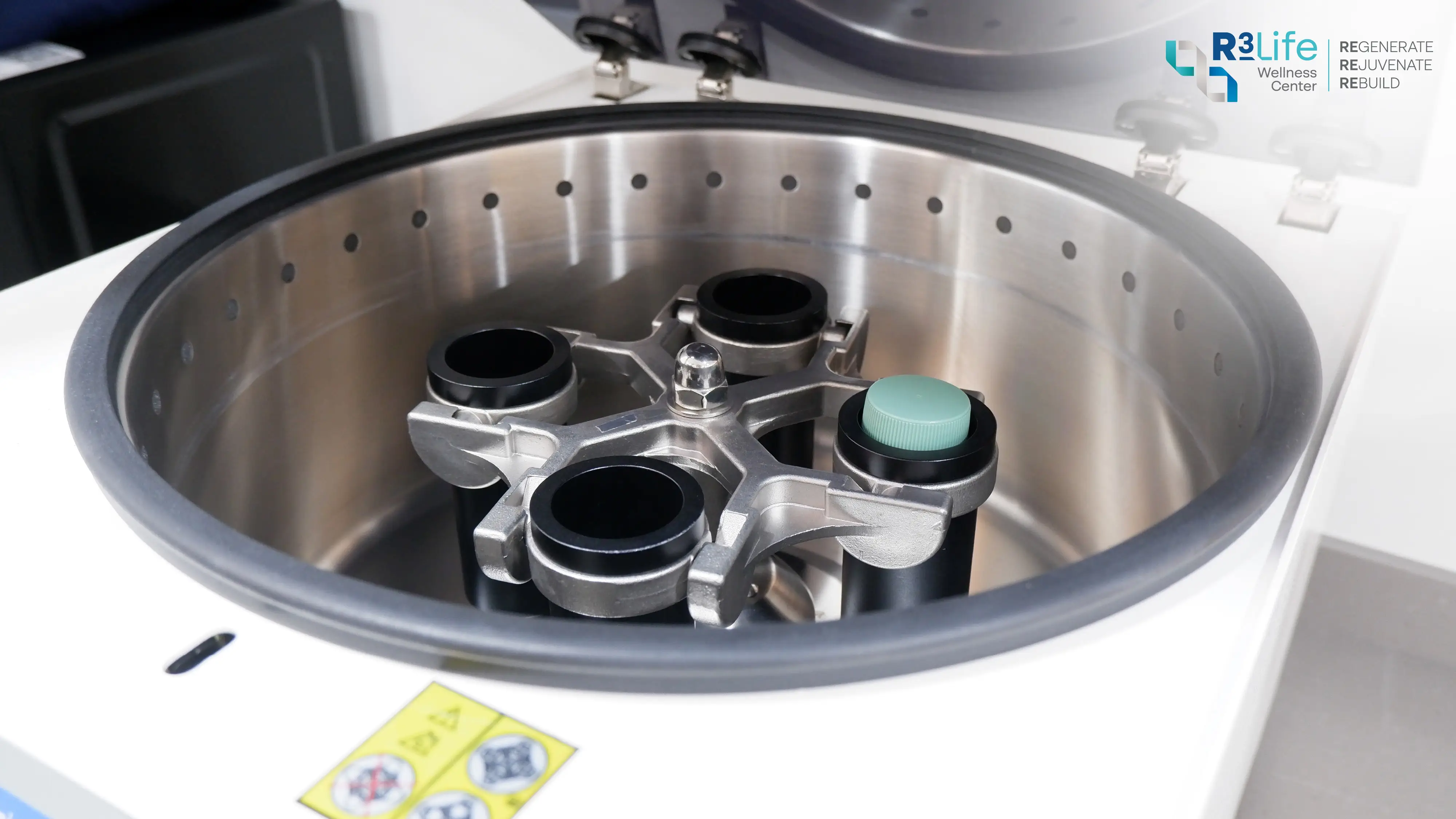
The clearest signal to emerge in recent years concerns total platelet dose, meaning the absolute number of platelets delivered rather than the concentration factor quoted relative to baseline.
This distinction matters more than it sounds. A preparation described as five times baseline concentration delivers a different absolute dose depending on the individual's starting platelet count and on how much blood was processed. Two clients given a preparation described identically can receive substantially different quantities.
Several factors determine the dose that arrives:
- Volume of blood drawn at the start
- Centrifuge speed, duration, and number of spin cycles
- Whether the system used is a manual technique or a closed commercial kit
- The client's own baseline platelet count on the day
- How much of the platelet-rich fraction is recovered rather than discarded
The Leukocyte Debate and Why It Faded
For roughly a decade, the dominant question in the field was whether preparations should include white blood cells or exclude them. Leukocyte-poor preparations were argued to reduce inflammatory response within the joint; leukocyte-rich preparations were argued to carry additional useful signaling.
The debate produced a large volume of research and no decisive answer. As better-controlled comparisons accumulated, the leukocyte question turned out to explain less of the variation in outcomes than platelet dose did, and attention shifted accordingly.
This is worth knowing because a good deal of material still online argues the leukocyte case as though it were the central issue. It is not that the question was settled in one direction; it is that it appears to matter less than the field once assumed.
Why Protocols Differ Between Providers
Given the absence of a standard, providers make reasonable choices that differ from each other. Some use commercial kits designed for consistency; some use manual protocols offering more control over the final composition. Some inject once, others deliver a series of injections spaced across several weeks.
None of this indicates that one approach is being done incorrectly. It does mean that asking specific questions is reasonable, and a provider should be able to describe their preparation method and how many injections a course involves.
Why the Best Protocol May Depend on Disease Stage
The more interesting recent development is the suggestion that the question has no single answer.
What the Network Meta-Analysis Evidence Found
Network meta-analysis is a method allowing comparison across many trials that did not directly compare the same options. Applied to PRP in knee osteoarthritis, this approach has produced a picture more nuanced than a simple verdict on whether PRP works.
Two themes recur. Preparations delivering higher platelet doses tend to be associated with better reported outcomes than lower-dose preparations. And the ranking of options appears to shift depending on the severity of the osteoarthritis being treated, which suggests protocol and stage should be considered together rather than separately.
Early Compared With Advanced Osteoarthritis
The pattern that emerges, stated with appropriate caution, is that PRP tends to be associated with more favourable outcomes in earlier-stage disease, where cartilage loss is less extensive and the joint retains more of its structure.
In advanced osteoarthritis the picture is less encouraging. That does not mean PRP has no place at later stages, but expectations should be calibrated differently, and the conversation should honestly include what else is available, including surgical options where they are appropriate.
Anyone being offered PRP without a discussion of their disease stage is not getting the full picture.
Where the Evidence Remains Thin
Several gaps are worth stating plainly:
- No agreed optimal dose. Higher doses look better than lower ones in aggregate, but there is no established target figure.
- Limited long-term follow-up. Most trials report over months rather than years, so durability beyond that is not well characterized.
- Inconsistent reporting. Many studies still do not report what their preparation actually contained, which limits what can be pooled.
- Variable comparison groups. Some trials compare against saline, others against hyaluronic acid or corticosteroid, which complicates ranking.
What to Expect Around the Procedure
Setting expectations accurately matters here, because the recovery pattern differs from what people assume based on other injections.
Preparation, Session Structure and Recovery
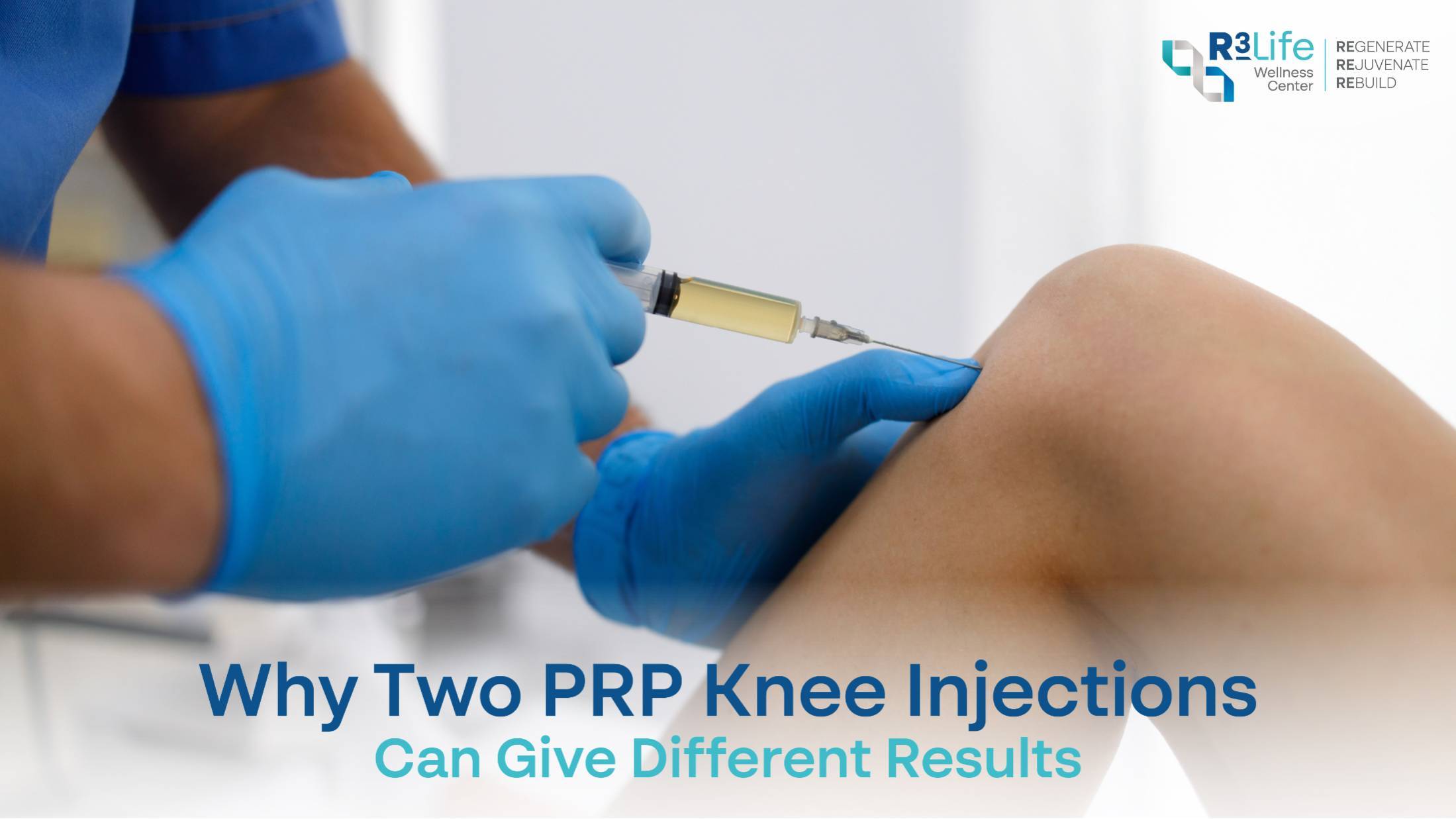
The sequence is straightforward. Blood is drawn, processed to separate and concentrate the platelet fraction, and the preparation is injected into the joint, often with imaging guidance. The appointment typically runs under an hour including processing time.
What follows surprises people who expect immediate relief:
- Soreness in the days after is common, and can include a temporary increase in stiffness or ache as the joint responds
- Relief tends to build gradually over weeks rather than appearing quickly, which is a different pattern from a corticosteroid injection
- Return to normal activity is usually prompt, with intense loading of the joint typically deferred for a short period
- A course rather than a single injection is common, with sessions spaced across several weeks
The comparison with cortisone is worth making explicitly, because clients often arrive expecting the same experience. Corticosteroid tends to act quickly and fade; PRP tends to build slowly and, where it works, to hold longer. Neither pattern is inherently better, and they suit different situations.
Who Tends to Be Considered
PRP is generally discussed with people who have knee osteoarthritis that is limiting them despite a genuine trial of exercise-based conservative care, and who are either not candidates for surgery or would prefer to defer it.
R3 Life Wellness Center offers PRP (Knee) at the Silom–Surawong flagship branch, prepared from the client's own blood and administered by physicians, with Ostenil Plus, a hyaluronic acid viscosupplement, available as an adjacent conservative option where lubrication and shock absorption are the priority.
Which of these makes sense, and whether either does, depends on your stage, your symptoms, and what you have already tried. Outcomes differ among individuals, and an assessment is the honest starting point rather than a protocol chosen in advance.
Frequently Asked Questions about PRP Knee Injections
Q: Why did PRP work for someone I know but not for me?
A: Preparation is the most likely explanation. Two injections both called PRP can contain very different platelet doses depending on blood volume, centrifuge protocol, and your own platelet count. Disease stage also matters, since the evidence suggests outcomes tend to be better in earlier-stage osteoarthritis.
Q: How does a PRP injection knee treatment compare with cortisone?
A: They behave differently. Corticosteroid typically acts fast and wears off, while PRP typically builds over weeks and, where it works, may last longer. Corticosteroid also carries considerations around repeated use that your physician should discuss with you.
Q: What does PRP injection recovery involve?
A: Most people return to ordinary activity quickly, though soreness and a temporary increase in stiffness for a few days afterward are common. Heavy loading of the joint is usually deferred briefly. Expect improvement to build gradually rather than arrive immediately.
Q: How many injections will I need?
A: Protocols vary between providers, and a course of several injections spaced across weeks is common rather than a single treatment. This is a reasonable thing to ask about directly before committing.
Q: Is PRP suitable for advanced osteoarthritis?
A: The evidence is less encouraging at advanced stages than at earlier ones. It is not automatically ruled out, but expectations should be set accordingly, and the discussion should include what else is available including surgical options where appropriate.
Conclusion
The question of whether PRP works for knee osteoarthritis is less useful than it appears, because it treats a category as though it were a single product. What ends up in the syringe depends on how much blood was drawn, how it was processed, and what your own platelet count was that day, and the evidence increasingly suggests that platelet dose is the variable carrying most of the signal. Disease stage appears to shift the answer as well, which is why a plan built without reference to your stage is a plan built on an assumption.
Assessment at R3 Life Wellness Center is led by physicians holding ABAARM board certification in anti-aging and regenerative medicine, with certification in cell therapy from the Academy of Cell Therapy Thailand. To discuss whether PRP is appropriate for your knee and your stage, visit r3lifewellness.com or message +66 88 689 8888 on WhatsApp.

 World Breastfeeding Week: The First Immune System and Where It Truly Begins