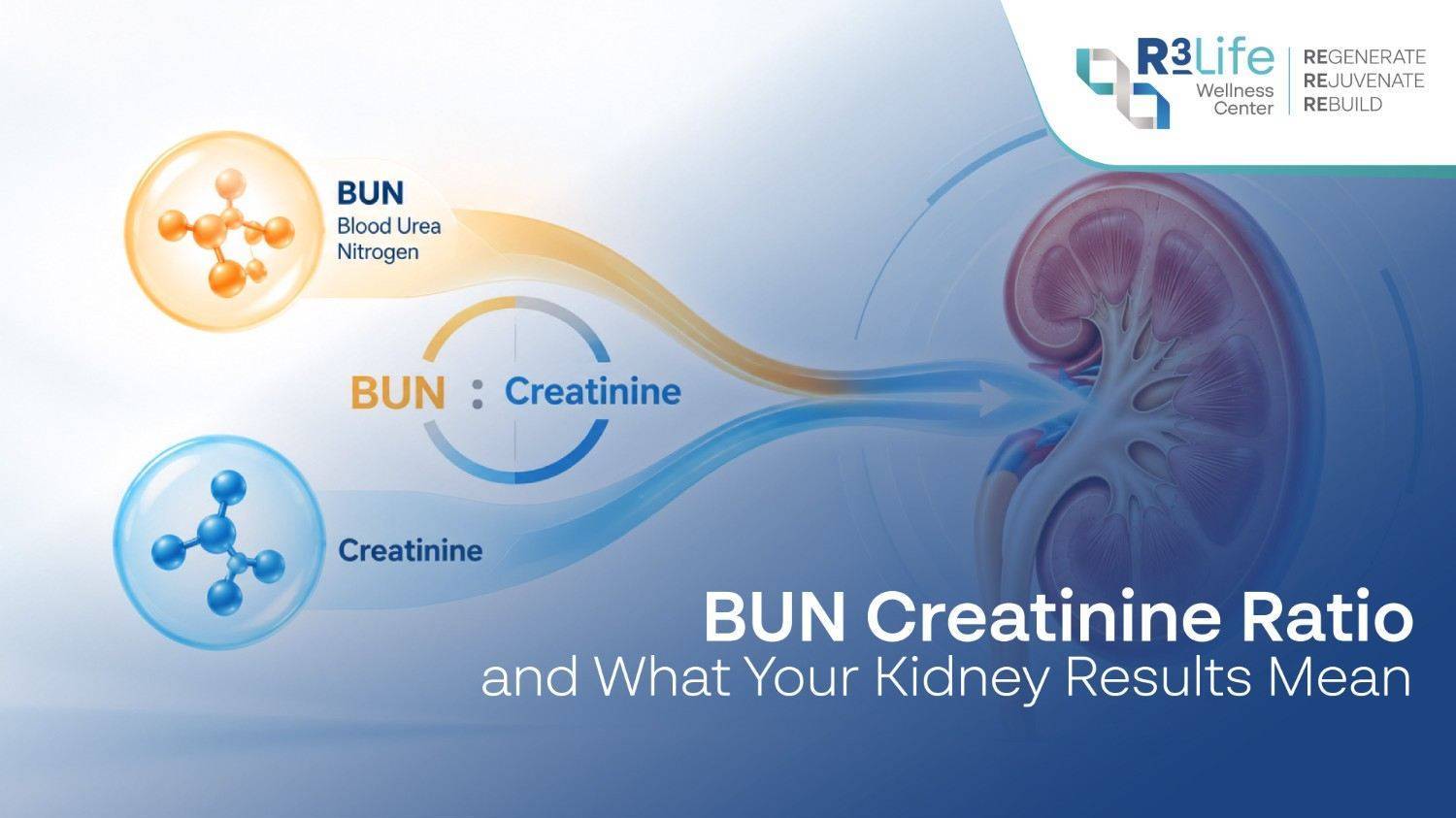
BUN Creatinine Ratio and What Your Kidney Results Mean
Key Highlights
- The BUN creatinine ratio compares two waste products in the blood and is commonly reported as part of a routine kidney function test.
- A typical BUN creatinine ratio falls between about 10:1 and 20:1, although each laboratory sets its own reference range.
- Dehydration, a high-protein diet, some medicines and bleeding in the digestive tract can all raise the ratio without any kidney disease.
- Creatinine levels depend partly on muscle mass, so very muscular or very slim people may see results that are normal for them.
- Doctors read the ratio alongside eGFR, urine tests and repeat results, because a single number rarely explains kidney health on its own.
Quick Summary
The BUN creatinine ratio is one of the most common and most misunderstood numbers on a blood test report. A flagged result can feel alarming, yet it often reflects everyday factors such as hydration or yesterday's protein intake.
Kidney health still deserves attention. Chronic kidney disease often causes no symptoms in its early stages, and a national survey in Thailand estimated that about 17.5% of adults showed signs of it. In Thailand's heat, hydration also affects results more than many people expect.
Here is how to read the numbers together, and when to look closer.
What a BUN Blood Test and Creatinine Measure
Both markers are waste products that healthy kidneys filter out of the blood.
Blood Urea Nitrogen (BUN)
Urea forms when the liver breaks down protein, and a BUN blood test measures how much urea nitrogen is circulating. Mayo Clinic describes about 7 to 20 mg/dL as a typical healthy range, while noting that ranges vary by laboratory, age and sex. BUN also moves with protein intake, hydration and liver function.
Creatinine and Muscle Mass
Creatinine comes from the normal breakdown of muscle tissue, so people with more muscle tend to produce more of it. According to MedlinePlus, a large meat meal, intense exercise and some medicines or supplements can temporarily raise blood creatinine.

Reading the BUN Creatinine Ratio
The ratio is calculated by dividing BUN by creatinine. A typical BUN creatinine ratio sits between about 10:1 and 20:1, but always use the range printed on your own report.
When the Ratio Is High
A high BUN creatinine ratio often points to something outside the kidneys reducing blood flow or adding urea. Common reasons include:
- Dehydration, including after heat exposure, illness or heavy sweating
- A high-protein diet
- Corticosteroid medicines
- Bleeding in the upper digestive tract
- Heart failure, which reduces blood flow to the kidneys
Several of these causes are temporary and settle once the trigger is addressed.
When the Ratio Is Low
A low ratio is less common. It can reflect low protein intake, malnutrition, advanced liver disease or rapid muscle breakdown, which releases extra creatinine.
Why eGFR and a Kidney Function Test Belong Together
The ratio gives clues, but it does not measure how well the kidneys filter. That job falls to eGFR, the estimated glomerular filtration rate, which is calculated from creatinine together with age and sex.
The National Kidney Foundation considers an eGFR of 90 or above normal when there are no other signs of kidney damage, and a result below 60 a sign that the kidneys may not be working well. Chronic kidney disease is diagnosed only when abnormal results persist for more than three months, according to KDIGO guidelines. Because muscle mass also affects eGFR, doctors may add a cystatin C or urine test.
A urine albumin-to-creatinine ratio can show kidney damage before eGFR changes, and a result of 30 mg/g or above indicates albuminuria, which can be an early sign of kidney damage. One abnormal blood result is rarely a diagnosis; repeat testing is the usual next step.
Kidney Function Testing at R3 Life Wellness Center
At R3 Life Wellness Center, a physician reviews kidney markers alongside your history, diet and medicines. The Kidney Function panel covers BUN, creatinine and uric acid, and individual lab tests can be ordered à la carte and are sent to an outside laboratory. Kidney markers are also included in the Universe Health Check Up, a blood-based check of liver, kidney, heart, blood sugar and lipid markers.
Kidney function also matters before some IV therapies. For chelation, kidney function is the safety prerequisite, and your physician may review kidney results before other IV formulas.
Frequently Asked Questions About BUN Creatinine Ratio
Q: What is a normal BUN creatinine ratio?
A: A normal BUN creatinine ratio is usually between about 10:1 and 20:1. Compare your result with the reference range printed on your own report.
Q: What is a dangerously high BUN creatinine ratio?
A: No single number defines a dangerous BUN creatinine ratio, because the cause matters more than the figure. A high ratio together with vomiting blood, black stools, confusion, very low urine output or severe weakness needs urgent care at a hospital. Without symptoms, the usual next step is a review of hydration and medicines and a repeat test.
Q: How can I lower a high BUN creatinine ratio?
A: The right step depends on why the ratio is high. If dehydration is the cause, steady fluid intake often brings it back toward range, while a diet- or medicine-related rise needs a doctor's review. Avoid changing prescribed medicines on your own.
Q: Should I prepare for a kidney function test?
A: Many clinics suggest avoiding intense exercise and a very large meat meal the day before, and staying normally hydrated. Mention any supplements or medicines you take, since some can affect creatinine.
Conclusion
The BUN creatinine ratio is a useful clue, not a verdict. Read alongside eGFR, urine testing and your own history, it helps separate everyday factors like hydration and diet from changes that deserve follow-up.
Care at R3 Life Wellness Center is led by a physician board-certified in anti-aging and regenerative medicine (ABAARM).
To have your kidney results reviewed in context, book at r3lifewellness.com or message the team on WhatsApp at +66 88 689 8888.

 From Mindfulness to Longevity: Why Listening to Your Body Matters for Movement and Recovery