
Metabolic Flexibility and What Can Be Measured
Key Highlights
- Metabolic flexibility describes how efficiently the body switches between burning fat and burning carbohydrate as food intake and energy demands change.
- Researchers measure it with laboratory tools such as indirect calorimetry and insulin clamps, which are not available as routine clinic tests.
- Blood markers such as fasting insulin and fasting glucose can indicate insulin resistance, but they are proxies rather than direct measures.
- Regular exercise is the most consistently supported way to improve metabolic flexibility, with sleep and meal timing also playing a role.
- Emerging oral compounds such as SLU-PP-332 and O-304 are being studied for their effects on fat and glucose metabolism.
Quick Summary
Metabolic flexibility has moved from research papers into wellness conversations, often attached to promises about energy and fat loss. The underlying physiology is real and well studied. Measuring it is harder, and many claims about testing it outside a laboratory go further than the science.
This article explains what metabolic flexibility describes, how researchers measure it, what reliably improves it, and what can honestly be assessed in practice.
What Metabolic Flexibility Describes
The body runs on a mix of fuels, mainly fat and carbohydrate. Metabolic flexibility is the ability to shift that mix to match what is available.
Switching Between Fuel Sources
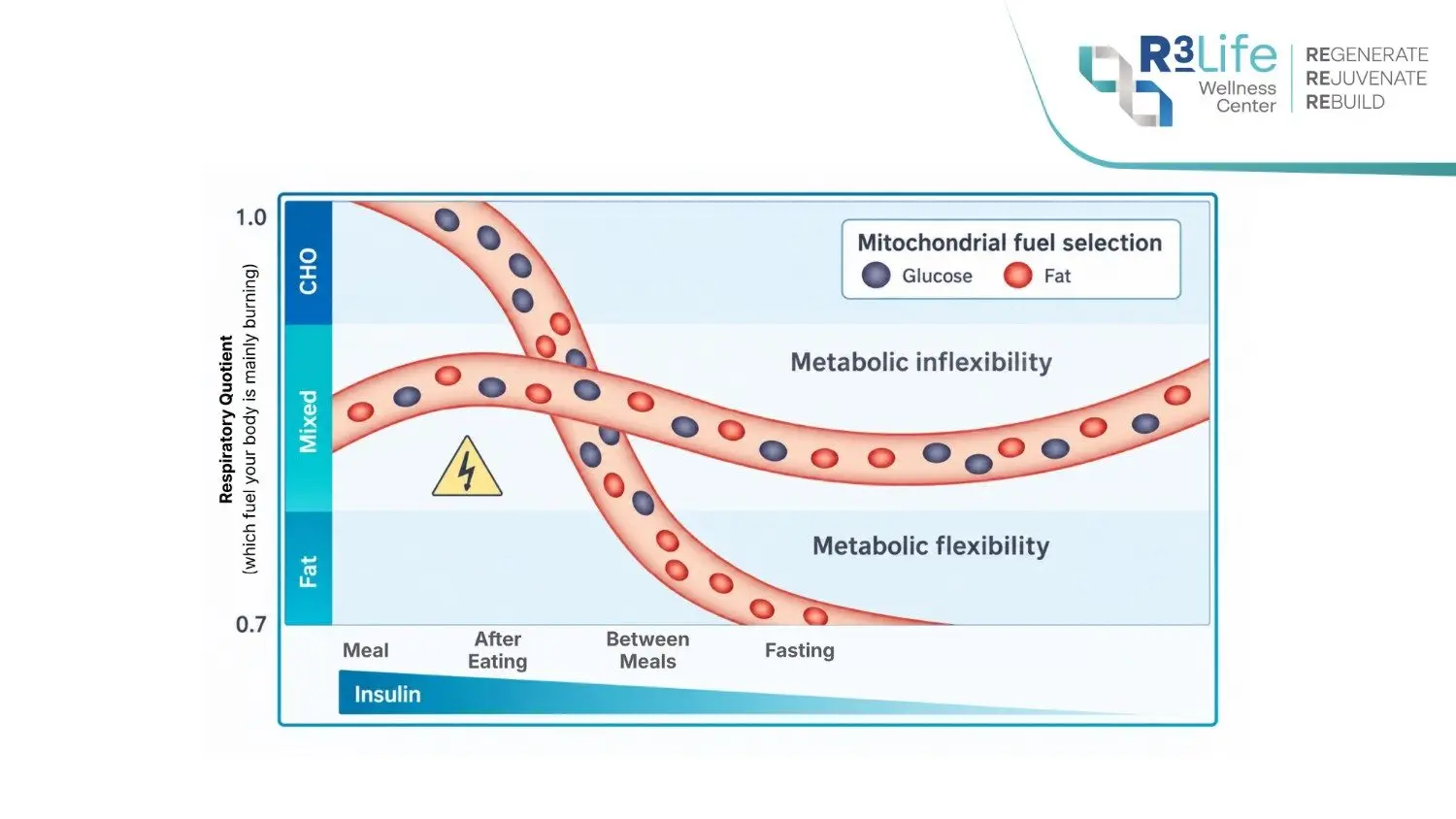
A flexible metabolism leans on fat during fasting and rest, then shifts toward carbohydrate after a meal. In other words, your body already runs its own intermittent fasting schedule every night. Popular fasting methods simply stretch that window a little longer. This switching helps keep blood sugar stable and energy available across the day.
What Happens Moving From Fasted to Fed
After eating, rising insulin signals muscle and other tissues to take up glucose and use it as fuel, while fat burning slows. As insulin falls between meals, the body returns to fat as its main fuel. In a flexible system, these transitions are smooth and timely.
Where Inflexibility Shows Up
In metabolic inflexibility, the switch becomes sluggish. Research links it with insulin resistance, excess body fat, type 2 diabetes, and inactivity. Commonly listed insulin resistance symptoms, such as tiredness after meals, are nonspecific, and insulin resistance itself is often silent, so symptom checklists are an unreliable guide.
How It Is Measured in Research
Metabolic flexibility is measured by tracking which fuel the body is burning, and how quickly that changes.
Respiratory Quotient and Whole-Room Calorimetry
Your breath gives away which fuel you're burning. Burning fat and burning carbohydrate use up oxygen and release carbon dioxide in slightly different amounts, so comparing the two shows your body's fuel mix.
In everyday clinical practice, this is usually measured with a breath-based indirect calorimeter. You breathe through a mask or mouthpiece for a short session while you rest, and the device estimates how much energy you use and whether you are burning mainly fat or carbohydrate. Some hospitals and wellness clinics offer this test.
In research settings, scientists may use more intensive methods. These include a sealed "metabolic chamber," where a person stays for hours or even days while every breath is measured, and controlled lab tests that hold blood sugar and insulin steady to see how the body responds.
Why These Are Research Tools, Not Clinic Tests
These methods require specialized equipment, strict protocols, and hours of monitoring. Consumer devices that estimate fuel use from a breath sample exist, but their validation against laboratory methods is limited. There is currently no routine clinical test for metabolic flexibility.
What Routine Bloodwork Can and Cannot Proxy
A standard blood test can't show fuel switching directly, but a few markers can hint at insulin resistance, one of its most common causes:
- Fasting insulin, which often rises years before blood sugar does
- Fasting glucose and HbA1c, which show how well blood sugar is controlled
- Triglycerides and HDL cholesterol, which often shift when insulin resistance develops
Together, they offer useful clues, but not a metabolic flexibility score.
What Is Shown to Improve It
The strongest evidence points to lifestyle factors, with exercise at the top. Emerging compounds are an area of active research.
Exercise as the Strongest Lever
Both endurance and resistance training have been shown to improve the body's ability to burn fat and respond to insulin. Exercise increases mitochondrial capacity in muscle, which is central to fuel switching. Consistency over months matters more than the intensity of any single session.
Where Weight Loss Alone Falls Short
Weight loss can improve insulin sensitivity, but studies suggest it may not fully restore metabolic flexibility without physical activity. Preserving muscle, a major site of glucose and fat use, appears to matter.
The Circadian Connection
The body handles food differently across the day, and insulin sensitivity is generally higher earlier on. Research on meal timing suggests that eating within a consistent window, rather than late into the night, may support better metabolic responses.
Where Emerging Compounds Fit
Two oral compounds are being studied for their effects on fat metabolism, and both are available at R3 Life Wellness Center following physician assessment:
- SLU-PP-332, an oral estrogen-related receptor (ERR) agonist studied as a potential exercise mimetic. It has been shown in preclinical research to increase fatty acid oxidation.
- O-304, an oral AMPK activator, which has progressed to a phase IIa clinical trial studying its effects on glucose metabolism in people with type 2 diabetes.
Neither compound replaces exercise, and outcomes differ among individuals. Where they are considered, it is as adjuncts within a physician-supervised plan.
This layer may be worth discussing if you are already training consistently and want additional metabolic support, or if injury or limited mobility makes it difficult to reach your usual activity level. Outcomes differ among individuals, and where these compounds are considered, it is as adjuncts within a physician-supervised plan.

What Is Worth Measuring in Practice
While metabolic flexibility itself cannot be tested in a clinic, its main driver can be assessed with reasonable proxies.
Reasonable Proxies and Their Limits
At R3 Life, Pre-Health Screening options such as the Universe Health Check Up assess blood sugar, lipid profile, and liver and kidney function, and a physician can advise on additional markers of insulin response where relevant. These results describe metabolic health broadly, and they are most useful tracked over time rather than read once.
Frequently Asked Questions About Metabolic Flexibility
Q: Is there a test that can tell me if I am metabolically flexible?
A: Not in routine practice. The accurate methods, such as indirect calorimetry and insulin clamps, are research tools. Blood markers like fasting insulin and glucose can indicate insulin resistance, which is closely related, but they do not measure fuel switching directly.
Q: Does fat adaptation mean I have good metabolic flexibility?
A: Not necessarily. Fat adaptation usually describes the body becoming efficient at burning fat on a low-carbohydrate diet. Metabolic flexibility is the ability to switch between fat and carbohydrate as needed, so being efficient with one fuel is not the same as switching well between both.
Q: How long does it take to improve metabolic flexibility?
A: Exercise studies often report measurable changes within weeks to months, but the timeline varies with starting fitness, age, and consistency. Sleep, meal timing, and preserving muscle also influence progress.
Q: Are SLU-PP-332 or O-304 right for me?
A: That depends on your health history, current medications, and goals, and it requires a physician's assessment. At R3 Life, they are discussed as adjuncts that work alongside exercise and lifestyle changes.
Conclusion
Metabolic flexibility is a useful way to understand how well the body adapts to changing fuel supply. It is measured precisely only in research settings, and the most reliable way to improve it remains regular exercise, supported by good sleep and consistent meal timing.
Care at R3 Life Wellness Center is led by a physician board-certified in anti-aging and regenerative medicine (ABAARM), with training in lifestyle medicine and nutritional wellness. To review your metabolic health markers and discuss whether additional support suits you, contact R3 Life at r3lifewellness.com or via WhatsApp at +66 88 689 8888.

 Are You Still Hungover From Last Night?