How Your Cells Age and What You Can Do About It
Key Highlights
- Cellular aging is shaped by a set of biological markers known as the Hallmarks of Aging, which guide modern longevity medicine.
- Two people of the same chronological age can have very different cellular health depending on damage accumulation and repair capacity.
- Visceral fat, disrupted sleep, chronic stress, smoking, and inactivity are universal accelerators that speed cellular decline.
- NAD+ supports energy metabolism, DNA repair, and sirtuin activity; its levels decline naturally with age.
- Mesenchymal stem cells help by signalling to surrounding tissue and modulating inflammation, supporting the body's natural repair environment.
Quick Summary — Aging Starts Long Before You See It
Aging begins long before fine lines appear or energy starts to slip. It begins inside your cells, where biological processes accumulate small changes over time. Modern longevity medicine now maps these changes through a framework called the Hallmarks of Aging, a set of biological markers that describes how cellular decline actually unfolds.
This article walks through that framework in plain language, looks at what speeds up cellular aging, and explores how the body's own repair systems can be supported. Dr. Tanaporn Eiamprapai, R3 Life Wellness Center's Medical Director, recently attended the Practical Anti-Aging Symposium 2026, where the latest thinking on these topics was discussed in depth.
The next sections lay out a clearer picture of how cells age, and what changes the trajectory.
The Hallmarks of Aging — A Map of How Cells Decline
Cellular aging isn't one process; it's many, working in parallel. Researchers organise these into a set of biological signatures known as the Hallmarks of Aging.
Why Aging Isn't Just About the Years on the Calendar
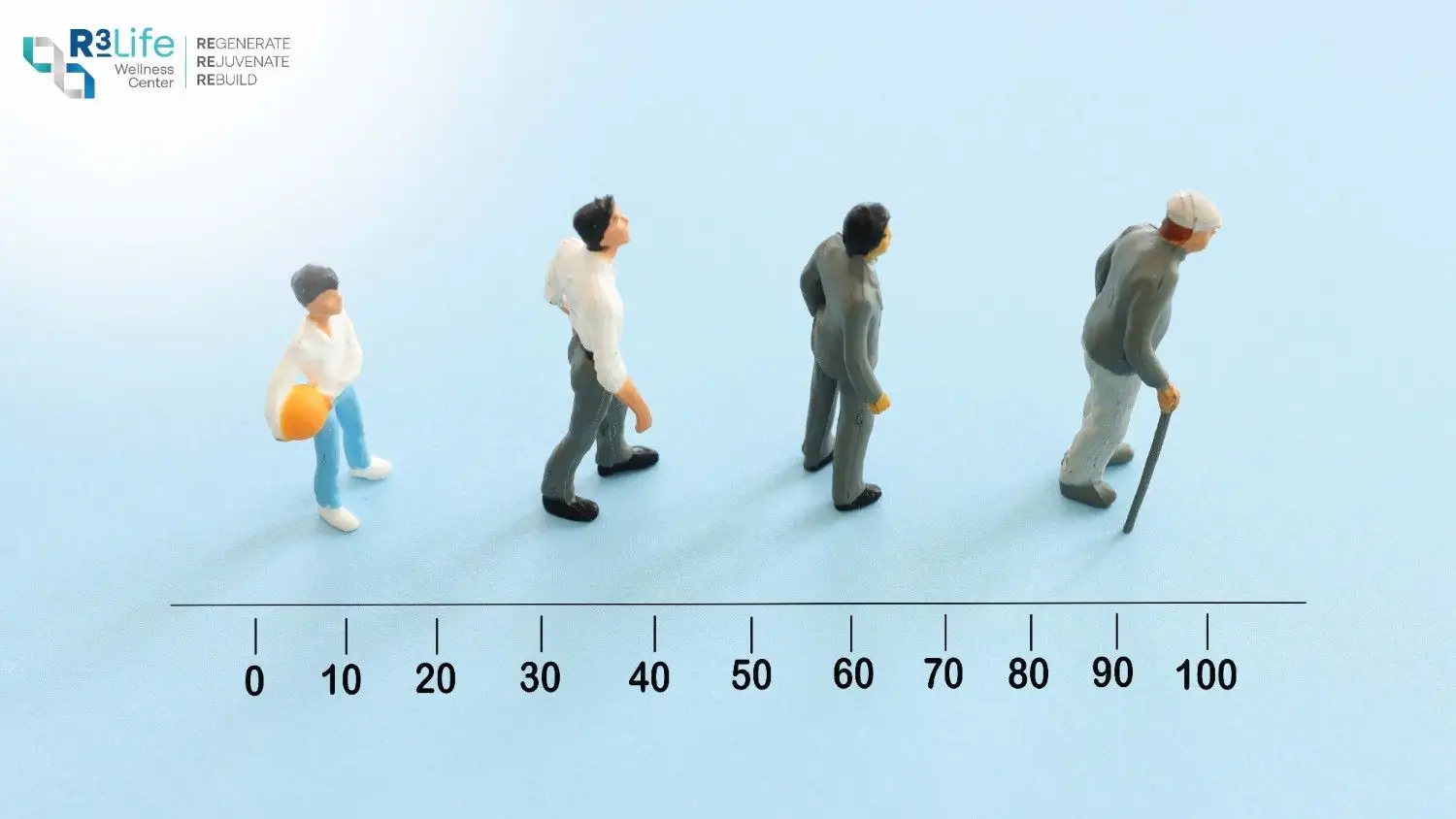
Two people the same age can have very different cellular health. What separates them is the rate at which their cells accumulate damage, and how effectively the body still repairs that damage. This is what is cellular aging at its most fundamental: the slow drift between what cells should do and what they actually can.
The Three Categories Behind Cellular Decline
The Hallmarks of Aging fall into three broad groups. Primary hallmarks involve the underlying damage, including telomere shortening (covered in depth in our article on telomere shortening and cellular aging) and genomic instability. Antagonistic hallmarks describe the body's responses that turn harmful when overactive, such as cellular senescence. Integrative hallmarks reflect the downstream consequences, including stem cell exhaustion and chronic, low-grade inflammation often called inflammaging.
Lifespan vs. Healthspan vs. Peakspan — What's the Real Goal?
Lifespan measures how long you live. Healthspan measures the years lived without significant disease. Peakspan, a newer concept gaining ground in longevity medicine, refers to the years you live at full physical and cognitive capacity. The shift in modern longevity care is from extending lifespan toward protecting peakspan, the window of life that matters most to most people.
What Speeds Up Cellular Aging
Cellular decline isn't fixed; it accelerates and slows in response to daily inputs.
The Universal Accelerators You Can Control
Several patterns consistently push cells to age faster. Visceral fat fuels chronic inflammation. Disrupted sleep limits the body's overnight repair cycles. Inactivity weakens mitochondrial efficiency. Chronic stress floods the system with cortisol, which over time damages cellular structures and shortens telomeres; for a closer look at this connection, see our article on the hidden connection between chronic stress and how fast you age. Smoking and excessive alcohol intake amplify oxidative stress and DNA damage.
When the Body's Repair Systems Start to Fall Behind
Cells repair themselves continuously through processes that clear damaged proteins, replace worn mitochondria, and recycle old material. With age and accumulated stress, these systems slow. Damage that once cleared overnight begins to linger, repair signals weaken, and tissues lose their margin of resilience.
Supporting Cellular Repair from the Inside
Once you understand what's pushing cells to age, the question shifts from prevention to support. Two areas of intervention have meaningful clinical backing in this space.
NAD+ and Cellular Energy
Nicotinamide adenine dinucleotide, or NAD+, is a coenzyme involved in energy metabolism, DNA repair, and the function of regulatory proteins called sirtuins. Levels of NAD+ decline naturally with age, which contributes to slower energy production and reduced cellular maintenance capacity. Restoring NAD+ doesn't reverse aging on its own; it sits alongside other interventions, including better sleep, movement, and managing chronic inflammation. R3 Life Wellness Center offers NAD+ DNA Rebuild as an IV therapy that delivers NAD+ with near-complete absorption. For a closer look at how NAD+ supports cellular repair, see our full guide.
Mesenchymal Stem Cells and the Repair Environment
Mesenchymal stem cells, or MSCs, work as biological signaling cells. Rather than replacing tissue directly, they communicate with surrounding cells, modulate inflammation, and help restore the body's repair environment. R3 Life Wellness Center's Cord Tissue-MSCs and Amnion-MSCs are sourced from young, healthy donors, cultured with xeno-free media, and stored under strict quality controls. Cell source quality matters here, because MSC effectiveness depends on the biological youthfulness and purity of the cells being introduced.
Frequently Asked Questions about Cellular Aging
Q: What are the Hallmarks of Aging?
A: The Hallmarks of Aging are a framework used in longevity medicine to describe the biological processes that drive cellular decline. They include telomere shortening, mitochondrial dysfunction, cellular senescence, chronic inflammation, and stem cell exhaustion, among others. The framework helps clinicians and patients understand why cells age the way they do.
Q: Can cellular aging be slowed?
A: Cellular aging cannot be stopped, but its pace can be influenced. Sleep, nutrition, exercise, and stress management all affect how fast cellular damage accumulates. Targeted clinical support, such as NAD+ therapy or stem cell therapy, can complement these foundations when appropriate.
Q: How do stem cells help with aging?
A: Mesenchymal stem cells help by sending repair signals to surrounding tissues, modulating inflammation, and supporting the body's natural regenerative environment. They don't reverse aging, but they can help restore conditions that age-related decline disrupts.
Conclusion — Your Cells Are Listening to What You Do Today
Cellular aging is a steady accumulation of small changes; it's also one of the most modifiable processes in modern medicine. Understanding the Hallmarks of Aging, what speeds decline, and what supports repair gives you a clearer foundation for long-term health decisions.
If you're exploring how to support your cellular health, R3 Life Wellness Center offers a free consultation to walk you through assessment options and treatment paths tailored to your goals. Visit r3lifewellness.com or contact us via WhatsApp at +66 88 689 8888.
 10 Best Liver Healthy Foods for Optimal Function