Ozempic Face and How to Restore Lost Volume
Key Highlights
- Ozempic face is a colloquial term for the facial changes that follow rapid weight loss — not a recognized medical diagnosis, and not specific to any one medication.
- The midface loses structural fat during rapid weight loss, which flattens cheek projection and deepens the folds around the mouth.
- Volume loss, skin quality, and structural support are three separate problems, and each responds to a different kind of treatment.
- Regaining weight rarely restores facial volume, because fat does not return to the same compartments it left.
- Treatment is generally most useful once weight has been stable for several months, so results are judged against a settled baseline.
Quick Summary
Weight comes off, clothes fit differently, and the bloodwork improves. Then the mirror starts telling a different story, and the face looks older rather than healthier.
The term that has attached itself to this is “Ozempic face,” though the change has little to do with any single medication. Rapid weight loss from any source; a GLP-1 prescription, bariatric surgery, illness, or hard dieting. tends to produce it, and the cause is structural rather than cosmetic.
This article explains what changes in the midface during rapid weight loss, why regaining the weight does not put it back, and what can realistically be done to restore it. That restoration; the facial side of the picture, once the weight is already off — is where R3 Life Wellness Center’s work begins.
Why Rapid Weight Loss Changes the Face
The face is not simply a smaller version of itself after weight loss. What changes is the architecture underneath the skin.
What the Term Describes — and What It Doesn't
First, the point that causes the most confusion: "Ozempic face" is not caused by Ozempic, and R3 Life Wellness Center does not prescribe or sell weight-loss medication. The name is simply the label that stuck, the way a whole category of change ends up named after the product that made it famous.
The change itself comes from rapid weight loss of any kind — a GLP-1 prescription, yes, but equally bariatric surgery, illness, or hard dieting. The same pattern was recognized for decades before these medications existed. GLP-1 drugs simply made it far more visible, because the weight comes off quickly and a great many people are experiencing it at once.
"Ozempic face" describes a cluster of changes that tend to appear together: hollowing at the cheeks and temples, deeper folds from the nose to the mouth, shadowing under the eyes, and skin that reads as loose rather than firm.
Midface Fat Pads and Volume Loss
Facial fat is not one uniform layer. It is organized into distinct compartments, some sitting deep against the bone and others just beneath the skin, and the deep compartments in the midface are what give the cheek its forward projection.
When body fat falls, these compartments shrink along with everything else. The body does not keep the face fat for last, and the consequences are structural:
- The cheek flattens and loses its highest point of projection
- The folds between the nose and mouth deepen as support is withdrawn from above
- The hollow beneath the eye becomes more pronounced
- Underlying bony contours become more visible through thinner soft tissue
Research on midface aging supports this layered picture. In one study tracking clients with CT scans taken roughly eleven years apart, total midface fat volume fell by about 12 percent, but the loss was not evenly distributed. The superficial compartment just beneath the skin declined by around 11 percent, while the deep compartment declined by roughly 18 percent. The researchers noted that deep fat loss removes support from the fat above it, deepening the fold between nose and mouth, while more superficial loss leaves the cheek looking deflated. The study followed gradual age-related change rather than rapid weight loss, but it illustrates why the deep compartments matter so much to midface structure.
Skin Laxity and Fibroblast Fatigue
The skin envelope had been accommodating a larger volume. Whether it retracts neatly afterward depends largely on how much functional collagen and elastin it still contains, and on how actively the fibroblasts in the dermis are still producing them.
That capacity declines steadily with age, which is why two people can lose the same amount of weight and end up looking very different. Several factors influence how well the skin adapts:
- Age at the time of weight loss
- How much weight was lost and how quickly
- Cumulative sun exposure and smoking history
- Previous cycles of weight loss and regain
The volume change and the skin change happen at the same time, but they are not the same problem, and that distinction matters a great deal for what comes next.
What Actually Changes Structurally
Understanding what has actually changed is the difference between a treatment plan that works and one that addresses the wrong layer entirely.

Volume, Skin Quality and Support Are Separate Problems
Three things determine how the midface looks, and rapid weight loss can affect all three at once:
- Volume: how much soft tissue sits beneath the skin and holds it forward
- Skin quality: dermal thickness, collagen density, elasticity, and surface texture
- Structural support: the firmness of the deeper layers that suspend the face against gravity
Restoring volume does nothing for skin texture. Improving skin quality does not replace a fat compartment that has emptied. Treating one and expecting the others to follow is the most common reason people feel disappointed with a result that was technically successful.
Why Regaining Weight Does Not Reverse It
This is the part clients find hardest to accept. Fat regain does not follow the same route as fat loss, and it tends to return first to the trunk and abdomen rather than to the deep compartments of the midface.
What the skin lost along the way may not be fully recovered by regaining weight either. Elastin, the protein that gives skin its recoil, is renewed only slowly in adult skin, so that component of the loss tends to persist. Collagen responds better to treatment, but weight regain on its own is not a reliable way to restore it. Beyond that, deliberately regaining weight to soften the face means surrendering the metabolic benefit that the weight loss delivered, which is rarely a trade anyone wants to make once it is described plainly.
Approaches to Restoring Structure
Because the changes sit in different layers, restoring structure usually means addressing more than one of them. What follows describes the categories of approach rather than any single treatment, since the right combination depends entirely on which problem is dominant.
Replacing Lost Volume
Where the deep midface has emptied, the practical option is reintroducing volume at the points the anatomy indicates are missing.
Two broad categories exist. Hyaluronic acid fillers restore projection directly and immediately, with results that fade gradually as the material is metabolized. Collagen-stimulating injectables work differently, supporting the skin's own collagen structure over a period of weeks rather than filling a space outright.
Volume work is precise rather than generous. The goal is restoring support that was lost, not adding more than was ever there.
Stimulating Collagen and Improving Skin Quality
Skin that has thinned and lost elasticity needs a different approach from volume replacement. This category includes biostimulatory injectables and treatments derived from mesenchymal stem cells, which are being explored for their potential to support the skin's own repair pathways, hydration, and collagen signaling.
This is an area of active research rather than settled practice, and outcomes differ among individuals. What is consistent is the timeline: skin quality work is gradual and cumulative, which is why it is usually started early in a plan rather than added at the end.
Tightening Compared With Lifting — What Each Addresses
These two words get used interchangeably in conversation, and they describe genuinely different actions on different tissues.
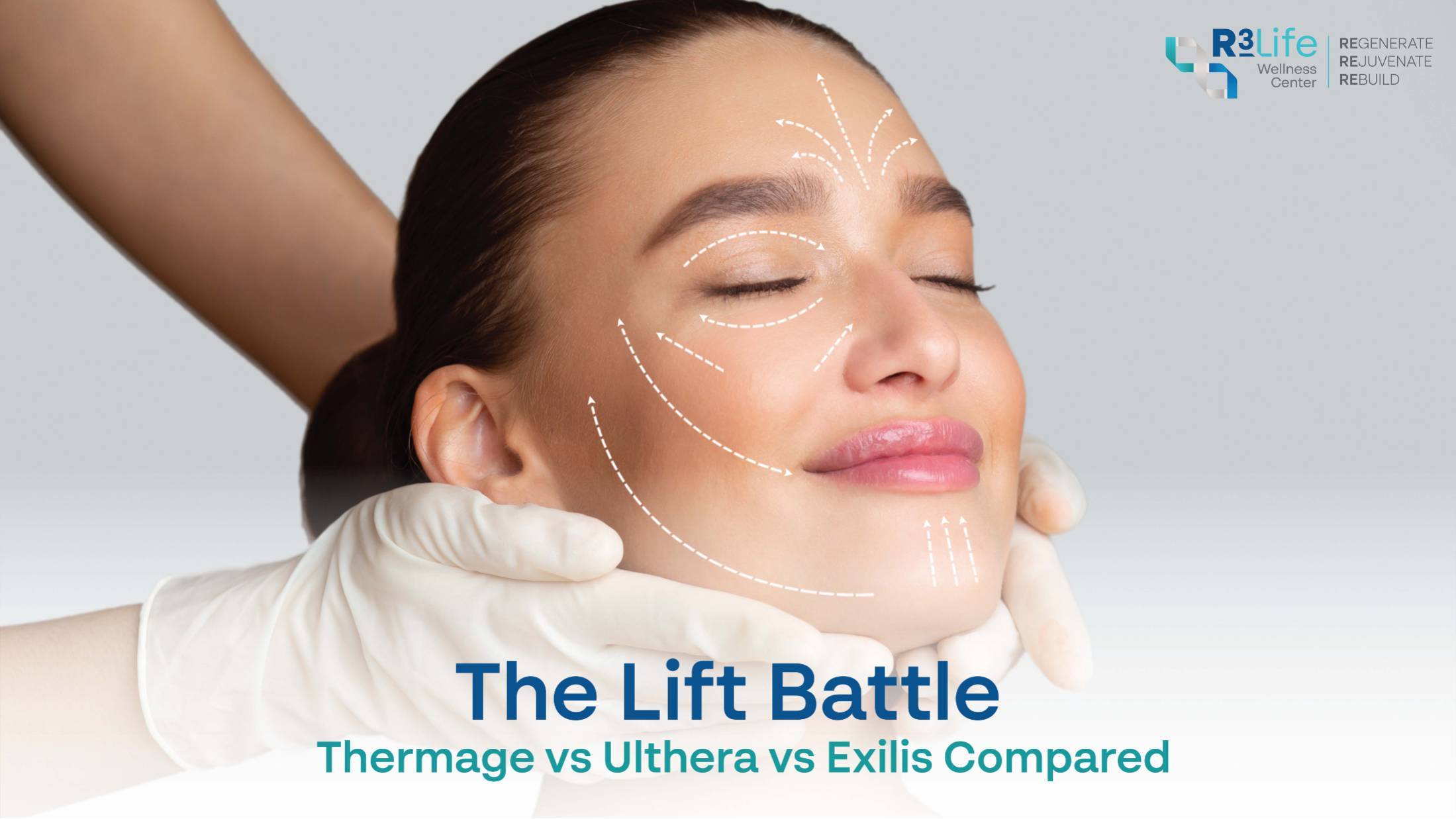
- Tightening works on the skin itself, contracting existing collagen and prompting new collagen production over the months that follow. Radiofrequency-based treatments sit here.
- Lifting works deeper, directing energy at the SMAS layer, the structural foundation that suspends the face against gravity. Ultrasound-based treatments sit here.
Neither replaces lost volume. They address the envelope and its support, which is a different job from refilling a compartment that has emptied.

Who This Applies To
Not everyone who loses weight quickly needs intervention. Younger clients with good dermal quality often adapt well on their own, and the sensible first step is assessment rather than treatment.
Timing Relative to Weight Stabilization
Treating a face that is still changing is the most common timing error. Volume placed against a moving baseline can look correct at three months and wrong at nine.
Most clinicians prefer to wait until weight has been stable for several months before beginning volume work. For clients continuing on GLP-1 therapy, this needs an honest conversation about whether weight has genuinely plateaued or is still trending downward.
Building a Sequence Rather Than a Single Treatment
A single treatment rarely addresses a change that occurred across three layers. A staged approach tends to be more useful, and R3 Life Wellness Center's aesthetic menu is organized to support one, at the Silom–Surawong flagship branch.
- Assessment to identify which of the three problems is actually dominant
- Skin quality groundwork, started early because it builds gradually, through the exosome lines including Premium Fresh Exosome, Fresh Exosome, and Revive Exosome (EXO-25)
- Volume restoration once weight has stabilized, using Restylane where direct projection is needed, or the collagen-supporting injectables Juvelook and Collaju where a slower structural route is preferred
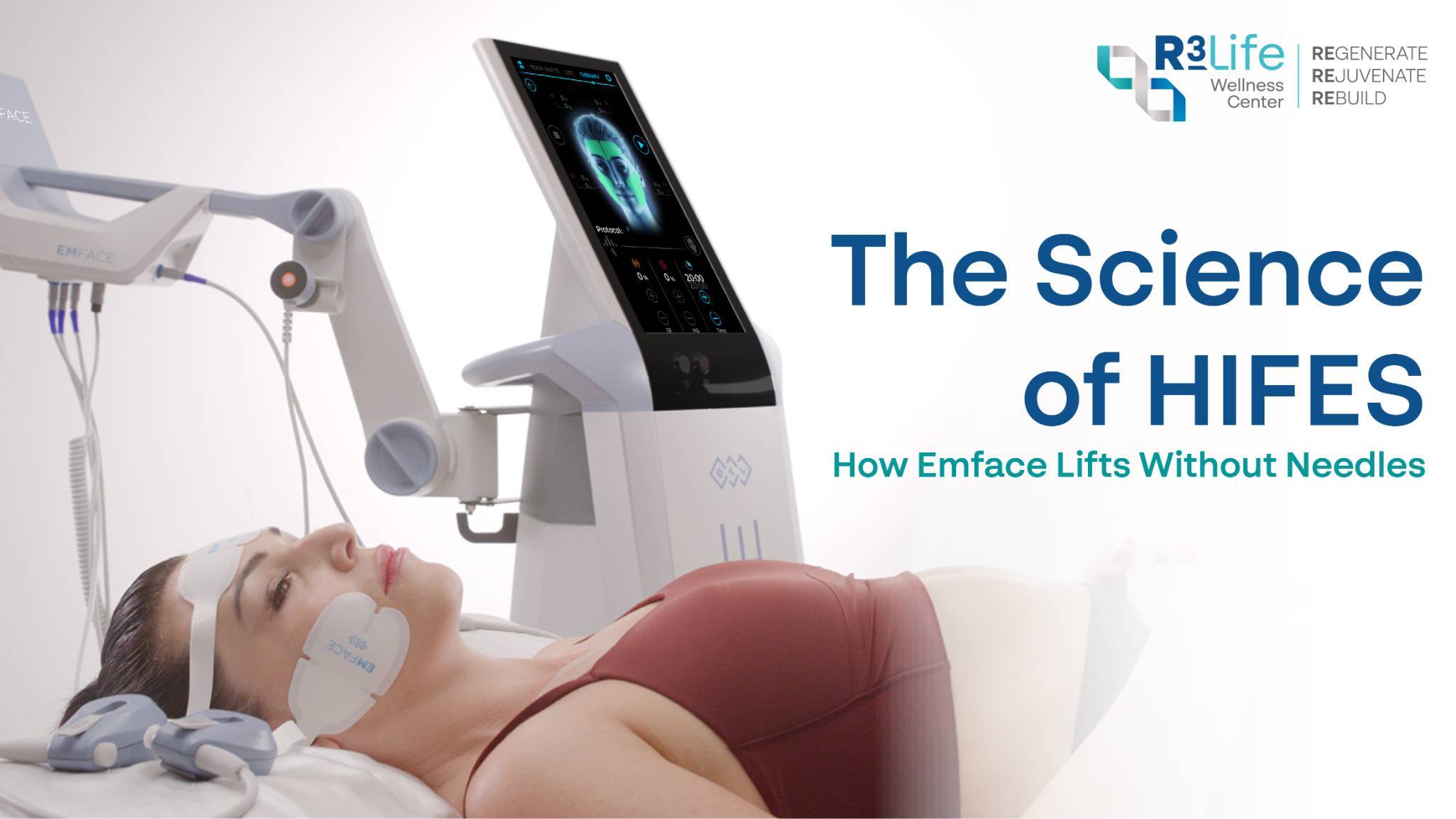
- Tightening or lifting where laxity remains the limiting factor, through Thermage FLX for tightening, Ulthera SPT for lifting, or Emface where a needle-free option with no downtime suits the client. Emface works differently from the other two, stimulating the muscles that lift the face rather than acting on skin or deeper tissue directly, which is why it is sometimes chosen when muscle tone is part of the picture
The sequence runs over months rather than weeks, and it is adjusted as the face responds. Outcomes differ among individuals. All four steps draw on the same https://r3lifewellness.com/en/service-aesthetic at the Silom–Surawong flagship, combined according to what the assessment shows.
Frequently Asked Questions about Ozempic Face
Q: How do I know whether I have facial volume loss or skin laxity?
A: A: They often show up together in what people call "Ozempic Face," but they aren't the same thing. Volume loss reads as flatness or hollowing; laxity reads as looseness; skin that no longer sits snugly over the structure beneath it. Because each is treated differently, a hands-on assessment is the only reliable way to tell which is driving the change.
Q: Can my face recover on its own once my weight is stable?
A: Sometimes. Younger skin with good collagen reserves often adapts well once weight settles, so giving it several stable months before judging the result is sensible. Where dermal quality has already declined with age or sun exposure, the change tends to persist. Outcomes differ from person to person, which is why an individual assessment matters more than a general rule.
Q: Is filler the only way to restore facial volume after weight loss?
A: No. Filler addresses only one of the three changes behind "Ozempic Face": lost volume. At R3 Life Wellness Center, volume can be restored with Restylane where direct projection is needed, or with collagen-supporting injectables like Juvelook and Collaju where a slower structural route is preferred — while skin quality and firmness are handled separately.
Q: Which treatment is right for the changes I'm seeing?
A: It depends on which problem — volume, skin quality, or structural support — is dominant, and often more than one is involved. That is what an assessment is for. From there, a plan at R3 Life Wellness Center might combine exosome skin-quality groundwork, volume restoration, and tightening with Thermage FLX or lifting with Ulthera SPT. Outcomes differ among individuals, so the combination is matched to the face.
Q: When should I have my face assessed after weight loss?
A: An assessment can happen at any point, and it often makes sense before deciding on anything. For volume work specifically, it is best to wait until weight has been stable for several months, so the result is judged against a settled baseline. R3 Life Wellness Center's assessment maps which of the three changes is dominant before any treatment is suggested — the sensible first step before committing to a plan.
Conclusion
Facial volume loss after rapid weight loss; the change behind "Ozempic face" is structural, not superficial. The fat compartments that hold the midface forward shrink alongside everything else, the skin that covered them has less capacity to adapt than it once did, and the two are separate problems. Recognizing which one is actually driving the change is what makes a treatment plan work.
Aesthetic assessment at R3 Life Wellness Center is led by ABAARM board-certified physicians with postgraduate training in clinical dermatology from Cardiff University. To discuss what would suit your own timeline and anatomy, visit r3lifewellness.com or message +66 88 689 8888 on WhatsApp.
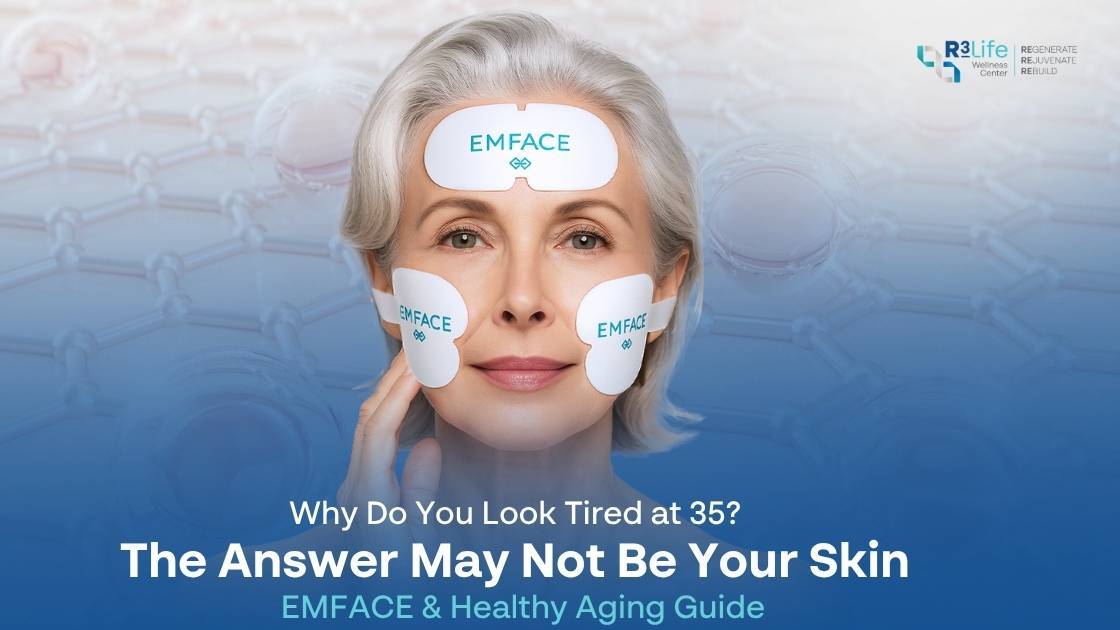
 Why Do You Look Tired at 35? The Answer May Not Be Your Skin | EMFACE & Healthy Aging Guide