Can Yoga Really Improve Your Skin? The Answer Lies in Your Nervous System and Stress Levels
5 Key Signals Your Skin Is Trying to Tell You
- Beauty is not just about skincare—it reflects the balance of your nervous system and stress levels.
- Chronic stress can accelerate skin aging through cortisol, inflammation, and reduced cellular repair.
- Yoga and relaxation improve skin appearance by influencing the nervous system and circulation—not just the skin itself.
- Radiant skin = a balanced body (sleep, recovery, and internal function).
- True, long-term beauty begins from within—especially for those with accumulated stress or poor sleep.
Your Face Reflects Your Nervous System More Than Your Skincare
Why Relaxation Practices Like Yoga Can Truly Influence Beauty
Have you ever experienced this?
You invest in high-quality skincare, yet your face still looks tired… while someone else does almost nothing but looks naturally fresh, calm, and youthful.
The difference may not lie in skincare or even age. It lies in your nervous system and stress state.
Why We’re Talking About Yoga in a Beauty Article
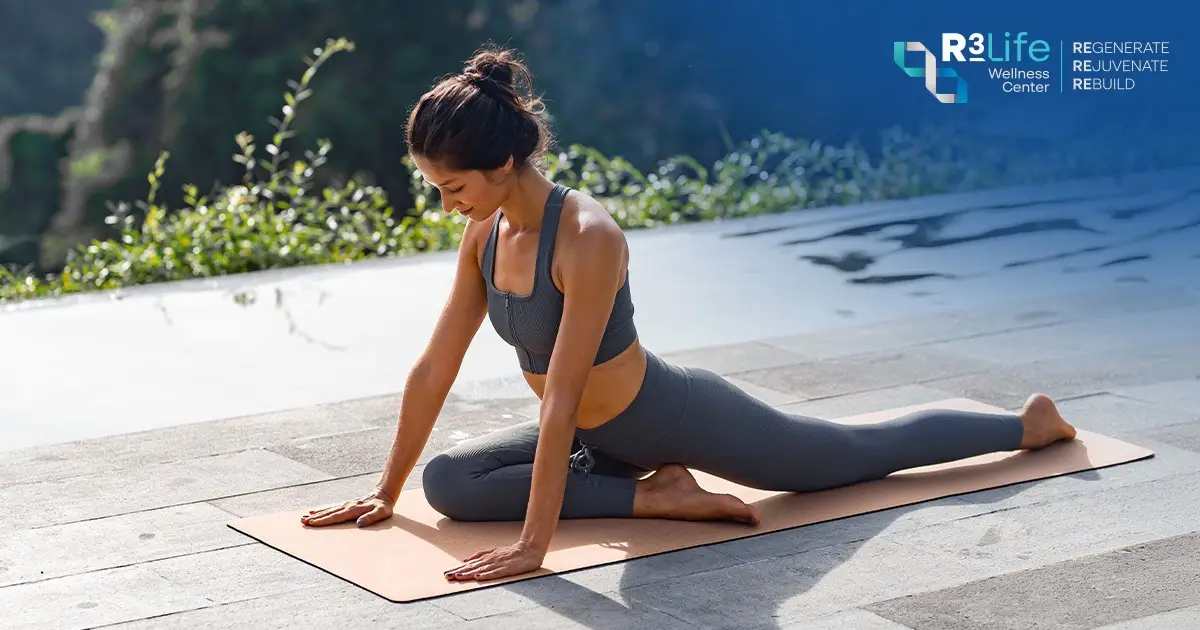
In recent years, a fascinating pattern has emerged: People who regularly practice yoga or relaxation techniques often have a softer, more relaxed, and radiant appearance—something that’s hard to explain at first glance.
Yoga is not a cosmetic treatment. It doesn’t contain active ingredients. It doesn’t directly change facial structure.
Yet, it clearly enhances overall appearance.
That’s exactly why yoga is used here as an example—to explain something deeper: Long-term beauty doesn’t begin with the skin. It begins within the body

The Overlooked Connection: Stress and Your Face
Your face is not just a surface, it's a reflection of internal processes.
When the body is under chronic stress, the nervous system triggers the release of cortisol.
Over time, this is associated with:
- Reduced collagen production
- Increased inflammation
- Decreased blood circulation to the skin
The visible result includes dull, tired-looking skin, a fatigued facial appearance, and faster signs of aging. Stress also affects facial muscles unconsciously, leading to tightness in the forehead, around the eyes, or the jaw, which, when repeated daily, can gradually alter facial expression over time.
Stressed Face vs Balanced Face
You may have noticed this without realizing it:
Under stress:
- Facial tension increases
- Skin tone looks uneven
- The face appears tired—even with enough rest
In a balanced state:
- Facial muscles relax
- Blood circulation improves
- Skin appears brighter
- The overall look becomes naturally more youthful
This is not just perception—it’s rooted in biological mechanisms linking stress and skin.
Why Relaxation Impacts Your Skin
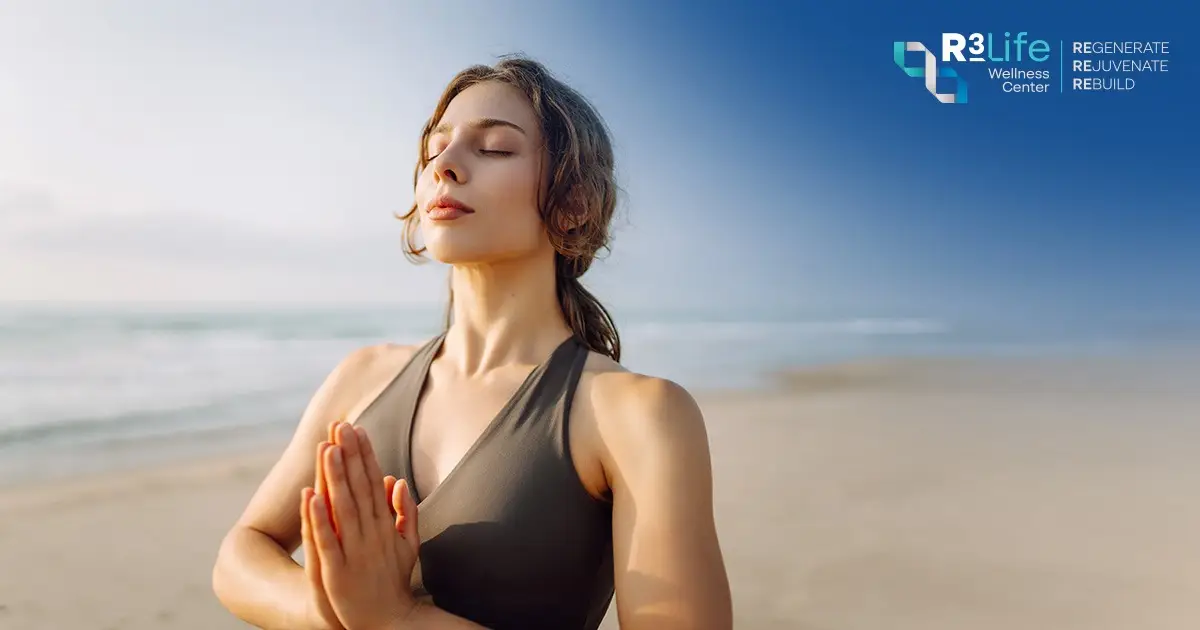
Yoga, deep breathing, and meditation don’t directly act on the skin, but instead influence the Autonomic Nervous System, which controls the stress response, blood circulation, sleep quality, and cellular repair.
When the Body Is in Stress Mode
When the nervous system shifts into Sympathetic Mode (Fight or Flight), cortisol levels increase, inflammation rises, blood flow to the skin decreases, and facial muscles tighten.
Visible effects:
- Dull skin
- Tired appearance
- Accelerated aging
When the Body Is in Relaxation Mode
Yoga and breathing activate the Parasympathetic System (Rest & Restore), which leads to a decrease in stress hormones, improved blood flow and oxygen, more efficient cellular repair, and relaxed facial muscles.
Visible results:
- Brighter skin
- Relaxed facial expression
- Natural glow
When Internal Balance Shapes External Beauty
In regenerative medicine and longevity science, beauty is not separate from health but is a result of internal balance, including hormonal levels, chronic stress, inflammation, and sleep quality.
Research shows that chronic stress increases inflammatory markers and reduces the body’s ability to repair itself, while quality sleep supports cellular regeneration and hormonal balance.
This means that healthy-looking skin is a reflection of overall body function—not just external care.
Why Skincare Alone May Not Be Enough
Skincare plays an important role but mainly at the surface level, whereas factors like stress, sleep, and nervous system balance affect the internal environment of the skin.
This explains why some people use the right skincare but still experience dullness, fatigue, and slow skin recovery.
When Relaxation Alone Isn’t Enough
For some individuals, lifestyle changes like yoga or meditation help to a certain extent, but in cases of chronic stress or long-term fatigue, deeper support may be needed.
Signs to watch for include feeling tired despite adequate rest, poor sleep quality, and persistently dull or fatigued skin; at this stage, system-level care becomes increasingly important.
A Holistic Approach: From Within to Outer Radiance
Modern wellness care focuses on evaluating the body as a whole not just the skin by looking at nervous system balance, stress levels, sleep quality, and cellular recovery.
The goal is to help the body return to optimal balance, which may include nutritional support, lifestyle adjustments, and personalized wellness programs.
Conclusion: True Beauty Begins with Balance
Real beauty doesn’t start with what you apply to your skin; it starts with your internal state. When the body and nervous system are balanced, inflammation decreases, cellular repair improves, and your face reflects this naturally, but when stress persists, the skin continues to show signs of fatigue.
At R3 Life Wellness Center, the focus is on evaluating and restoring overall body balance, especially nervous system regulation, sleep quality, and recovery capacity.
Examples of supportive approaches may include:
- IV Therapy to support internal balance and reduce stress in certain cases
- Recovery & Sleep Optimization Programs to enhance sleep quality and regeneration
All treatments should be personalized and guided by medical professionals because, ultimately, beauty is not something you create externally, it's something your body reflects when it’s truly in balance.
FAQ: Stress and Skin Health
Q1: Can stress really make you look older?
Yes. Biologically, chronic stress increases cortisol levels, which are linked to inflammation, reduced collagen production, and slower skin repair—leading to dull and fatigued skin.
Q2: How does yoga improve skin?
Yoga and breathing exercises help regulate the nervous system, promoting relaxation. This supports better circulation and cellular repair, resulting in healthier-looking skin overall.
Q3: What if I take care of myself but my skin doesn’t improve?
Lifestyle habits like yoga, rest, and stress management are essential—but results take time and consistency. In cases of deeper imbalance or chronic stress, a medical evaluation can help identify root causes and create a more effective, personalized approach.
 Exosome or PRP? Which is Right for Pollution-Damaged Skin?