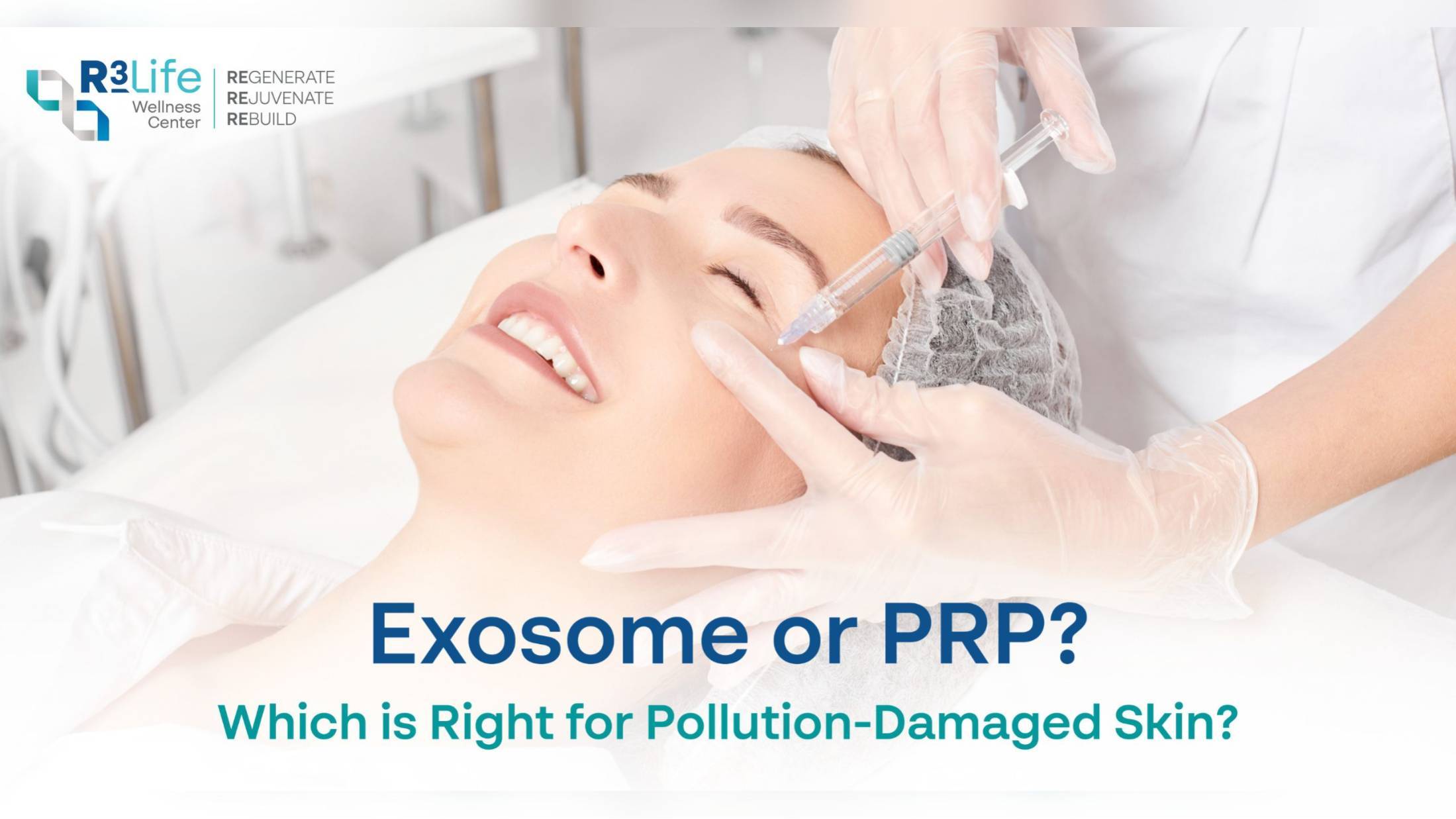
Exosome or PRP? Which is Right for Pollution-Damaged Skin?
KEY TAKEAWAYS
- Pollution doesn’t just sit on the skin’s surface; PM 2.5 and environmental toxins penetrate deeper, causing oxidative damage, inflammation, and premature aging that topical products alone can’t fully reverse.
- PRP (Platelet-Rich Plasma) uses your own blood to stimulate healing. Platelet growth factors boost collagen and tissue repair, helping improve scars, fine lines, and overall skin quality.
- Exosome therapy delivers cellular messengers that signal damaged cells to repair and regenerate, improving skin function at a deeper level.
- Not all exosomes are the same. Human MSC-derived exosomes offer better biocompatibility and more consistent absorption than plant or animal sources, leading to more predictable results.
Quick Summary
Living in a polluted city affects your skin far beyond what’s visible. PM 2.5, heavy metals, and toxins penetrate below the surface, causing oxidative stress, inflammation, and cellular damage that accelerate aging from within. Because this damage happens at a deeper level, surface treatments alone can’t fully address the problem.
Regenerative treatments like PRP (Platelet-Rich Plasma) and exosome therapy work from the inside out by activating the skin’s natural repair processes. This article compares how each treatment works, what results to expect, and how to choose the right option for pollution-damaged skin—sometimes, a combination of both may be recommended.
When Your Skin Needs Repair, Not Just Care

There's an important distinction between skin maintenance and skin repair.
Maintenance keeps healthy skin healthy. It includes daily cleansing, moisturizing, sun protection, and periodic facials. These practices prevent damage and preserve what you have.
Repair addresses skin that's already been compromised. When pollution exposure, sun damage, or aging has degraded collagen, disrupted cellular function, or triggered chronic inflammation, maintenance alone cannot restore what's been lost. You need treatments that actively rebuild.
Signs your skin needs repair, not just care:
- Dullness that doesn't respond to exfoliation or brightening products
- Fine lines appearing faster than expected for your age
- Uneven texture that persists despite consistent skincare
- Hyperpigmentation that fades slowly or not at all
- Loss of firmness and elasticity
- Acne scarring or post-inflammatory marks
- General "tired" appearance even when well-rested
If these describe your skin, topical products may have reached their limit. Regenerative treatments like PRP and exosomes work at the cellular level where the real damage exists.
Understanding PRP (Platelet-Rich Plasma)
How PRP Works
PRP therapy uses your own blood to heal your own skin. The process begins with a standard blood draw, similar to a routine lab test. Your blood is then processed in a centrifuge to concentrate the platelet-rich plasma — separating out the growth factors responsible for cell repair and regeneration from the other blood components.
Platelets are best known for clotting, but they also contain concentrated growth factors that trigger tissue repair. When injected into skin, these growth factors signal your cells to produce new collagen, generate fresh blood vessels, and accelerate healing processes.
The result is skin regeneration using your body's own biological material. Because PRP comes from you, there's virtually no risk of allergic reaction or rejection.
What PRP Treats
PRP supports skin rejuvenation by stimulating collagen, improving firmness, softening acne scars, and helping even skin tone. Using growth factors from your own blood, it activates natural healing to enhance skin quality and reduce fine lines and wrinkles for a more refreshed appearance.
PRP is particularly effective for:
- Fine lines and early wrinkles
- Mild to moderate skin laxity
- Acne scarring
- Hyperpigmentation and uneven tone
- Overall skin texture improvement
- Under-eye hollows and dark circles
Understanding Exosome Therapy
What Are Exosomes?
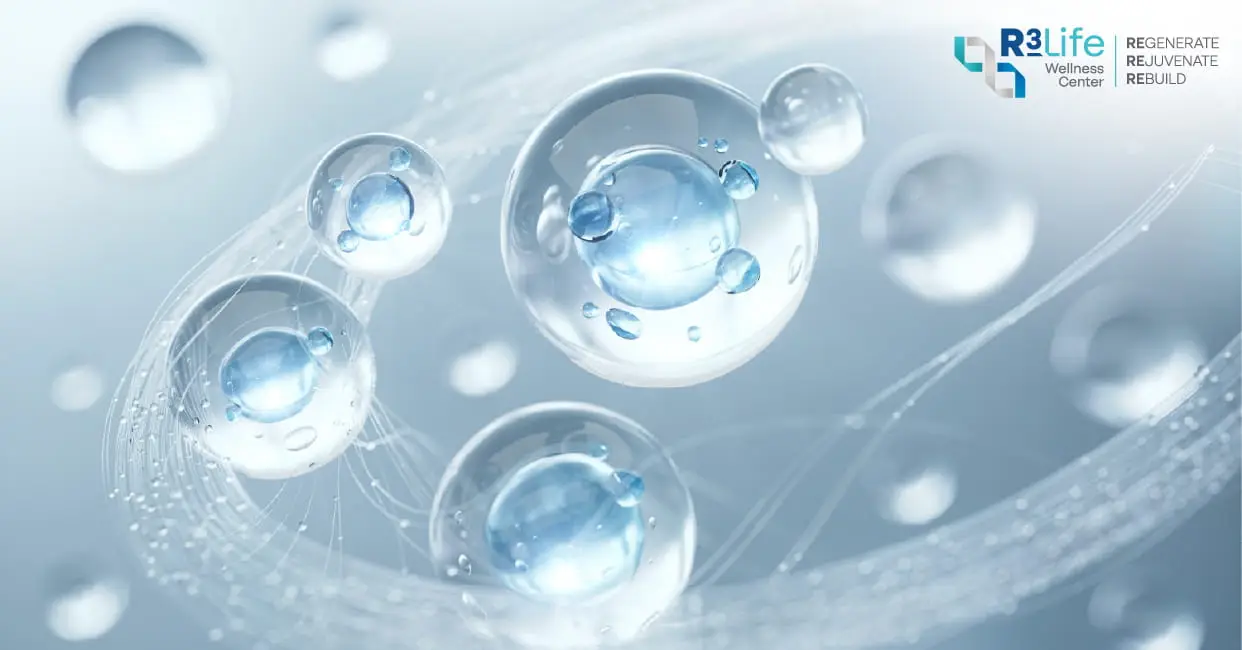
Exosomes are tiny vesicles, roughly ~40 to 160 nanometers in diameter, that cells release to communicate with other cells. Think of them as microscopic messenger packages containing proteins, growth factors, lipids, and genetic material (RNA) that instruct recipient cells how to behave.
In the context of skin therapy, exosomes derived from mesenchymal stem cells (MSCs) carry regenerative signals that can reprogram damaged skin cells. When applied to aging or pollution-damaged skin, these exosomes deliver instructions for repair, collagen synthesis, and reduced inflammation directly to your cells.
Exosome therapy works by isolating these beneficial signaling molecules, making it a precise and targeted approach to skin regeneration. It can also be used alongside stem cell therapy — the two treatments complement each other well, with exosomes reinforcing and amplifying the regenerative signals that stem cell therapy initiates.
How Exosomes Work
When exosomes are introduced to damaged skin, they're absorbed by your cells and release their cargo of regenerative signals. This triggers several beneficial processes:
- Collagen activation. Exosomes stimulate fibroblasts to produce new collagen and elastin, restoring skin structure and firmness.
- Anti-inflammatory effects. The signaling molecules reduce chronic inflammation that contributes to aging and damage.
- Antioxidant boost. Exosomes activate cellular antioxidant defenses, helping neutralize ongoing oxidative stress from pollution exposure.
- Cellular repair pathways. The RNA and proteins in exosomes can activate repair mechanisms that have become dormant in damaged cells.
- Improved cell communication. By enhancing how cells signal each other, exosomes help restore coordinated tissue function.
What Exosomes Treat
Exosome therapy addresses a broad range of skin concerns, with particular strength in treating chronic or severe damage:
- Chronic skin issues that haven't responded to other treatments
- Active acne and post-acne scarring
- Significant sun damage and photoaging
- Hyperpigmentation and melasma
- Dull, devitalized skin
- Scalp rejuvenation and hair restoration
The exosomes used at R3 Life come directly from the lab as Premium Fresh Exosomes — extracted and prepared fresh rather than processed from a stored formula. This freshness is part of what makes the treatment effective: the signaling molecules are at peak viability when they reach your skin. The formula is specifically designed for more advanced concerns, with higher concentration and volume to treat chronic skin issues, acne, and scars more effectively. It also stimulates collagen, smooths wrinkles, and revitalizes skin across the face, neck, and scalp.
Not All Exosomes Are Equal
The source of exosomes significantly impacts their effectiveness and safety. Understanding the differences helps you make an informed choice.
The ideal combination depends on your goals, timing, and budget. These examples reflect common choices among international couples, with final recommendations personalized during consultation.
Human-Derived Exosomes (MSC-Derived)
Exosomes derived from human mesenchymal stem cells offer the highest biocompatibility. Because they originate from human cells, they contain signaling molecules that your body recognizes and responds to optimally.
MSC-derived exosomes are typically harvested from umbilical cord tissue from screened donors. The exosomes are then isolated, purified, and concentrated using specialized techniques.
Advantages:
- Maximum biocompatibility with human tissue
- Contains growth factors
- Predictable, consistent results
R3 Life uses MSC-derived exosomes processed with state-of-the-art separation technology and verified through flow cytometry to ensure purity and potency.
Plant-Based Exosomes
While plants do produce exosome-like particles, their signaling molecules evolved for plant biology, not human tissue repair.
Plant exosomes may offer some antioxidant benefits, but they lack the specific growth factors that instruct human cells to regenerate. They're generally less expensive but deliver more limited results.
Animal-Based Exosomes
Exosomes from bovine or porcine sources are biologically closer to human signaling proteins than plant vesicles, which may allow more direct cellular communication. However, concerns about immune reactions and cross-species pathogens limit their use. As a result, aesthetic medicine typically favors human-derived (MSC) exosomes for regeneration or plant-derived vesicles for their lower allergenic risk.
Why Human-Derived Exosomes Deliver Superior Results
The difference comes down to how your body recognizes biological signals. Human MSC-derived exosomes are received more naturally by your cells, triggering collagen production, activating repair pathways, and calming inflammation for more effective regeneration.
With plant or animal exosomes, this recognition is less complete, so results may be more limited. For patients seeking meaningful skin regeneration, human-derived exosomes offer more predictable outcomes, reflecting the higher standards required to produce medical-grade preparations.
Which Treatment is Right for You?
Choose PRP If...
- Your overall health is good — PRP uses your own blood, so the quality of your plasma directly affects the quality of your results
- You prefer using your own biological material with zero foreign substances
- Your skin concerns are mild to moderate
- Budget is a primary consideration
- You're comfortable with multiple sessions over time
- You want to combine treatment with microneedling for enhanced results
Choose Exosomes If...
- You have moderate to severe skin damage or chronic issues
- Previous treatments haven't delivered desired results
- You want potentially faster or more dramatic improvement
- You're addressing multiple concerns simultaneously (face, neck, and scalp)
- You prefer fewer treatment sessions
- You're seeking the most advanced regenerative technology available
Consider Combining Both If...
- You want to maximize regenerative potential
- Your skin has multiple types of damage (scarring plus aging plus pigmentation)
- You're preparing for a significant event and want optimal results
- Your physician recommends a comprehensive protocol
The Pollution Factor: Why It Matters for Treatment Selection
Pollution-damaged skin presents specific challenges that influence treatment choice.
- Oxidative stress: PM 2.5 particles generate free radicals that overwhelm your skin's natural antioxidant defenses. Both PRP and exosomes support recovery, but exosomes provide targeted signals that activate antioxidant pathways at the cellular level.
- Chronic inflammation: Pollution exposure triggers ongoing low-grade inflammation that accelerates aging. Exosomes deliver concentrated anti-inflammatory signals designed to help rebalance stressed skin and support long-term resilience.
- Deep penetration damage: Pollution particles don't stay on the surface. They penetrate into deeper skin layers where they cause structural damage. Regenerative treatments that work at the cellular level, rather than just the surface, are essential.
- Accumulated toxicity. Years of pollution exposure create compounded damage. Severe cases may benefit from exosome therapy's more intensive regenerative signaling, while mild cases may respond well to PRP.
For Bangkok residents dealing with seasonal PM 2.5 exposure, addressing pollution-related skin damage isn't vanity, it's health maintenance. The same oxidative stress and inflammation affecting your skin is occurring throughout your body.
FAQ
Q: What's the main difference between PRP and exosomes?
A: PRP uses growth factors from your own blood to stimulate healing. Exosomes deliver concentrated cellular messengers from human stem cells that instruct your cells to repair themselves. Both are regenerative, but they work through different mechanisms.
Q: Is there any risk of allergic reaction?
A: PRP uses your own blood, so allergic reaction is virtually impossible. Human-derived exosomes have excellent biocompatibility, and serious reactions are rare. As with any injection, some people experience minor, temporary responses at the treatment site; such as slight redness, mild swelling, or brief sensitivity, which typically resolve on their own within a few hours.
Q: How many sessions will I need?
A: This varies by individual, skin condition, and treatment goals. We can recommend a personalized treatment plan after assessing your skin during consultation.

 Body Contouring vs Weight Loss: Do You Need Fat Reduction or Skin Tightening?