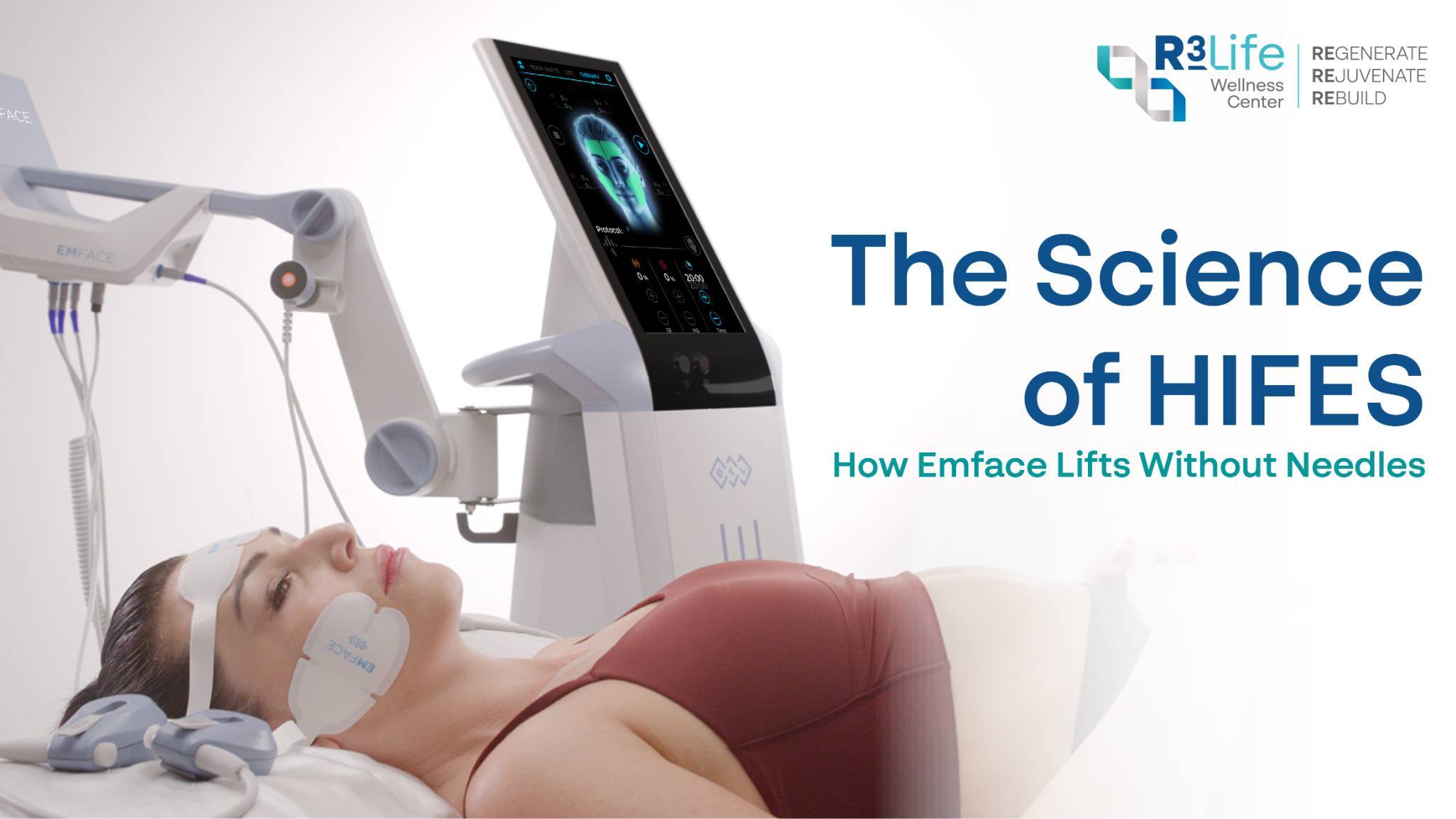
The Science of HIFES — How Emface Lifts Without Needles
KEY TAKEAWAYS
- HIFES (High-Intensity Facial Electrical Stimulation) is an FDA-cleared technology that contracts facial muscles to restore tone, density, and lift
- Emface combines HIFES with Synchronized Radiofrequency (RF) in a single session, treating both muscle and skin simultaneously
- HIFES produces approximately 75,000 muscle contractions per 20-minute session, targeting the frontalis, zygomaticus major, zygomaticus minor, and risorius muscles
- RF heats the dermis to stimulate collagen and elastin production, while HIFES strengthens the muscles that support facial structure
- Clinical studies show a 37% reduction in wrinkles, 23% increase in lift, and 30% improvement in muscle tone
- The treatment is needle-free, non-invasive, and requires no downtime
Quick Summary
Facial aging isn’t just about skin — it’s also about the muscles beneath losing tone and volume. Most treatments target one or the other. Emface targets both.
Using High Intensity Facial Electromagnetic Stimulation (HIFES) combined with synchronized Radiofrequency (RF), Emface strengthens facial muscles while stimulating collagen and elastin production in the skin. The result is a lifted, tighter, smoother look — without needles, surgery, or downtime.
This article explores the science behind HIFES and RF, the clinical evidence, and what to expect at treatment at R3 Life Wellness Center.
The Evolution of Facial Lifting
For decades, facial lifting meant surgery with anaesthesia, scarring, and long recovery. Injectables like Botox and fillers later offered non-surgical improvement, followed by energy-based devices that tightened skin by stimulating collagen. Each helped in different ways, but none addressed both skin and muscle together. Injectables need ongoing upkeep and don’t improve skin quality, while energy devices target skin but not the underlying muscles.
Emface changes this by combining skin tightening and muscle stimulation in one, needle-free treatment—addressing the face’s structure and surface at the same time.
What is Emface?
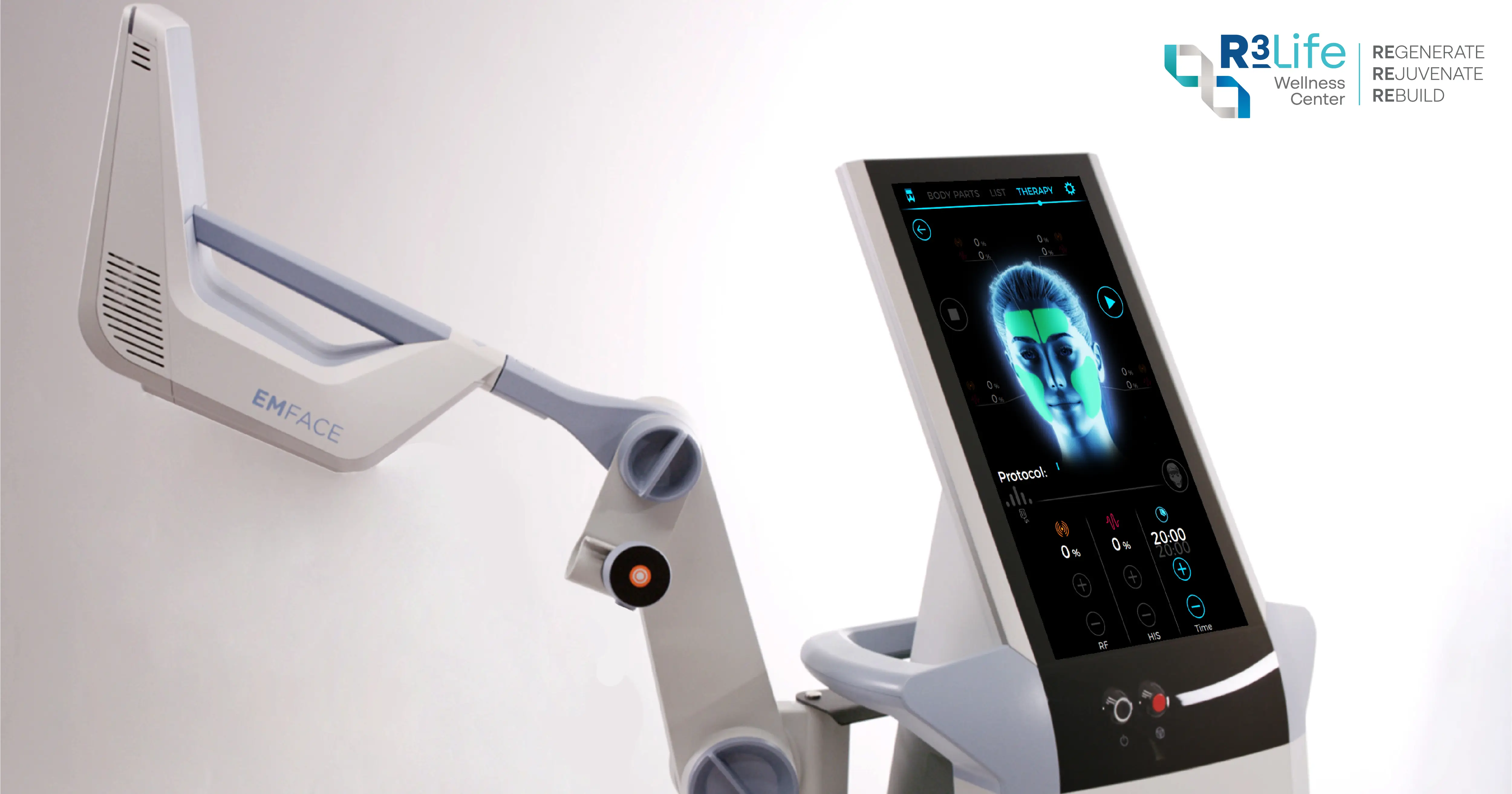
Emface is an FDA-cleared facial treatment developed by BTL Aesthetics, the same company behind Emsculpt and Emsculpt Neo. While those devices target body muscles, Emface is designed specifically for the face.
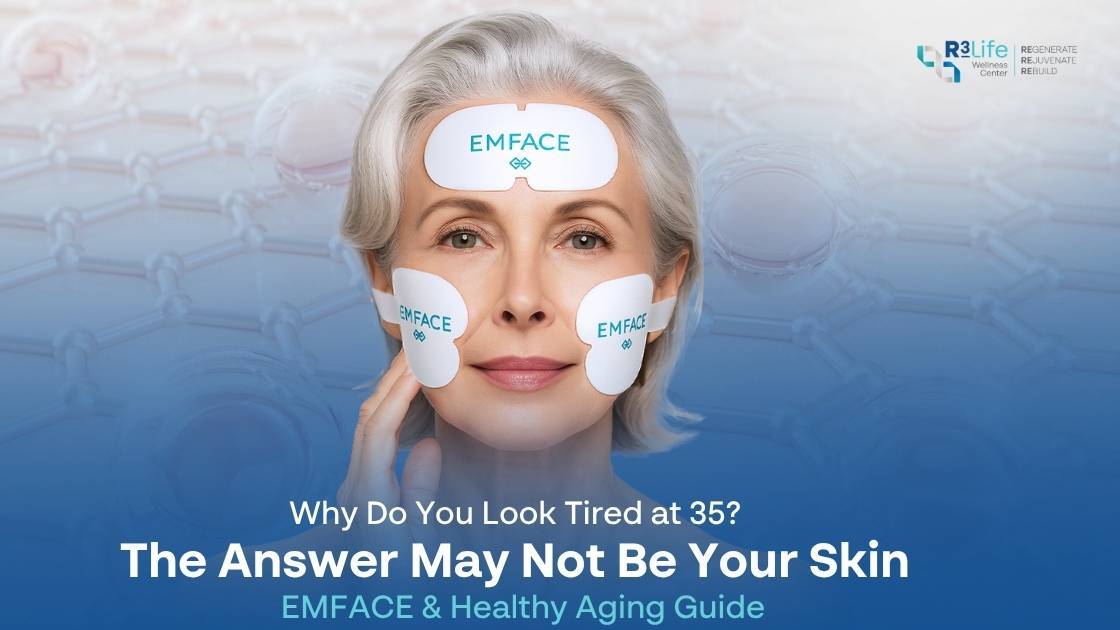
The treatment uses two technologies delivered simultaneously through applicators placed on the forehead and cheeks:
- HIFES (High-Intensity Facial Electrical Stimulation): Contracts and strengthens facial muscles to restore tone and lift
- Synchronized Radiofrequency (RF): Heats the dermis to stimulate collagen and elastin production for smoother, tighter skin
What makes Emface unique is this dual approach. Most non-invasive facial treatments focus on either skin or muscle. Emface treats both at the same time, which is why it delivers lifting, toning, and skin tightening in a single session.
The procedure is entirely needle-free. There are no incisions, no injections, and no downtime. You can return to your normal activities immediately after treatment.
Understanding HIFES Technology
HIFES is the core technology that powers Emface. It's a patented, FDA-cleared technology designed specifically for facial muscle treatment. Unlike body-contouring devices that target large muscle groups like the glutes or abdomen, HIFES is calibrated for the smaller, more delicate muscles of the face. This precision allows it to stimulate targeted facial muscles without affecting surrounding tissues.
How HIFES Works
HIFES delivers electrical pulses that target the motor nerves in your facial muscles. When these nerves are stimulated, the muscles contract involuntarily. This is similar in principle to how your muscles contract during exercise, but far more intense and targeted.
A single 20-minute Emface session produces approximately 75,000 muscle contractions. These rapid, repeated contractions trigger cellular changes that increase muscle density, volume, and tone over time.
Which Muscles Does HIFES Target?
HIFES specifically targets the elevator muscles of the face, the muscles responsible for lifting rather than pulling down. These include:
- Frontalis: The forehead muscle that elevates the brow
- Zygomaticus major and minor: The cheek muscles that lift the corners of the mouth and midface
- Risorius: Another cheek muscle that supports facial contour
These muscles are integrated within the SMAS (a structural network of fibers and fat that links facial muscles to the skin), a continuous layer extending from the galea aponeurotica (the tough, fibrous 'helmet' atop the skull) down into the platysma (the thin, broad sheet of muscle covering the front of the neck).
Why Muscle Matters for Facial Aging
Facial muscles lose volume and tone with age, a process called sarcopenia. Research suggests facial muscles can diminish by 3 to 8 percent per decade starting from age 30. As these muscles weaken, they provide less support for the overlying skin and fat, contributing to sagging and loss of definition.
Most skincare and even many aesthetic treatments ignore this muscle component entirely. HIFES addresses it directly, restoring structural support from within rather than just treating the surface.
Synchronized RF — The Second Component
While HIFES targets the muscles, Synchronized Radiofrequency (RF) targets the skin. Together, they form the dual-action approach that makes Emface unique.
Radiofrequency is not new to aesthetics. It has been used for years in various skin tightening treatments. What makes Emface different is how the RF is delivered in sync with the HIFES muscle stimulation.
How Synchronized RF Works
The RF energy penetrates the dermis, the deeper layer of skin where collagen and elastin are produced. It heats the tissue to approximately 40-42°C, a temperature range that triggers the body's natural regeneration response.
This controlled heating does two things:
- Stimulates collagen and elastin production: The heat signals fibroblasts (the cells responsible for producing collagen and elastin) to ramp up production. Over time, this leads to firmer, smoother, and more elastic skin.
- Prepares muscles for HIFES: The warmth also relaxes and warms the underlying muscles, making them more responsive to the electrical stimulation that follows.
The SMAS Layer
The RF energy also affects the SMAS (superficial musculoaponeurotic system), a layer of fibrous connective tissue that sits beneath the skin and surrounds the facial muscles. This is the same layer that surgeons manipulate during a traditional facelift.
By building elastin in the SMAS layer, RF helps reinforce the structural support of the face from the inside out. This contributes to the lifting effect that patients experience after completing their treatment course.
How HIFES and RF Work Together to Lift Your Face
- RF works on the skin envelope: It remodels collagen and elastin fibres, tightening and smoothing the skin from within.
- HIFES works on the muscle foundation: It strengthens and tones the muscles that support facial structure, restoring lift and definition.
- RF enhances HIFES effectiveness: By warming the muscles, RF makes them more receptive to electrical stimulation, improving the quality of contractions.
The result is a multi-layered rejuvenation effect. The skin becomes firmer and smoother. The muscles become stronger and more toned. And because both improvements happen together, the overall facial contour appears more lifted and defined.
Clinical studies show that after completing a standard treatment course, patients experienced:
- 37% reduction in wrinkles
- 23% increase in lift
- 30% improvement in muscle tone
These results develop gradually with optimal outcomes visible approximately three months after the final session.
Emface vs Other Options
With so many facial rejuvenation options available, it helps to understand where Emface fits in.
Emface vs Botox
Botox
- Relaxes facial muscles to reduce dynamic wrinkles (lines from expressions)
- Best for smoothing frown lines, forehead lines, and crow’s feet
- Does not add lift or improve overall skin quality
- Results focus on wrinkle reduction rather than structural support
Emface
- Strengthens facial muscles to restore lift and structural support
- Improves skin quality by stimulating natural collagen with RF energy
- Best for those seeking firmer, more lifted contours without injections
- Results develop gradually with improved tone and skin texture
The two treatments address different concerns and can be used together for complementary results.
Emface vs Dermal Fillers
Dermal Fillers
- Add visible volume by injecting substances like hyaluronic acid beneath the skin
- Best for restoring lost volume and reshaping facial contours (cheeks, lips, under-eye hollows)
- Results are immediate and visibly noticeable
- Require repeat treatments over time
Emface
- Lifts and firms by strengthening facial muscles and stimulating natural collagen (no added volume)
- Best for natural-looking lift and tightening; ideal for those who prefer to avoid needles or pain
- Results develop gradually with improved tone and firmness
- Can be combined with fillers based on individual goals
While fillers deliver instant volume with quick visible results, they carry risks such as migration and lumping over time. Emface offers a natural, longer-lasting alternative by strengthening muscles and boosting collagen — no injections, no residue. Depending on your goals, both can also be used together for a more complete result.
Emface vs Ultherapy
Ultherapy
- Uses micro-focused ultrasound to target the dermis and SMAS layer
- Stimulates collagen for skin tightening and improved firmness
- Best for treating skin laxity
- Does not directly strengthen or stimulate facial muscles
Emface
- Targets both skin and muscle in a single treatment
- Uses RF for collagen stimulation and HIFES to strengthen facial muscles
- Addresses muscle tone and volume loss, not just skin laxity
- Comfortable, non-invasive procedure with no downtime — only 20 minutes per session
- Best for those seeking lift from deeper structural support
Emface vs Surgical Facelift
Surgical Facelift
- Physically repositions tissue and removes excess skin
- Delivers the most dramatic and long-lasting rejuvenation results
- Involves anaesthesia, incisions, and potential scarring
- Requires extended downtime and recovery
Emface
- Non-invasive, needle-free treatment with no downtime
- Improves lift by strengthening facial muscles and stimulating collagen
- Best for subtle, natural-looking rejuvenation
- Ideal for those who want visible improvement without surgery
The Treatment Experience
Knowing what to expect can help you feel more comfortable before your first session.
Before Treatment
A registered nurse will gently cleanse the treatment area to remove makeup and skincare products, ensuring proper applicator adhesion. There's no need for numbing cream or anaesthesia.
During Treatment
You'll lie down comfortably while the applicators are placed on your forehead and cheeks. Once the session begins, you'll feel two distinct sensations:
Warmth from the RF: A gentle heating sensation, similar to a warm compress or hot stone massage.
Muscle contractions from HIFES: A tingling or tapping sensation as your facial muscles contract involuntarily. Some patients find this feels unusual at first, but it's not painful.
Each session lasts approximately 20 minutes with no numbing cream required. The intensity can be adjusted based on your comfort level.
After Treatment
There's no downtime. Your skin may appear slightly flushed immediately after, but this typically subsides within an hour. You can apply skincare, makeup, and sunscreen right away and return to your normal activities immediately.
Treatment Protocol
The standard Emface protocol consists of four sessions, spaced one to two weeks apart. Some patients notice subtle improvements after the first session, but optimal results develop over the following weeks as collagen rebuilds and muscles strengthen.
Results typically last up to one year. Maintenance sessions every six to twelve months can help preserve and extend the effects.
Who is Emface For?
Emface is suitable for most adults looking to improve facial tone, reduce wrinkles, and achieve a more lifted appearance without needles or surgery. Since Emface targets facial muscles rather than skin, it can also be combined with other treatments for enhanced results.
Ideal Candidates
- Individuals looking to improve overall skin quality, including tone, texture, and radiance
- Those who want to address fine lines and enhance skin firmness without injectables
- Patients seeking a preventive treatment to maintain youthful, healthy-looking skin before more significant aging occurs
- Anyone who prefers non-invasive options with no downtime that work on both skin and underlying structure
- Those looking to complement existing treatments like Botox or fillers for a more complete skin rejuvenation approach
Who Should Avoid Emface
Emface may not be suitable for everyone. You should consult with a medical professional before treatment if you have:
- Metal implants in the treatment area
- A pacemaker or other implanted electronic device
- Active skin conditions such as cystic acne, eczema, or sunburn in the treatment area
Pregnant or breastfeeding individuals should postpone treatment until cleared by their doctor.
FAQ
Q: Is Emface painful?
A: No. Most patients describe the sensation as a warm facial massage combined with gentle tingling or tapping from the muscle contractions. The intensity can be adjusted to your comfort level.
Q: When will I see results?
A: Some patients notice subtle improvements after the first session. However, optimal results appear approximately three months after completing the treatment course, once collagen has fully rebuilt and muscles have strengthened.
Q: Can I combine Emface with other treatments?
A: Yes. Emface complements treatments like Botox, fillers, and laser therapies. Because it strengthens the underlying muscle structure, it can enhance and prolong the results of other procedures. Consult with your provider to create a personalized treatment plan.
Q: Is there any downtime?
A: None. You can return to your normal activities immediately after treatment. Some patients experience mild redness that subsides within an hour.
 Thermage FLX Face & Body Rejuvenation in Bangkok