The Gut and Skin Connection: What It Means for You
Key Highlights
- The gut and skin are directly connected through the gut-skin axis, a communication network linking digestive health to skin condition.
- Gut dysbiosis is an imbalance in gut bacteria which can drive inflammation that shows up as acne, redness, dullness, and premature skin aging.
- Many chronic skin issues are signs of internal imbalance, not just surface-level problems topical products can solve.
- Skin conditions often return after topical treatment when underlying gut dysbiosis is left unaddressed.
- Addressing the gut directly through diet, lifestyle, and targeted clinical support is increasingly recognised as a foundation for healthier skin.
Introduction — Clear Skin Might Start in Your Gut
For years, skincare has been treated as something you apply — serums, acids, peels, masks. But a growing body of research, and a noticeable shift in how wellness-oriented travelers and expats now approach skin health, points to a very different starting point: the gut.
Persistent acne, unexplained redness, dullness that no product seems to resolve — these are often signals from the inside, not just the surface. Understanding the gut and skin connection changes how you think about skincare entirely, because it reframes the question from "what can I put on my skin?" to "what is my skin trying to tell me about my internal health?"
What Is the Gut-Skin Axis?
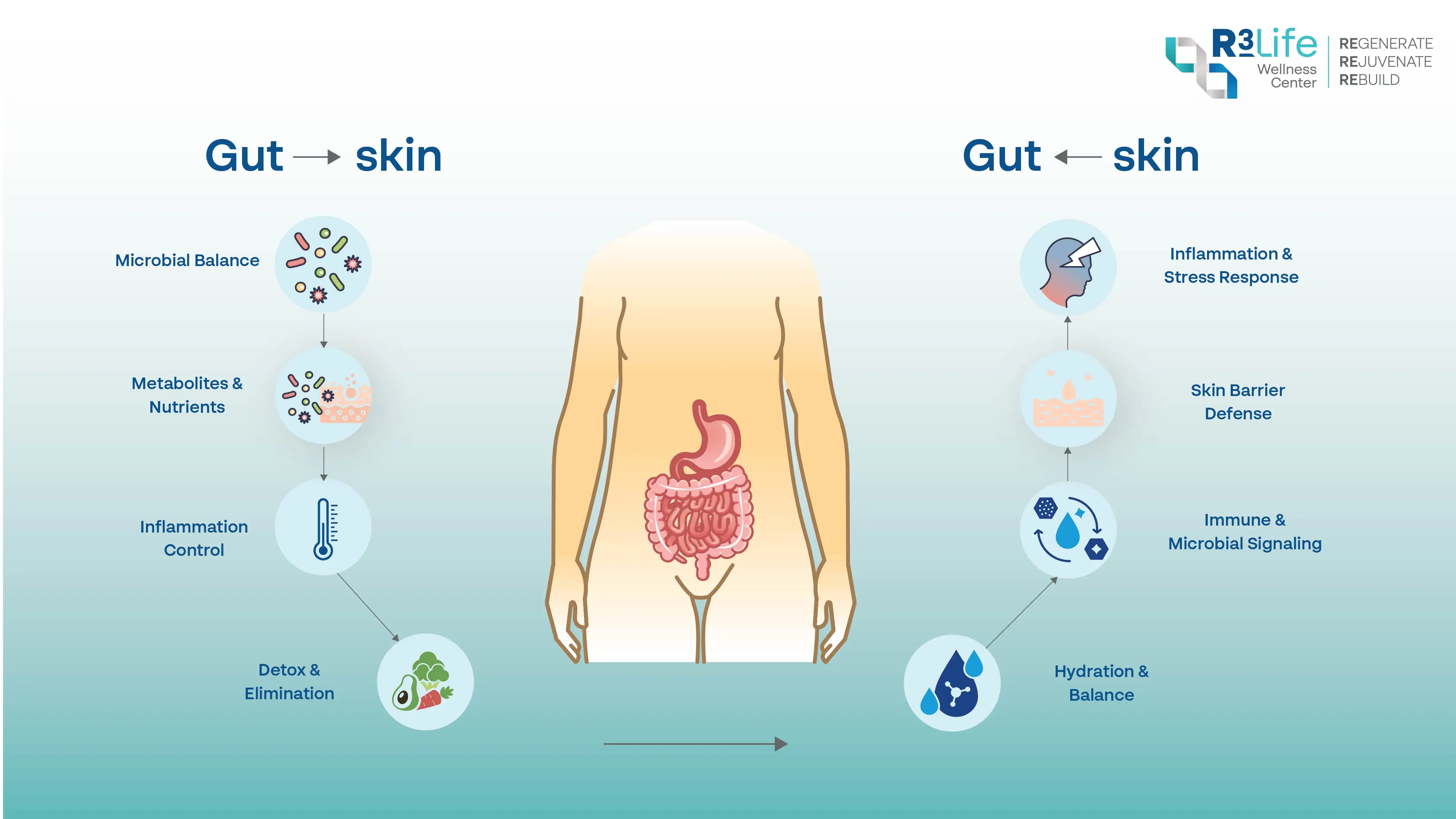
The gut-skin axis refers to the two-way biological relationship between your digestive system and your skin. While they sit at opposite ends of the body, they are in constant communication through immune signaling, hormonal messengers, and inflammatory pathways.
How Gut Bacteria Communicate With Your Skin
Your gut houses trillions of microorganisms that play an active role far beyond digestion. These bacteria influence the skin through several mechanisms:
- They help regulate the immune system, which in turn influences how your skin responds to triggers.
- They produce short-chain fatty acids and other metabolites that either calm or amplify inflammation throughout the body — including in the skin.
- They support the production of vitamins and nutrients (such as certain B vitamins) that skin cells rely on for renewal.
When this microbial ecosystem is healthy and diverse, the signals it sends support calm, resilient skin. When it becomes imbalanced, the signals change.
The Science Behind Internal Inflammation and Skin Health
At the center of the gut-skin axis is inflammation. A disrupted gut microbiome can weaken the intestinal lining, allowing inflammatory compounds to enter the bloodstream and circulate systemically. Over time, this low-grade inflammation influences skin barrier function, oil production, and how quickly skin cells repair themselves. In short, the skin becomes more reactive, more prone to breakouts, and slower to recover.
Gut Imbalance and What It Does to Your Skin
So what does gut dysbiosis actually look like on the face? The answer is broader than most people realise — gut imbalance is increasingly linked to a range of inflammatory skin conditions, including acne, seborrheic dermatitis, rosacea, eczema, and psoriasis. It often explains skin issues that seem resistant to conventional topical approaches.
Acne, Seborrheic Dermatitis, and the Inflammation Link
Adult acne and seborrheic dermatitis are among the most common skin complaints tied to gut imbalance. A 2024 population-based study of more than 185,000 acne patients found a significantly elevated risk of gastrointestinal conditions including constipation, IBS, and reflux, with the relationship bidirectional and most pronounced in moderate-to-severe cases. When inflammation rises in the gut, it tends to surface on the skin.
When the gut is inflamed, the body's overall inflammatory load increases, which can:
- Stimulate excess oil production in the skin
- Disrupt the skin microbiome, encouraging problem bacteria
- Slow the healing of existing blemishes
- Intensify flushing and visible redness
This is why many people find that their breakouts flare during periods of poor diet, stress, or digestive upset; the gut is quietly shaping what shows up on their face.
Dull, Aging Skin — Could Your Gut Be the Cause?
Skin that looks tired, sallow, or prematurely aged is often not a hydration problem, it's an inflammation and nutrient problem. A dysbiotic gut absorbs nutrients less efficiently and generates more oxidative stress, both of which reduce collagen integrity, slow cellular turnover, and contribute to a visibly duller complexion over time. This is a slow, quiet process that can gradually shift how your skin looks in your thirties, forties, and beyond.
Skin Conditions That Are Often Gut Problems in Disguise
Several chronic skin conditions have been repeatedly linked to underlying gut imbalance, including:
- Rosacea and persistent facial flushing
- Eczema, recurring skin sensitivity, and a compromised skin barrier
- Certain forms of adult acne
- Unexplained itching or reactive skin
This doesn't mean the gut is the only factor in these conditions, but it does mean that ignoring it often limits how much progress topical treatment alone can achieve.
Why Treating the Surface Isn't Enough
A high-quality skincare routine matters but it does have some limits, especially when the underlying trigger sits deeper than the skin itself.
What Topical Skincare Cannot Fix
Topical products can soothe, hydrate, exfoliate, and support the skin barrier — but they cannot:
- Change the inflammatory signals your gut is sending through your bloodstream
- Restore nutrient absorption for skin cell repair
- Rebalance an ecosystem of trillions of bacteria
- Repair a compromised intestinal lining
When skin issues are driven by internal inflammation, no topical routine; however expensive or well-designed, can fully resolve them, because it is not reaching the source.
How Gut Dysbiosis Keeps Skin Problems Coming Back
This is why many people experience a frustrating cycle: a breakout clears, redness calms, dullness lifts briefly — and then everything returns. If the gut is still inflamed and imbalanced, the inflammatory signals keep arriving at the skin, triggering the same issues over and over. Addressing only the surface is like repainting a damp wall without fixing the leak behind it.
How to Address Skin Health From the Inside Out
The good news is that the gut-skin relationship works in both directions. When the gut is supported, the inflammatory load decreases — and the skin often responds over time.
What the Research Says About the Gut-Skin Approach
Internationally, the gut-first approach to skin health has moved from fringe wellness into mainstream clinical conversation. Dermatologists and integrative physicians increasingly consider gut health in treatment plans for conditions that were once approached purely topically. Foundational strategies include:
- A diverse, fiber-rich, minimally processed diet
- Regular intake of fermented foods to support microbial diversity
- Reducing excess sugar, alcohol, and heavily processed foods
- Managing stress, which directly influences gut balance
- Prioritizing consistent sleep, which supports both gut and skin recovery
For many people, these changes produce meaningful improvement — but when dysbiosis is established, the intestinal barrier is compromised, or inflammation has been building for years, lifestyle changes alone may take considerable time to restore balance.
Foods That Naturally Support a Healthier Gut
Before clinical support enters the picture, what you eat day to day still does the most foundational work. The gut microbiome responds directly to dietary fiber and fermented foods, and many everyday ingredients are rich in prebiotics, the non-digestible fibres that feed beneficial bacteria.
Foods naturally high in prebiotics include:
- Alliums: garlic, onions, leeks, and shallots
- Fibrous vegetables: asparagus, artichokes, and chicory root
- Whole grains: oats, barley, and wheat bran
- Legumes: lentils, chickpeas, and beans
- Fruits: bananas (especially slightly underripe), apples, and berries
- Fermented foods: yogurt, kimchi, sauerkraut, kefir, and miso, which supply live beneficial bacteria alongside prebiotic fibre
For many people, consistent inclusion of these foods, combined with adequate hydration and reduced ultra-processed intake, is enough to maintain microbial diversity and support healthy gut function over time. Where these foundations fall short is when gut imbalance has already become established or chronic, which is where more targeted support begins to matter.
When Clinical Gut Support Makes the Difference
For individuals with long-standing gut imbalance or recurring skin issues that haven't responded to lifestyle change, clinical support can address what diet and supplements alone cannot fully resolve.
At R3 Life Wellness Center, GutZen Blend is a signature IV therapy built around L-alanyl-L-glutamine — the main energy source for the cells that line and repair the intestinal wall. By replenishing glutamine at the cellular level, it supports intestinal repair and reduces the inflammation most closely linked to skin manifestations of gut imbalance.
Profloramax is the maintenance complement — a clinical-grade oral supplement with a Tetrabiotics formula (probiotics, prebiotics, postbiotics, and parabiotics) that sustains microbial diversity over time. The two work as a pair: GutZen repairs the foundation, Profloramax maintains the ecosystem that keeps results lasting.
Both are prescribed under medical supervision by R3 Life's doctors and registered nurses. Outcomes differ among individuals.
Frequently Asked Questions about the Gut and Skin Connection
Q: Can fixing your gut really improve your skin?
A: For many people, yes. When gut dysbiosis and internal inflammation are contributing to skin issues, addressing the gut often leads to visible improvements in skin clarity, tone, and resilience. Results vary from person to person, and gut-focused approaches work best alongside a supportive skincare routine and healthy lifestyle.
Q: How long does it take for gut health to affect skin?
A: Skin changes tend to occur gradually. Some people notice improvements in inflammation-related issues within a few weeks of meaningful gut support, while deeper changes in skin texture, tone, and resilience typically unfold over several months as the microbiome and intestinal lining recover.
Q: What gut problems cause acne?
A: Gut dysbiosis, increased intestinal permeability, and chronic low-grade inflammation are the most commonly cited gut-related drivers of adult acne. These can be influenced by diet, stress, medications (including repeated antibiotic use), and sleep quality.
Q: Is the gut-skin connection backed by science?
A: Yes. The gut-skin axis is an increasingly well-studied area, with research linking gut microbiome composition, intestinal permeability, and systemic inflammation to a range of skin conditions including acne, rosacea, eczema, and premature skin aging. It is now recognised in both dermatology and integrative medicine.
Conclusion — The Best Skincare Routine Starts From Within
The gut and skin connection reframes how we think about healthy skin. Inflammation, imbalance, and barrier disruption in the gut don't stay in the gut — they travel, and they often make their first visible appearance on the face. Topical skincare will always have a role, but for skin issues that keep returning, the most important work may be happening much deeper than the surface.
If you suspect your skin concerns are linked to underlying gut imbalance, a personalized consultation can help you understand what's actually driving them — and what targeted support may benefit you most. To learn more, visit r3lifewellness.com or connect with the team on WhatsApp at +66 88 689 8888 to book a free consultation with R3 Life Wellness Center.
This article was reviewed by Dr. Ploy (Tanaporn Eiamprapai), Medical Director at R3 Life Wellness Center, holding an MSc in Clinical Dermatology (Distinction) from Cardiff University, Board Certified in Anti-Aging & Regenerative Medicine (ABAARM) and Diplomate of the International Board of Lifestyle Medicine.

 Thermage Eye Treatment: Non-Surgical Solution for Youthful Eyes