Blue Zones Explained: Why the World's Longest-Living Communities Still Matter in Modern Longevity Medicine
Blue Zones Explained: Why the World's Longest-Living Communities Still Matter in Modern Longevity Medicine
5 Key Takeaways
- Blue Zones are regions where exceptional longevity has been observed, but they are not a guaranteed blueprint for living to 100.
- People in different Blue Zones eat different foods; what they share is a lifestyle rather than a specific diet.
- Daily movement, strong social relationships, purpose, and community may all contribute to healthy aging.
- Modern longevity medicine focuses not only on extending lifespan, but on improving healthspan—the years spent living independently and in good health.
- Personalized longevity combines lifestyle, preventive medicine, and scientific health assessment to create a strategy tailored to each individual.
Everyone Wants to Live Longer. But Is That Really the Right Question?
For centuries, humanity has searched for the secret to a long life.
Today, conversations about longevity often revolve around advanced health screenings, genetic testing, stem cells, supplements, or the latest anti-aging technologies.
Yet one question may be even more important:
If we live longer, how do we want to spend those extra years?
That question lies at the heart of the world's most famous longevity communities, the Blue Zones.
These regions have attracted worldwide attention because they are home to unusually high numbers of people living into their nineties and beyond, with many reaching 100 years of age.
Surprisingly, researchers found that the answer wasn't a miracle food or a revolutionary medical treatment.
Instead, it was the way people lived every day.
What Are Blue Zones?
The term Blue Zones refers to regions where researchers observed unusually high concentrations of long-lived individuals.
The five most well-known Blue Zones include:
- Okinawa, Japan
- Sardinia, Italy
- Ikaria, Greece
- Nicoya Peninsula, Costa Rica
- Loma Linda, California, USA
Although these communities differ dramatically in culture, religion, geography, and cuisine, researchers identified several recurring lifestyle patterns.
These include:
- Eating minimally processed foods
- Moving naturally throughout the day
- Maintaining close family and community relationships
- Having a clear sense of purpose
- Living in environments that encourage healthy behaviors
However, it is important to understand what Blue Zones represent and what they do not.
Most evidence comes from population-based observational research, not randomized clinical trials. While these communities provide valuable insights into healthy aging, they should be viewed as sources of inspiration rather than definitive proof of cause and effect.
In recent years, some researchers have also questioned aspects of the demographic data from certain Blue Zone regions. Rather than diminishing their value, these discussions remind us that Blue Zones are best understood as a framework for exploring longevity not as a universal formula for living to 100.

There Is No Single "Longevity Diet"
One of the biggest misconceptions about Blue Zones is that everyone follows the same diet.
They don't.
People in Okinawa traditionally eat sweet potatoes.
Those in Sardinia consume sheep's milk cheese.
Residents of Ikaria rely heavily on olive oil.
Many people in Loma Linda follow vegetarian or plant-forward diets.
The foods differ.
The eating patterns are what they have in common.
Across these communities, meals tend to emphasize:
- Vegetables
- Legumes
- Whole grains
- Healthy fats
- Limited ultra-processed foods
Equally important is how people eat.
Meals are often shared with family or friends, eaten slowly, and viewed as part of daily life rather than an interruption to it.
Healthy nutrition is not simply about nutrients.
It is also about rhythm, culture, and connection.
Natural Movement Matters More Than Intense Exercise
People living in Blue Zones rarely spend hours in the gym.
Instead, movement is woven into everyday life.
They walk. They garden. They cook. They climb stairs. They visit neighbors.
They stay physically active without thinking of it as exercise.
This contrasts sharply with modern urban lifestyles, where someone may complete a one-hour workout but remain seated for the rest of the day.
Current research increasingly distinguishes between exercise and daily movement.
Both matter.
While structured exercise improves cardiovascular fitness and muscle strength, reducing prolonged sitting and increasing natural movement throughout the day may also play an important role in long-term health.
Sometimes, improving longevity is less about exercising harder and more about sitting less.
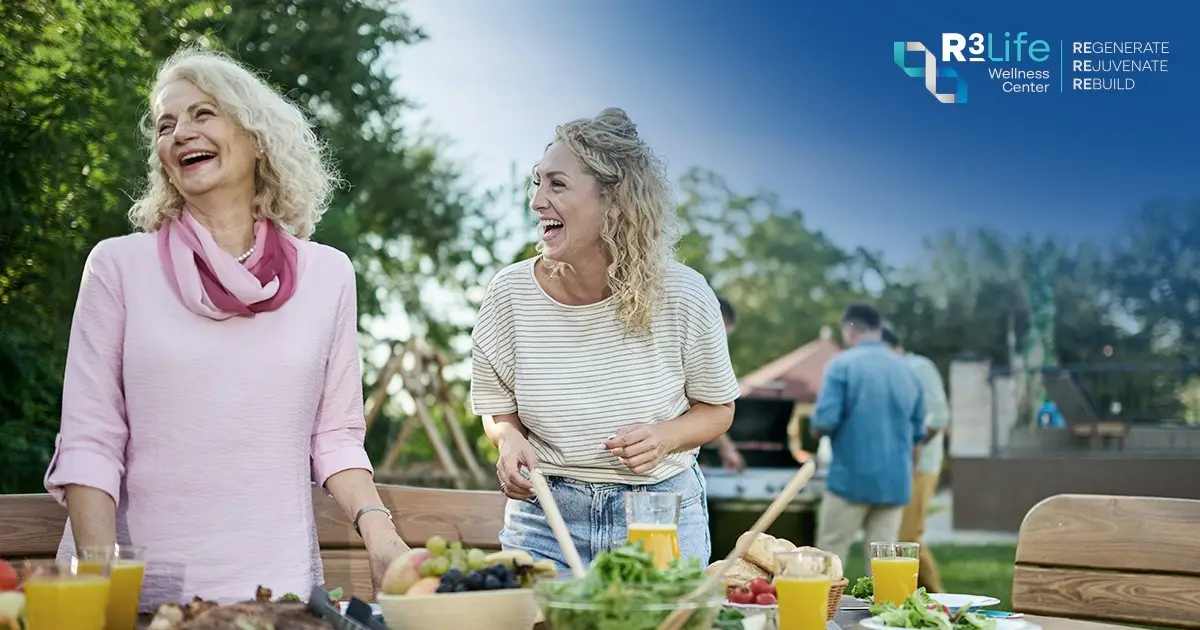
Longevity May Begin With the People Around You
One of the most striking characteristics of Blue Zone communities is that older adults remain deeply connected to society.
They continue contributing to family life. They pass on knowledge. They participate in community activities. They feel needed.
Modern research increasingly recognizes social connection as an essential component of health.
Social isolation has been associated with poorer mental health, reduced quality of life, and increased risk of several chronic conditions.
Having meaningful relationships does not necessarily mean having hundreds of friends.
Sometimes, it simply means having people who care whether you are healthy, happy, and still present in their lives.
For many individuals, the motivation to care for their health comes not from laboratory numbers but from knowing that someone is waiting for them at home.
Having a Reason to Wake Up Every Morning
In Okinawa, the concept of Ikigai describes a person's reason for living.
In Nicoya, people speak of Plan de Vida, or a life plan with meaning and direction.
Purpose does not need to be extraordinary.
For some, it means watching grandchildren grow.
For others, it means continuing meaningful work, traveling, volunteering, or remaining independent.
Purpose alone cannot guarantee longevity.
But it often gives healthy habits a reason to exist.
When we know why we want to stay healthy, taking care of ourselves becomes less about discipline—and more about protecting the life we hope to continue living.

Healthspan Matters More Than Lifespan
When discussing longevity, many people focus on reaching 100 years of age.
Modern longevity medicine asks a different question.
Can we remain healthy, independent, and mentally sharp during those extra years?
This concept is known as healthspan, the number of years we spend living in good physical and cognitive health.
The goal is not simply to add years to life.
It is to add life to those years.
Living longer means little if those additional years are spent struggling with frailty, disability, or chronic illness.
This shift from lifespan to healthspan is one of the defining principles of preventive and longevity medicine today.
From Blue Zones to Personalized Longevity
Life in today's cities is very different from life in Okinawa or Sardinia.
We work longer hours. We sleep less. We eat quickly. We experience chronic stress, pollution, and digital overload.
Simply copying the lifestyle of a Blue Zone community is neither realistic nor necessary.
This is where Personalized Longevity comes in.
Rather than applying a single lifestyle template to everyone, modern longevity medicine considers each person's:
- Medical history
- Nutrition
- Sleep quality
- Physical activity
- Metabolic health
- Stress levels
- Social environment
- Personal goals
Technology and preventive health assessments do not replace healthy habits.
Instead, they help us better understand our biology so we can make more informed decisions about how to protect our long-term health.
R3 Perspective: What Are You Living Longer For?
Perhaps Blue Zones never intended to teach us how to live to 100.
Perhaps their greatest lesson is encouraging us to ask a more meaningful question.
What kind of life do you hope to enjoy if you live longer?
Because longevity is not about achieving perfect laboratory results.
It is about continuing to travel. Playing with your children. Building your career. Enjoying time with loved ones. Staying independent. Doing the work that gives your life meaning.
At R3 Life Wellness Center, we believe longevity extends far beyond anti-aging treatments or individual wellness programs.
It begins with understanding your current health, recognizing potential risks early, and designing a preventive strategy that fits your unique life, not someone else's.
For one person, that journey may begin with improving sleep.
For another, it may involve nutrition, movement, stress management, or preventive health assessments.
The most important question isn't:
"Which longevity treatment should I choose?"
Instead, ask yourself:
"What kind of life am I trying to protect?"
Because the ultimate goal of longevity medicine is not simply to help us live longer.
It is to help us continue living well for as long as possible.
FAQ
1.Can I improve my longevity even if I don't live in a Blue Zone?
Yes. While the original Blue Zones offer valuable insights into healthy aging, modern longevity medicine recognizes that most people cannot replicate those environments. Instead, the focus is on adopting evidence-based lifestyle habits—such as regular movement, quality sleep, balanced nutrition, stress management, and strong social connections—that fit your own daily life. Personalized preventive healthcare can also help identify individual risk factors and support long-term health.
2.What is the difference between lifespan and healthspan?
Lifespan refers to the total number of years you live, while healthspan refers to the number of years you remain healthy, active, and independent. Today's longevity medicine places greater emphasis on extending healthspan, helping people enjoy a higher quality of life rather than simply living longer.
3.Where should I start if I'm interested in longevity medicine?
The best place to start isn't with a treatment—it's with a conversation. Our ABAARM-certified physician takes the time to understand your health, your lifestyle, and what matters most to you before recommending a personalized longevity plan. Because exceptional care begins with understanding the person, not just the patient.

 The New Wedding Trip: Luxury Wellness for Couples