MSCs Stem Cell Facial Rejuvenation: What Is Skin Longevity? | R3 Life
Explore MSCs stem cell facial rejuvenation, the science behind Skin Longevity, how it differs from skin tightening and Skin Boosters, and what to consider.
MSCs Stem Cells and Natural Facial Rejuvenation: A New Perspective on Skin Longevity
4 Things to Know About Stem Cell Facial Rejuvenation and Skin Longevity
- Skin Longevity focuses on long-term skin health, emphasizing a healthy skin foundation and the body's natural repair processes.
- MSCs stem cells have attracted interest in regenerative medicine for their ability to release signals involved in tissue repair and inflammation regulation.
- MSCs differ from skin-tightening devices and injectable Skin Boosters in their biological mechanisms, with ongoing research exploring their potential role in cellular rejuvenation.
- Cell quality matters beyond cell count, including cell viability, purity, culture standards, and safety testing.
As we age, our skin changes in more ways than visible wrinkles or loss of firmness. The body's natural skin repair and renewal processes also evolve over time. This is where Skin Longevity offers a different perspective. Rather than focusing solely on correcting visible signs of aging, it emphasizes maintaining a healthy skin foundation and supporting long-term skin quality as we grow older.
One area attracting growing scientific interest is mesenchymal stem cells (MSCs), particularly their ability to communicate with surrounding cells and participate in biological signaling associated with the body's natural tissue repair processes.
Understanding MSCs Stem Cells and Cellular Skin Rejuvenation
Mesenchymal stem cells (MSCs) are a type of cell studied in regenerative medicine for their ability to release signaling molecules involved in tissue repair, inflammation regulation, and biological processes associated with collagen production.
What makes MSCs particularly interesting is their potential role in supporting the body's natural tissue repair mechanisms, offering a research direction for understanding age-related changes in skin quality.
However, the clinical evidence supporting MSC injections specifically for cosmetic facial rejuvenation remains limited.
Who Might Be Interested in Stem Cell Facial Rejuvenation?
People exploring emerging approaches to skin health may be particularly interested if they have noticed the following age-related skin concerns.
1. Dull & Tired-Looking Skin
Skin that appears less radiant or refreshed, even with a consistent skincare routine.
2. Fine Lines & Early Signs of Aging
The appearance of fine lines and gradual changes in skin quality associated with aging.
3. Loss of Skin Firmness & Elasticity
Skin that feels less firm, with early signs of laxity or reduced elasticity.
4. Uneven Skin Texture
Concerns about roughness, enlarged-looking pores, or changes in overall skin smoothness.
These concerns may encourage someone to learn more about MSCs, but they do not necessarily mean stem cell injections are appropriate. A physician should assess individual suitability, expected benefits, and relevant precautions before any treatment decision.
How Do MSCs Differ from Skin-Tightening Devices and Skin Boosters?
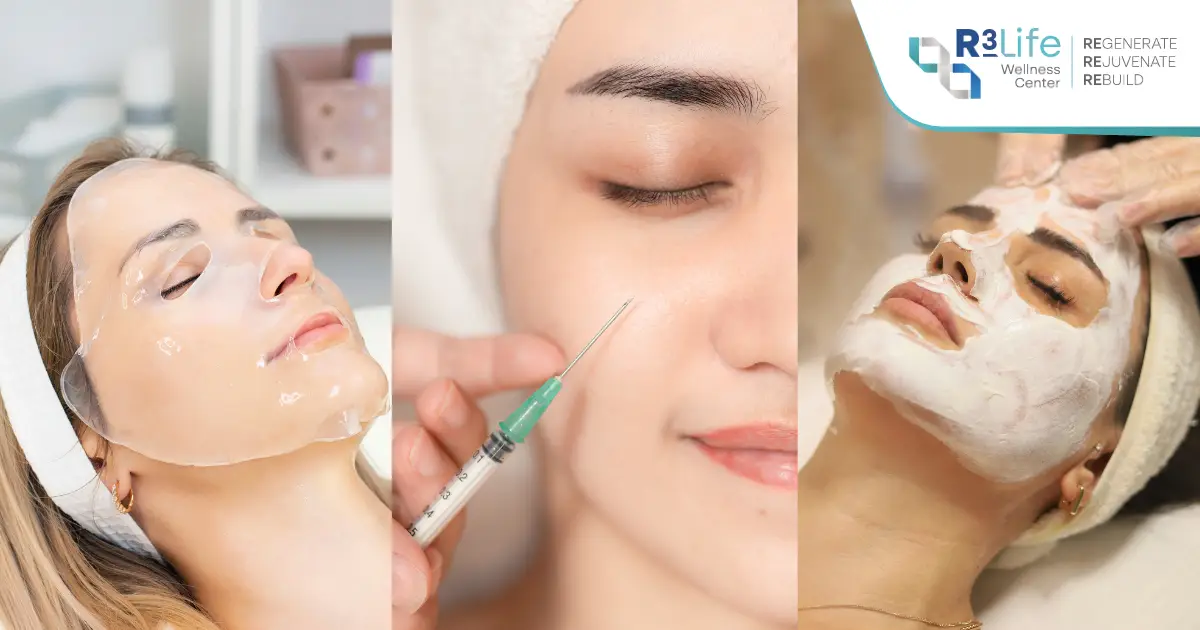
Certain skin-tightening devices use energy-based technologies to stimulate collagen production and remodeling. Injectable Skin Boosters, meanwhile, generally focus on hydration and skin quality, depending on their formulations.
MSCs are being investigated for their ability to release biological signals involved in the body's natural tissue repair processes. This has generated interest in their potential applications in cellular rejuvenation, although their effectiveness for cosmetic facial treatments is still being studied.
From a Skin Longevity perspective, the goal is not necessarily to determine which treatment is better, but to identify an approach that aligns with individual skin conditions, long-term goals, and the available medical evidence.
A Three-Step Skin Care Approach Inspired by Skin Longevity
This program combines three complementary components with distinct purposes: an investigational cellular rejuvenation approach, nutritional skin support, and post-procedure skin care.
1. 10 Million Cord Tissue-Derived MSCs — Cellular Rejuvenation
Cord tissue-derived mesenchymal stem cells (MSCs) have attracted interest in regenerative medicine because of their ability to release signaling molecules associated with the body's natural tissue repair mechanisms.
In this program, 10 million MSCs may be considered as part of an individualized treatment approach. A physician may schedule a follow-up assessment approximately 2–3 months after the procedure to evaluate any changes in skin condition. Individual outcomes may vary, and there is no clinically established timeline for visible results from cosmetic MSC injections.
Beyond cell count or treatment cost, cell quality is a key consideration. Important factors include cell viability, purity, safety testing, and culture standards, such as xeno-free culture processes that avoid animal-derived components. A higher cell count does not necessarily guarantee better results.
2. Premium Factor (Placenta for Face) — Cellular Nourishment
Premium Factor is included as an additional skin-nourishing component. Placenta-derived preparations may contain biological compounds such as amino acids and peptides, depending on the specific formulation.
These compounds are associated with various cellular functions and tissue repair processes. Amino acids also serve as essential building blocks for proteins, including collagen, which contributes to the skin's structure and elasticity.
3. Korean Sterile Hydrogel Mask — Post-Treatment Skin Recovery
The final step involves a sterile hydrogel mask from South Korea, designed to provide hydration, soothe the skin, and improve comfort after the procedure, particularly in areas that may experience temporary redness or irritation following injections.
Skin Longevity: Better Skin Tomorrow Begins with How You Care for It Today
Taking care of your skin does not have to begin only when wrinkles or sagging become noticeable. Skin Longevity emphasizes building a healthy skin foundation and maintaining skin quality over time.
Regenerative medicine and ongoing MSC research offer an emerging perspective on the future of skin care. However, decisions about stem cell-based procedures should consider the treating physician's knowledge and experience, cell quality and manufacturing standards, relevant precautions, and individual suitability. Investing in long-term skin health is not simply about correcting what you see today. It is about caring for the foundation of your skin for the years ahead. Skin Longevity begins with understanding your skin and making informed choices about how to care for it today.
Frequently Asked Questions About Stem Cell Facial Rejuvenation
1. How Long Does It Take to See Results from Stem Cell Facial Injections?
Everyone's skin health and natural repair processes are different. A physician may schedule a follow-up assessment approximately 2–3 months after the procedure to evaluate any changes in skin condition.
2. Are 10 Million Stem Cells Enough for Facial Rejuvenation, and How Often Should Treatment Be Repeated?
A physician may consider 10 million MSCs for an initial procedure, depending on the individual's assessment. Cell quality is an important consideration, including cell viability above 85%, purity, animal-free or xeno-free manufacturing processes, and appropriate production standards.
For ongoing care, a physician may consider reassessment after 6 months or 1 year, depending on the individual's skin condition and suitability.
3. Are Stem Cell Facial Injections Better Than Skin-Tightening Treatments or Skin Boosters?
Each approach works differently and serves a distinct purpose. Certain skin-tightening devices use energy to stimulate collagen production, while injectable Skin Boosters focus on improving skin quality according to their formulations.
MSCs, on the other hand, have attracted scientific interest for their biological signaling activities associated with natural tissue repair. Their effectiveness for facial rejuvenation remains under investigation.
Choosing the right approach involves considering your budget, desired results, expected timeline, concerns about the substances used and how long they remain in the body, and the precautions associated with each procedure. Ultimately, Skin Longevity is not just about achieving visible results today. It is about making informed choices that prioritize your skin's health and well-being over the long term.
 10 Best Liver Healthy Foods for Optimal Function