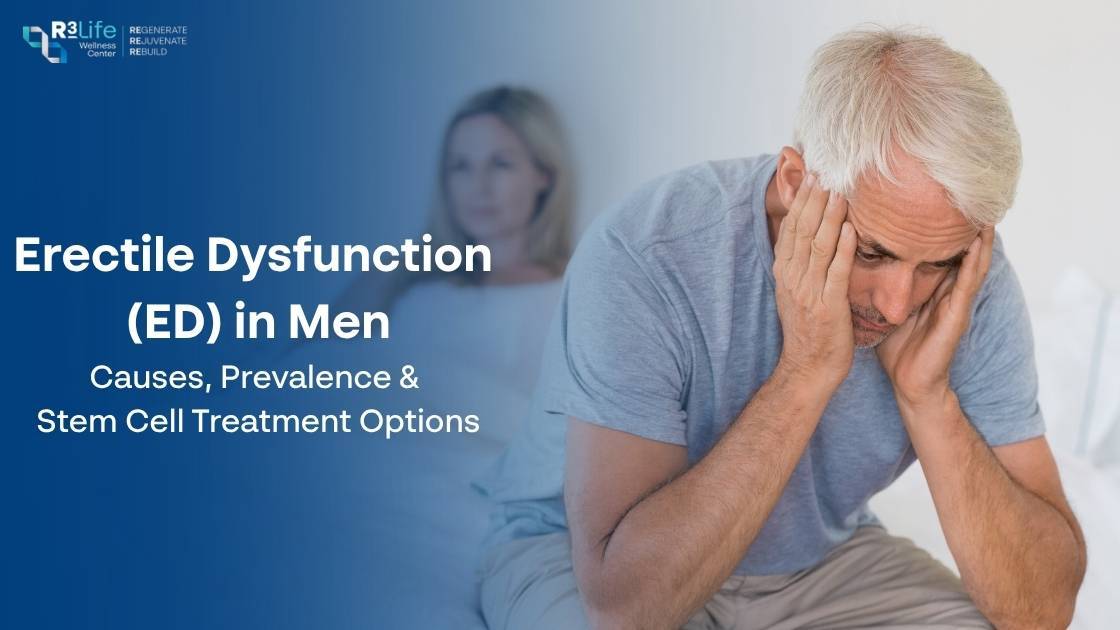
Erectile Dysfunction Treatment: Causes, Risk Factors and Stem Cell Therapy
Erectile dysfunction is not just an age problem or a confidence problem. It can involve blood vessels, nerves, hormones, stress and underlying health conditions. Learn the causes, treatment options and how stem cell therapy is being studied as part of regenerative ED care.
When the body does not respond the way the mind wants
Erectile dysfunction, often shortened to ED, is more common than most men want to admit. The silence around it is loud. Many people still imagine ED as something that only happens to older men, but the truth is more layered: erection quality can change because of blood flow, nerve signals, hormones, stress, sleep, medication, metabolic health and lifestyle.
Medically, erectile dysfunction means the consistent or recurrent difficulty in getting or keeping an erection firm enough for satisfying sexual activity. One tired night after poor sleep is not the same thing as ED. But when the problem repeats, persists or begins affecting confidence and relationships, it deserves proper medical attention.
This guide explains what causes erectile dysfunction, who is at risk, how common it is, how standard ED treatments such as Viagra or sildenafil work, and how stem cell therapy is being explored in regenerative medicine for ED. It also explains what men should ask before choosing a clinic, because hope is powerful, but vague promises are not medicine.
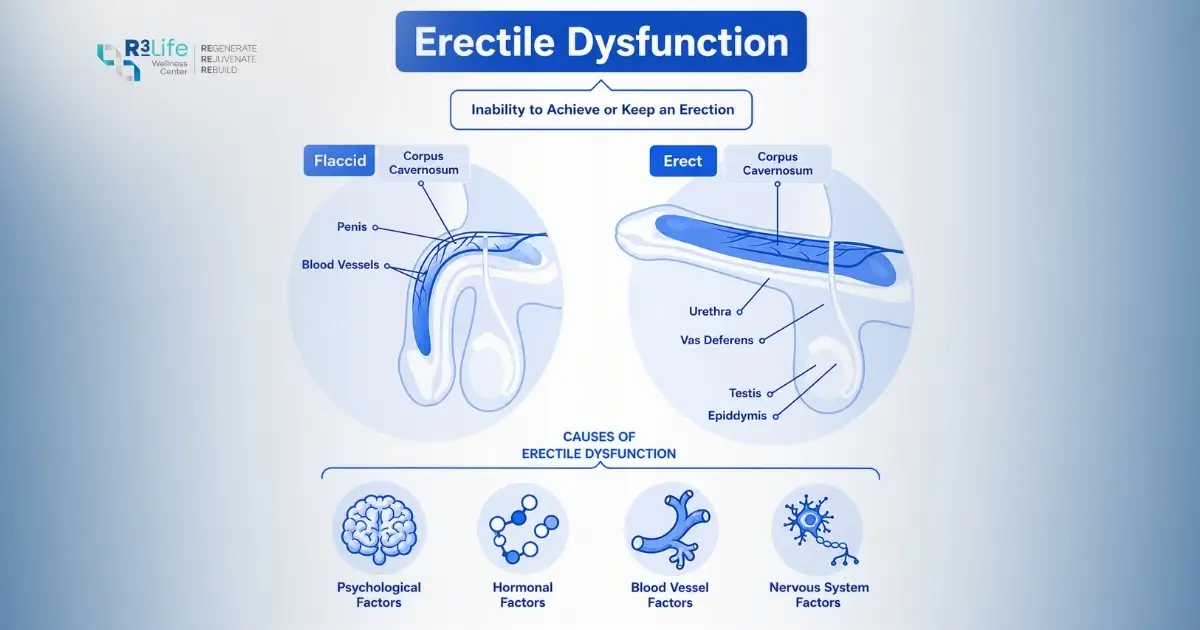
What is erectile dysfunction?
Erectile dysfunction is the ongoing inability to achieve or maintain an erection suitable for sexual intercourse. It may show up as trouble getting an erection, losing firmness too quickly, reduced erection hardness or reduced sexual confidence. It may also appear together with lower desire, anxiety about performance or relationship strain.
Occasional erection difficulty is common and does not always mean something is wrong. Persistent ED, however, can be a sign that the vascular, neurological, hormonal or psychological systems involved in sexual function need attention.
How common is ED, and who is at risk?
ED becomes more common with age, especially after 40, but age is not the whole story. Younger men can experience ED too, particularly when stress, lack of sleep, obesity, smoking, anxiety, diabetes, high blood pressure or poor cardiovascular health are part of the picture.
A useful way to think about ED is this: the penis is a small-vessel organ. When blood vessels are under strain, erection quality can be one of the first places the body whispers a warning. What is bad for the heart is often bad for erections as well.
The main risk factors include:
· Diabetes or poor blood sugar control
· High blood pressure or high cholesterol
· Obesity and metabolic syndrome
· Smoking or long-term heavy alcohol use
· Low physical activity
· Low testosterone or hormonal imbalance
· Certain medications, including some antidepressants and blood pressure medicines
· Stress, anxiety, depression and relationship tension
· Pelvic surgery, prostate treatment or nerve injury

What causes erectile dysfunction? It is not only "in your head"
Erection is a coordinated process between the brain, emotions, nerves, hormones, muscles and blood vessels. When one part of that system is disrupted, erectile function can change. Doctors usually group the causes of ED into three broad categories: organic, psychogenic and mixed.
1. Organic ED: physical causes
Organic ED means the main driver is physical. The most common physical pathway is vascular: the blood vessels that deliver blood to the penis do not work as well as they should. Diabetes can damage both blood vessels and nerves. High blood pressure and cholesterol can affect vessel flexibility. Low testosterone may reduce desire and erection quality. Some medications can also affect sexual function.
2. Psychogenic ED: stress, anxiety and mental health
The brain is not separate from the body. Chronic stress, depression, anxiety and fear of underperforming can interrupt arousal and erection. Once a man has one difficult experience, worry can create a loop: anxiety leads to erection difficulty, and erection difficulty leads to more anxiety. That loop is real, and it is treatable.
3. Mixed ED: the most common real-life pattern
Many men have a mixed pattern. For example, mild blood vessel changes may start the issue, but anxiety makes it worse. Or long-term diabetes may affect nerve signaling, while relationship pressure adds a psychological layer. The right ED treatment starts with finding the real mix, not guessing.
Why ED should be taken seriously
Erectile dysfunction is not only a bedroom problem. It can affect confidence, mood, self-esteem and relationships. It can also be an early clue that the body needs a deeper health check, especially for blood sugar, blood pressure, cholesterol, testosterone and cardiovascular risk.
That is why a discreet consultation is not a sign of weakness. It is a strategic health decision. Men do not need to wait until the problem becomes loud enough to damage their confidence.
Erectile dysfunction treatment options: from lifestyle to regenerative medicine
There is no single best ED treatment for every man. The best approach depends on the cause, severity, medical history, medications, goals and safety profile. A proper assessment may include medical history, sexual history, physical examination, blood tests and sometimes vascular or hormonal evaluation.
- Lifestyle and health optimization
The foundation of ED prevention and treatment is often the least glamorous but the most honest: improve the body that creates the erection. Smoking cessation, weight management, regular exercise, better sleep, reduced alcohol, stress care and control of diabetes or blood pressure can all support erectile function. Not flashy, but biology rarely cares about marketing sparkle.
- PDE5 inhibitors: Viagra, sildenafil, tadalafil and related medicines
PDE5 inhibitors such as sildenafil, commonly known by the brand name Viagra, and tadalafil, commonly known by the brand name Cialis, help increase blood flow to the penis in response to sexual stimulation. For many men, they work well and remain a standard first-line option. They are fast-acting compared with regenerative approaches, but they do not directly repair damaged nerves, blood vessels or smooth muscle tissue.
These medicines are not suitable for everyone. Men taking nitrates for chest pain, or men with certain heart and blood pressure conditions, should not use ED medication without medical approval.
- Regenerative medicine for ED
Regenerative medicine looks at ED from a different angle. Instead of only improving blood flow during a medication window, it asks whether damaged tissue, nerve signaling, small blood vessels and smooth muscle inside the corpus cavernosum can be supported at a deeper biological level. This is where stem cell therapy for erectile dysfunction has gained attention.
How stem cell therapy for erectile dysfunction may work
Stem cell therapy for ED is being studied because many cases of erectile dysfunction involve structural or functional changes in the penile tissue: reduced blood vessel health, nerve damage, smooth muscle loss, inflammation or fibrosis. The goal of a regenerative approach is not to create an instant erection like a pill. The goal is to support repair pathways in the tissue environment.
Research suggests several possible mechanisms:
· Angiogenesis: supporting the formation of new blood vessels and better microcirculation
· Paracrine signaling: releasing growth factors and signaling molecules that may support tissue repair
· Neuroregeneration: supporting nerve recovery and nerve signaling pathways
· Smooth muscle preservation: helping maintain the tissue needed for erection rigidity
· Anti-inflammatory effects: reducing cellular stress that may impair blood vessel and tissue function
Mesenchymal stem cells, often called MSCs, are among the most studied cell types in ED research. Sources discussed in scientific literature include adipose-derived cells, bone marrow-derived cells, umbilical cord or Wharton's jelly-derived cells and amnion-related sources. The source, processing quality, dose, delivery technique and patient selection matter enormously.
The science is promising, but it should be described accurately: stem cell therapy for ED is still an emerging and investigational area in many regulatory environments. Larger, controlled clinical trials with longer follow-up are needed before anyone can honestly claim guaranteed long-term results.
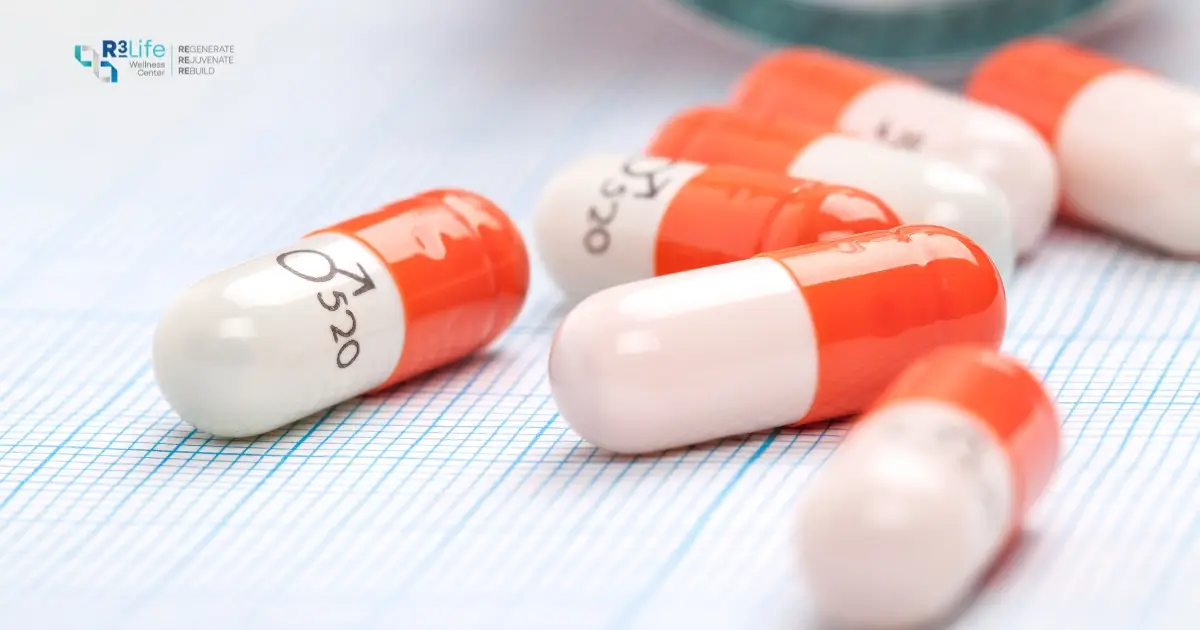
Viagra vs stem cell therapy for ED: what is the difference?
| Feature | Viagra / Sildenafil / PDE5 inhibitors | Stem Cell Therapy / Regenerative ED Care |
| Main goal | Improve blood flow during the medication window | Support tissue repair pathways and erectile function potential |
| Onset | Often works within the same day when appropriate | Usually evaluated over weeks to months |
| Mechanism | Relaxes smooth muscle and increases blood flow in response to stimulation | May support angiogenesis, nerve signaling, smooth muscle health and anti-inflammatory pathways |
| Best suited for | Many men with ED who are medically suitable for PDE5 inhibitors | Selected patients after physician assessment, especially where tissue, vascular or nerve factors are relevant |
| Limitations | Does not directly repair underlying tissue damage; not suitable with nitrates or certain conditions | Evidence is still developing; results vary; quality and protocol matter |
| Medical status | Established and widely used under medical guidance | Emerging regenerative approach; should be discussed with a qualified physician |
In simple terms: Viagra can help the system perform during a specific time window. Stem cell therapy aims to support the system itself. They are not enemies. They are different tools, and the right tool depends on the diagnosis.

What does the stem cell treatment process look like?
The exact protocol should always be determined by a physician, but a medically responsible stem cell therapy journey for ED usually includes:
1. A private medical consultation to understand symptoms, history, goals and concerns.
2. Assessment of likely ED causes, including vascular, metabolic, hormonal, medication-related and psychological factors.
3. Review of blood sugar, blood pressure, cardiovascular risk, testosterone and other relevant health markers.
4. Discussion of treatment options, including lifestyle optimization, medication, regenerative approaches or combination care where appropriate.
5. Clear explanation of cell source, preparation standards, procedure steps, expected timeline, possible risks and follow-up plan.
6. Physician-guided treatment and follow-up to monitor response and adjust the overall wellness strategy.
Some clinical studies follow patients for one to six months after treatment, and some report changes within weeks to months. However, individual outcomes can vary based on age, severity of ED, diabetes status, vascular health, smoking, testosterone, medications, cell quality and the treatment protocol.
Who may be a candidate for stem cell therapy for ED?
Stem cell therapy may be discussed for selected men whose ED appears to involve physical factors such as poor blood flow, diabetes-related nerve or vessel damage, post-surgical nerve injury or reduced response to PDE5 inhibitors. It may be less suitable when the main driver is untreated anxiety, relationship conflict, severe uncontrolled medical disease or a condition that requires urgent specialist care.
The point is not to sell every man the same treatment. The point is to identify the cause and design the safest, most logical plan. Good medicine is personalized. Bad medicine is copy-paste with a syringe.
Is stem cell therapy for ED safe?
Clinical studies on stem cell therapy for ED have reported encouraging short-term safety signals, but the evidence base remains limited by small sample sizes and short follow-up in many studies. That means safety depends on much more than the word "stem cell". It depends on medical screening, cell sourcing, laboratory standards, sterility testing, physician experience, appropriate patient selection and follow-up.
Before choosing any regenerative ED treatment, ask the clinic:
· What type of cells are used, and where do they come from?
· How are the cells screened, processed and tested?
· What standards are used to reduce contamination risk?
· Who performs the procedure, and what is their medical experience?
· What results are realistic for my case?
· What are the possible side effects or complications?
· How will my progress be measured after treatment?
A clinic that cannot answer these questions clearly is giving you fog, not medicine.
How to reduce the risk of ED before it becomes a bigger problem
Prevention is not glamorous, but it is powerful. The same habits that protect the heart often protect erection quality. Men who want better long-term sexual performance should start with the basics:
· Stop smoking, because smoking damages blood vessels and reduces blood flow.
· Exercise regularly, especially aerobic exercise and strength training suited to your health level.
· Maintain a healthy waistline and improve insulin sensitivity.
· Control blood sugar, blood pressure and cholesterol.
· Sleep enough to support testosterone, recovery and stress regulation.
· Limit alcohol and avoid recreational drugs.
· Manage stress and seek help for anxiety or depression when needed.
· Do annual checkups instead of waiting for symptoms to become severe.

Why choose R3 Life for men's wellness and regenerative ED care?
R3 Life approaches men's sexual wellness as part of whole-body vitality. Erectile function is not isolated from metabolism, vascular health, hormones, inflammation, aging, sleep, stress and confidence. That is why a modern ED treatment plan should look beyond a single pill and ask what the body needs to restore better function.
At R3 Life, the focus is on personalized assessment, regenerative wellness and cell-level rejuvenation strategies, supported by a discreet clinical experience. For eligible patients, this may include a discussion of regenerative medicine options such as stem cell therapy, along with broader wellness support such as anti-aging care, PRP, IV drip, ozone therapy and aesthetic treatments where clinically appropriate.
The difference is not only technology. It is judgment. R3 Life is built for patients who want clear explanation, privacy, quality-focused care and a plan that respects both science and the human side of confidence.
Final thoughts
Erectile dysfunction is not a verdict. It is information. It may be telling you that blood vessels, nerves, hormones, stress or metabolic health need attention. The earlier you listen, the more options you usually have.
For some men, standard ED medication may be enough. For others, a deeper regenerative wellness approach may be worth exploring. The best next step is a private medical consultation that identifies the cause and maps out a plan based on your body, not somebody else's internet promise.
If you are experiencing persistent ED, book a confidential consultation with R3 Life to discuss your symptoms, health profile and treatment options.
FAQ: Erectile dysfunction and stem cell therapy
1.What is erectile dysfunction?
Erectile dysfunction is the consistent or recurrent difficulty in getting or keeping an erection firm enough for satisfying sexual activity. Occasional erection difficulty can happen, but persistent ED should be medically assessed.
2.Can stem cell therapy help erectile dysfunction?
Stem cell therapy is being studied as a regenerative approach for ED because it may support blood vessel health, nerve signaling, smooth muscle tissue and repair pathways. Current research is promising, but more large, long-term clinical trials are needed.
3.How is stem cell therapy different from Viagra?
Viagra and other PDE5 inhibitors help improve blood flow during the medication window. Stem cell therapy aims to support tissue-level repair pathways over time. They work differently and may suit different patients depending on medical assessment.
4.How long does stem cell therapy for ED take to show results?
It is not an instant treatment. Some studies follow changes over one to six months, and some patients may notice changes within weeks to months. Results vary based on the cause and severity of ED, overall health and treatment protocol.
5.Who may be suitable for regenerative ED care?
Men with physical contributors to ED, such as vascular issues, diabetes-related damage, nerve injury or poor response to ED medication, may be candidates for discussion. A physician must assess suitability and safety first.
6.Is stem cell therapy for ED safe?
Early clinical studies report encouraging short-term safety signals, but long-term evidence is still developing. Safety depends on patient selection, cell source, processing quality, sterility, physician expertise and follow-up.
7.Can lifestyle changes improve erectile dysfunction?
Yes. Quitting smoking, exercising, improving sleep, managing weight, controlling diabetes and blood pressure, reducing alcohol and managing stress can support erectile function and overall vascular health.
8.When should I see a doctor for ED?
See a doctor if erection difficulty is persistent, worsening, affecting confidence or relationships, or if you have diabetes, heart disease, high blood pressure, low testosterone symptoms or other health concerns.
References
1. Mayo Clinic. Erectile dysfunction - Symptoms and causes. https://www.mayoclinic.org/diseases-conditions/erectile-dysfunction/symptoms-causes/syc-20355776
2. Mayo Clinic. Erectile dysfunction - Diagnosis and treatment. https://www.mayoclinic.org/diseases-conditions/erectile-dysfunction/diagnosis-treatment/drc-20355782
3. NIDDK. Definition & Facts for Erectile Dysfunction. https://www.niddk.nih.gov/health-information/urologic-diseases/erectile-dysfunction/definition-facts
4. NIDDK. Treatment for Erectile Dysfunction. https://www.niddk.nih.gov/health-information/urologic-diseases/erectile-dysfunction/treatment
5. American Urological Association. Erectile Dysfunction: AUA Guideline (2018). https://www.auanet.org/guidelines-and-quality/guidelines/erectile-dysfunction-(ed)-guideline
6. BMC Urology / PubMed Central. Stem cell therapy for erectile dysfunction: promise or reality? - a systematic review and meta-analysis of clinical trials (2025). https://pmc.ncbi.nlm.nih.gov/articles/PMC12395856/
7. International Journal of Impotence Research / PMC. Reviewing the evidence for shockwave- and cell-based regenerative therapies in the treatment of erectile dysfunction. https://pmc.ncbi.nlm.nih.gov/articles/PMC7968013/
8. FDA. Consumer Alert on Regenerative Medicine Products Including Stem Cells and Exosomes. https://www.fda.gov/vaccines-blood-biologics/consumers-biologics/consumer-alert-regenerative-medicine-products-including-stem-cells-and-exosomes
9. Asian Journal of Andrology. Lifestyle modifications and erectile dysfunction: what can be expected?. https://journals.lww.com/ajandrology/fulltext/2015/17010/lifestyle_modifications_and_erectile_dysfunction_.2.aspx
10. Google Search Central. Creating helpful, reliable, people-first content. https://developers.google.com/search/docs/fundamentals/creating-helpful-content
11. Google Search Central. FAQPage structured data guidelines. https://developers.google.com/search/docs/appearance/structured-data/faqpage
 Stem Cell Therapy in Thailand: What You Should Really Look for Before Choosing a Clinic