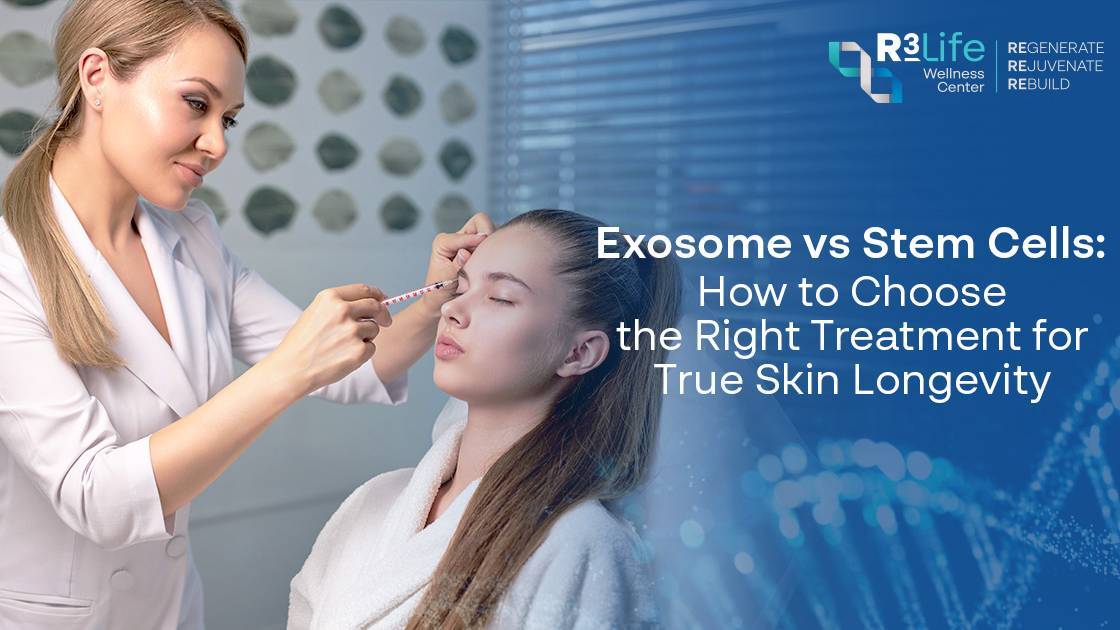
Exosome vs Stem Cells: Which Is Better for Skin Longevity & Anti-Aging?
In today’s aesthetic world, the term anti-aging treatment is everywhere. Clinics promise brighter skin, tighter texture, and faster glow.
But the conversation is evolving. The new question is not: “How can I look better today?” It is: “Will my skin still function well 5–10 years from now?”
This is the philosophy behind Longevity Beauty also known as Skin Longevity a regenerative approach focused on preserving cellular function, structural integrity, and long-term skin resilience.
Two of the most discussed treatments in regenerative aesthetics are:
- Exosome Therapy
- Stem Cell Therapy
Many people ask:
“Which is better exosome or stem cell therapy?”
The more intelligent question is:
“Which approach aligns with my long-term skin longevity strategy?”
What Is Skin Longevity? (Longevity Beauty Explained)
Skin Longevity refers to the ability of your skin to maintain:
- Strong collagen architecture
- Balanced inflammatory response
- Healthy extracellular matrix
- Effective cellular repair capacity
Research on cellular senescence (2019–2023) shows that visible aging is strongly linked to chronic inflammation and declining cellular communication — not just surface wrinkles.
True longevity beauty is not about temporary tightening. It is about supporting the biological environment of your skin.
That's where regenerative treatments like Stem Cell Therapy and Exosome Therapy enter the conversation.
Stem Cell Therapy for Anti-Aging and Structural Regeneration
Stem Cell Therapy involves the use of regenerative cells capable of:
- Self-renewal
- Cellular interaction
- Tissue repair support
According to research published in Cell Stem Cell (2018), stem cells exert regenerative effects both through direct cellular interaction and through paracrine signaling — meaning they continuously release biological signals that influence surrounding tissue.
In the context of anti-aging and skin longevity, stem cell therapy may be considered when the goal is:
- Deep structural skin regeneration
- Long-term dermal support
- Improved cellular repair capacity
- Restoration of declining tissue environment
Think of stem cells as a biological factory. They can continuously produce regenerative signals over time. This makes them more relevant in cases where there is visible structural decline — such as reduced elasticity, thinning dermis, or impaired repair function.
Exosome Therapy for Skin Rejuvenation and Cellular Signaling
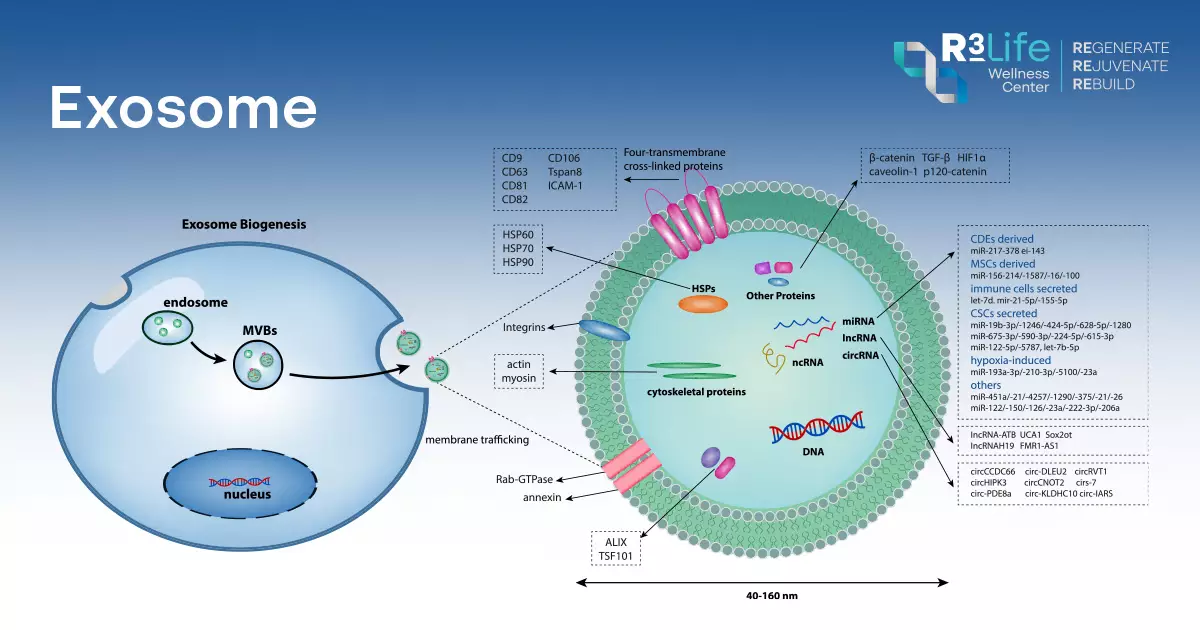
Exosome Therapy uses extracellular vesicles (30–150 nanometers) derived from regenerative cells. These vesicles contain growth factors, microRNA, and signaling molecules.
A review in Nature Reviews Molecular Cell Biology (2019) highlights the role of exosomes in:
- Modulating inflammation
- Enhancing cell-to-cell communication
- Supporting tissue signaling pathways
In aesthetic medicine, exosome therapy is often used to:
- Stimulate collagen signaling
- Reduce micro-inflammation
- Improve skin texture and tone
- Enhance recovery after microneedling or laser procedures
If stem cells are the factory, exosomes are the ready-made delivery package.
They provide immediate signaling support but do not function as ongoing regenerative producers.
This is why some patients may notice faster visible improvements in glow and texture with exosomes — particularly when structural damage is not yet advanced.
Exosome vs Stem Cells: What's the Real Difference?
Search queries like:
- Exosome vs stem cells difference
- Which is better exosome or stem cell therapy?
- Best regenerative treatment for anti-aging
often frame the comparison as a competition.
But from a Longevity Medicine perspective, it is not about superiority — it is about strategic application.
Exosome Therapy may be more suitable when:
- The skin structure is still relatively intact
- There is micro-inflammation or dullness
- The goal is enhanced collagen signaling
- The focus is skin rejuvenation and recovery
Stem Cell Therapy may be considered when:
- There is structural dermal decline
- Repair capacity is visibly reduced
- Elasticity loss is significant
- A long-term regenerative environment is desired
In many longevity protocols, both treatments can be integrated as part of a broader regenerative strategy.
Immediate Glow vs Structural Longevity
Traditional aesthetic goals focus on immediate glow. Longevity aesthetics focus on biological performance over time.
The real question becomes: Not Does my skin look better this week? But Will my skin maintain resilience over the next decade?
Structural Longevity emphasizes:
- Extracellular matrix support
- Long-term collagen stability
- Inflammation control
- Cellular communication optimization
This is where stem cell therapy and exosome therapy serve different but complementary roles.
Frequently Asked Questions about Exosome vs Stem Cells
Q: What is the main difference between exosome therapy and stem cell therapy?
A: Stem cells act like a biological factory, continuously releasing regenerative signals and supporting deep tissue repair over time. Exosomes are extracellular vesicles that deliver ready-made signaling molecules, offering immediate support but not ongoing regenerative production.
Q: Which treatment is better for anti-aging — exosomes or stem cells?
A: Neither is universally better. Exosome therapy may suit skin with intact structure, micro-inflammation, or dullness, while stem cell therapy may be considered when there is visible structural decline or reduced repair capacity. The right choice depends on your skin condition and long-term longevity goals.
Q: Can exosome and stem cell therapy be combined?
A: Yes. In many longevity protocols, the two are integrated as part of a broader regenerative strategy, with each addressing a different aspect of skin function — immediate signaling support and long-term structural regeneration. A consultation can help determine which combination fits your needs.
Choosing the Right Treatment for Your Skin Longevity Strategy
Exosome therapy is not stem cell therapy. Stem cell therapy is not exosome therapy. Both belong to the field of Regenerative Aesthetic Medicine, but they function through different mechanisms.
The right decision depends on:
- Your current skin structure
- Your inflammatory profile
- Your long-term longevity goals
- Your tolerance for advanced regenerative intervention
True longevity beauty is not about chasing trends. It is about selecting the right regenerative tool for sustained skin health.
Because real anti-aging is not about looking younger today. It is about preserving your skin's ability to repair itself for years to come.
 What is Stem Cell? A Beginner's Guide to Understanding