Stem Cell vs. NK Cell: What’s the Difference Before Choosing Cell Therapy? | R3 Life
Stem Cell vs. NK Cell in Longevity Medicine: What’s the Difference and What Should You Look For?
5 Key Takeaways
- Stem Cells and Natural Killer Cells (NK Cells) are different types of cells with different biological roles. Rather than asking which is “better,” it is more useful to consider the health objective and individual medical context.
- Mesenchymal Stem Cells (MSCs) have been studied for their role in cell-to-cell communication, the tissue environment, and processes involved in tissue repair and recovery.
- Natural Killer Cells (NK Cells) are part of the innate immune system and play a role in immune surveillance and responses to certain target cells.
- NK Cell Therapy may involve Autologous NK Cells, collected from the individual receiving them, or Allogeneic NK Cells, obtained from a donor. Understanding the source of the cells is therefore an important consideration.
- When considering Cell Therapy, cell type and cell count are only part of the picture. Cell source, preparation methods, cell quality, laboratory standards, and supporting medical evidence also matter.
When people begin exploring cell-based approaches to health and longevity, Stem Cells and NK Cells are often discussed together. This can create the impression that they belong to the same category or can simply be substituted for one another. Biologically, however, they are different types of cells with very different roles.
A useful way to understand the distinction is that MSCs are widely studied in relation to cell communication, the tissue environment, and processes involved in tissue repair, while NK Cells are immune cells involved in immune surveillance.
Stem Cells: More Than Simply “Creating New Cells”
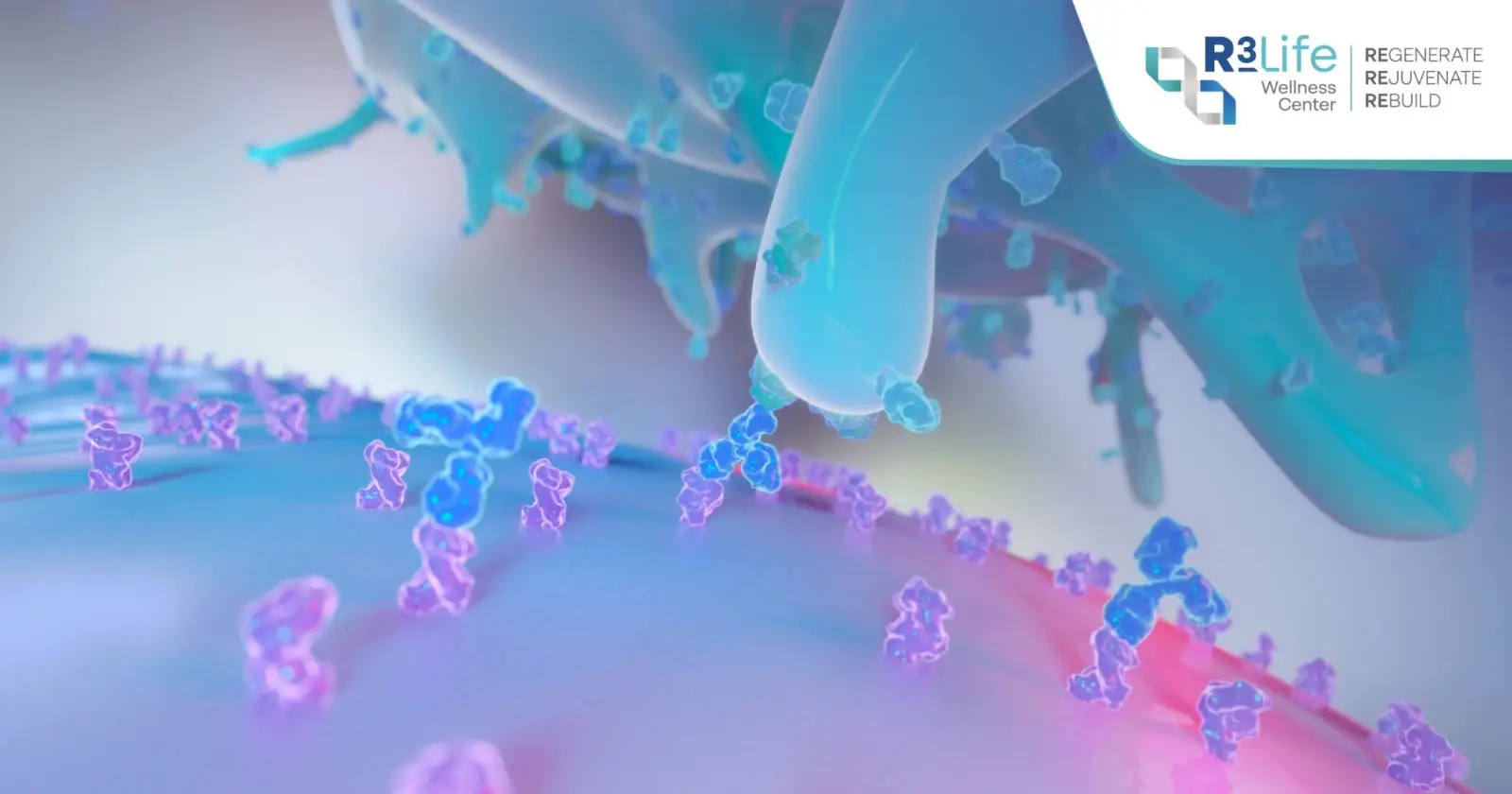
Stem Cell is a broad term covering several types of cells. One group that has received considerable attention in regenerative medicine is Mesenchymal Stem Cells (MSCs), which can be derived from different sources, including cord tissue and amnion.
Research into MSCs has explored their secretion of signaling molecules such as cytokines and growth factors, their communication with surrounding cells, and their influence on the tissue environment through mechanisms including paracrine signaling.
For this reason, describing Stem Cells simply as cells that travel to a damaged area and “create new tissue” is an oversimplification. In the context of MSCs, current research places considerable emphasis on how these cells interact with their surrounding environment as part of complex biological recovery processes. This should not be interpreted as MSCs simply creating or replacing entire organs.
NK Cells: The Immune Surveillance Side of the Story
Natural Killer Cells (NK Cells) are lymphocytes that form part of the innate immune system. They help recognize and respond to certain target cells, including virus-infected cells and cells displaying abnormal signals.
When an NK Cell recognizes an appropriate target, it can release substances such as perforin and granzymes, which contribute to processes that lead to target-cell death.
In the context of Cell Therapy, research has explored both Autologous NK Cells, collected from the person receiving the cells, and Allogeneic NK Cells, which come from a donor.
One advantage of Autologous NK Cells is compatibility. Because the cells originate from the individual receiving them, this approach reduces donor-recipient compatibility considerations associated with cells obtained from another person.
However, this does not mean that Autologous NK Cells are universally “better” or appropriate for everyone. Cell quality and function can be influenced by several factors, including an individual’s underlying health and the processes used to collect, expand, prepare, and assess the cells.
So, if you are considering NK Cell Therapy, one of the first questions worth asking is:
“Are the NK Cells collected from me, or do they come from a donor?”

Stem Cell or NK Cell: Which Is “Better”?
There is no useful universal answer to which is “better,” because the two involve different biological mechanisms.
If the question relates to the tissue environment and biological processes involved in recovery, the discussion may involve MSCs and Tissue Repair. If the focus is immune function and the surveillance of target cells, the discussion may instead involve NK Cells and Immune Surveillance.
The fact that these cells work through different biological mechanisms also does not automatically mean that using both approaches together will produce a synergistic or superior result. Appropriateness depends on factors including the type and source of cells, preparation methods, dose, route of administration, timing, intended objective, and the evidence supporting their use in that particular context.
Before Choosing Cell Therapy, Don’t Look Only at the Cell Count
Numbers such as 10 million, 50 million, or 100 million cells are easy to compare. But cell count alone does not determine the quality or appropriateness of Cell Therapy.
A healthcare provider offering transparent information should be able to explain where the cells come from, how they are prepared, how cell viability and sterility are assessed, and what quality-control systems and laboratory standards are involved.
For MSCs, useful questions include the source of the cells, such as cord tissue or amnion, how they are prepared and cultured, their viability and sterility results, and the rationale behind the proposed cell quantity and route of administration.
For NK Cells, look beyond the total cell count. Ask whether the cells are Autologous or Allogeneic, how NK Cell proportion and viability are assessed after expansion, and whether technologies such as Flow Cytometry are used to characterize and assess the cells.
Laboratory standards can also provide useful information. Depending on the laboratory and the scope of its work, you may encounter standards or quality systems such as ISO 15189, ISO 15190, ISO 20387, ISO Class 5, UK NEQAS, or clean-room standards.
However, seeing the name or logo of a standard is not enough. A more useful question is:
“What exactly does this accreditation or quality standard cover, and is that scope relevant to the Cell Therapy being considered?”
These standards do not guarantee the clinical outcome of Cell Therapy. They can, however, provide additional information about laboratory processes and quality-control systems, allowing people to look beyond price and cell count alone.
A Good Healthcare Provider Shouldn’t Start by Telling You Which Cells to Choose
Symptoms such as fatigue, slower recovery, or frequent infections do not automatically mean that someone should choose Stem Cell or NK Cell Therapy. The same concerns may be associated with sleep, nutrition, medications, infections, hormones, underlying medical conditions, or other factors.
Before considering Cell Therapy, the process should therefore begin with your health history, objectives, relevant test results, and a physician assessment. The aim is to understand whether a particular approach is relevant to what you want to address, what evidence supports it, and what limitations or risks should be understood before making a decision.
This reflects the approach to health and longevity that R3 Life emphasizes: the decision should begin with the individual, not the type of cell.
By considering your health history, objectives, relevant test results, and overall medical context, a physician can help determine whether a particular approach is relevant, what evidence supports it, and what limitations or risks should be understood before making a decision.
Frequently Asked Questions
1. Is an NK Cell a Stem Cell?
No. An NK Cell is an immune cell. Although NK Cells ultimately originate through blood-cell development from hematopoietic stem cells, once they have developed into NK Cells, they are specialized immune cells rather than Stem Cells in the same sense as MSCs.
2. Are Autologous NK Cells Better Than Donor NK Cells?
It cannot be concluded that one is universally “better” in every respect. Autologous NK Cells have an advantage in terms of compatibility because the cells originate from the person receiving them. However, the appropriate cell source also depends on the intended purpose, cell quality, preparation process, individual health context, and relevant medical evidence.
3. What Should I Ask First Before Considering Cell Therapy?
Start with: “Why is this approach being considered for me?”
Then ask where the cells come from, how they are prepared and quality-checked, whether viability and sterility are assessed, what laboratory standards apply, and what evidence and limitations are relevant to the specific objective being considered.

 The Early Signs of Cognitive Decline Most People Miss