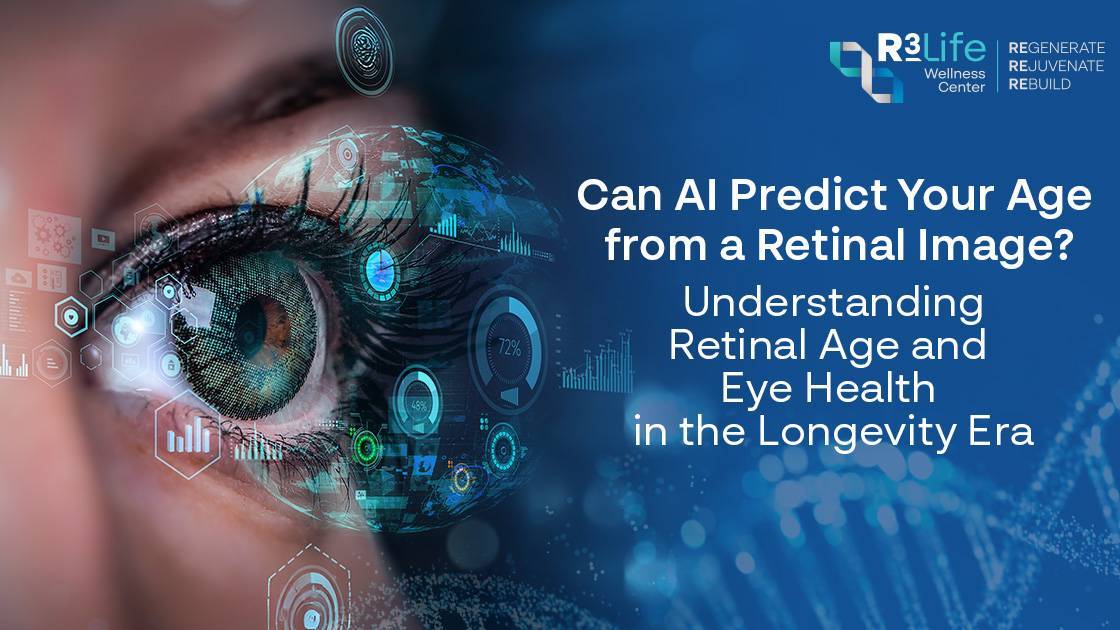
Can AI Predict Your Age from a Retinal Image? Understanding Retinal Age and Eye Health in the Longevity Era
Can AI Predict Your Age from a Retinal Image? Understanding Retinal Age and Eye Health in the Longevity Era
5 Key Takeaways
- AI can learn patterns from retinal images and estimate Retinal Age, an age prediction based on features within the retina.
- The Retinal Age Gap is the difference between a person’s actual age and the age estimated by AI from a retinal image.
- Research has found associations between a larger Retinal Age Gap and certain long-term health outcomes, but it cannot currently diagnose disease or predict an individual’s future health with certainty.
- Eye health depends on more than technology or supplements. Sleep, screen habits, nutrition, metabolic health, UV protection, and appropriate eye examinations all matter.
- Dietary supplements may support overall eye health, particularly when nutritional intake is insufficient, but they are not medicines and should not replace a balanced diet or medical evaluation.
When AI Sees More Than the Human Eye
Could a single retinal image reveal whether the body is showing patterns more commonly seen in someone older or younger?
Researchers are increasingly using Artificial Intelligence (AI) to analyse retinal photographs and identify subtle patterns that may be associated with age and overall health. This work forms part of a broader shift in Longevity Medicine, Preventive Healthcare, and Precision Medicine towards detecting biological changes before they become clinically apparent.
However, retinal age technology remains an emerging research field. It is not yet a standard medical test that can definitively determine whether someone is ageing faster or predict which diseases they will develop.
What Is Biological Age?
Age can be understood in at least two ways.
Chronological Age refers to the number of years since birth.
Biological Age is a broader concept that attempts to estimate how the body is changing or ageing compared with other people of the same chronological age.
Researchers may study biological ageing using several types of data, including:
- Blood biomarkers
- Epigenetic clocks
- Inflammation and metabolic health indicators
- Wearable health data
- Medical imaging, including retinal photographs
No single biomarker can fully define biological age. Results must therefore be interpreted alongside other clinical and lifestyle information.
Why Is AI Interested in the Retina?
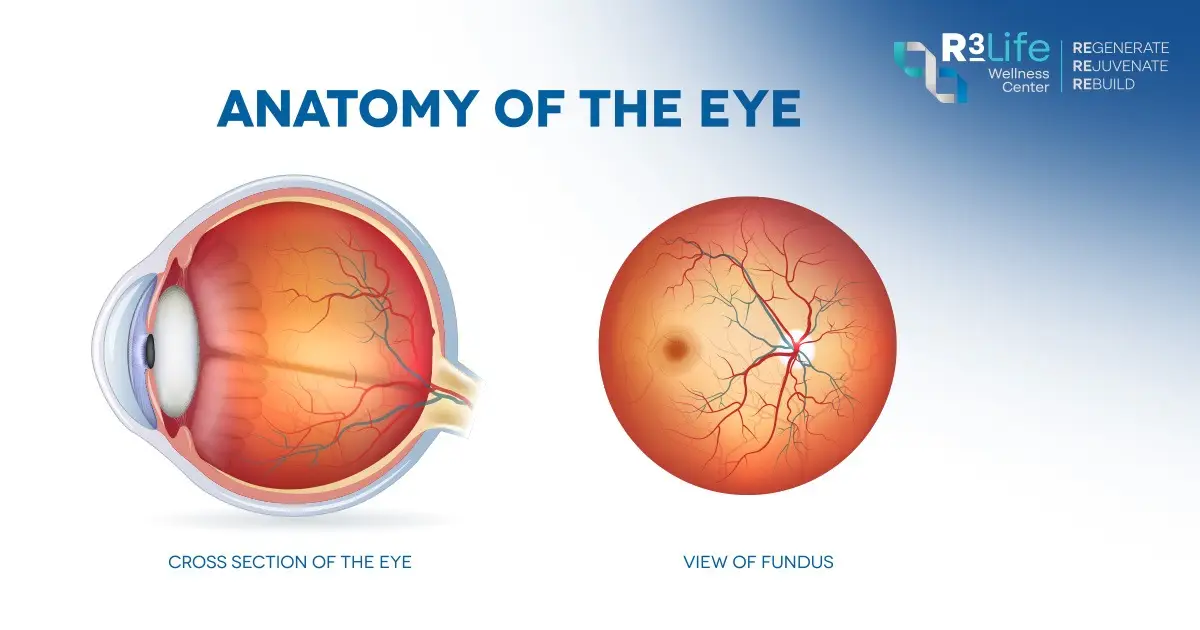
The retina is a layer of neural tissue at the back of the eye containing a dense network of small blood vessels. Unlike many internal tissues, it can be photographed non-invasively.
Retinal images may therefore provide information about:
- Microvascular structure
- Neural tissue
- Circulatory health
- Age-related changes
- Patterns associated with systemic health
AI does not directly “see ageing.” Instead, it learns statistical relationships between visual patterns in retinal images and the age or health information of the populations used to train the model.
Research published in Age and Ageing has shown that deep-learning models can estimate age from retinal images. These estimates are being investigated as potential biomarkers of biological ageing and future health risk, although further validation is required across more diverse populations and clinical settings.
What Are Retinal Age and Retinal Age Gap?
Retinal Age is the age estimated by an AI model based on features found in a retinal image.
The Retinal Age Gap is the difference between Retinal Age and Chronological Age.
For example:
A person is 45 years old, but the AI estimates a Retinal Age of 52.
The Retinal Age Gap would be +7 years.
This may indicate that the retinal image contains patterns more commonly observed in older individuals within the model’s reference population. It does not mean the person has physically aged seven additional years or will definitely develop a disease.
Retinal Age should therefore be viewed as an experimental biomarker rather than a direct measurement of biological age.
What Has Research Found About the Retinal Age Gap?
Research using retinal images from the UK Biobank has found that a larger Retinal Age Gap was statistically associated with a higher risk of certain long-term health outcomes, including all-cause mortality at the population level.
However, an association does not prove cause and effect.
A higher Retinal Age Gap does not necessarily cause illness, and it cannot currently predict the future health of an individual with certainty.
For this reason, Retinal Age Gap is best understood as a biomarker under investigation rather than a clinical diagnosis.

Can You Get a Retinal Age Test Today?
AI-based retinal analysis tools are being developed, but Retinal Age is not yet a routine or universally accepted health assessment.
Results may vary depending on:
- Image quality and camera type
- The AI model used
- The population used to train the model
- Existing eye conditions
- General health status
- The calculation and interpretation method
Before Retinal Age can become a standard clinical tool, further research is needed to establish accuracy, consistency, clinical relevance, and appropriate medical guidelines.
Will AI Replace Doctors?
AI can analyse large amounts of information and detect patterns that may be difficult for humans to identify. However, it cannot replace medical history-taking, physical examination, symptom assessment, clinical judgement, or an understanding of the individual patient.
Its most appropriate role is likely to be as a clinical decision-support tool, not as an independent medical decision-maker.
The future of Longevity Medicine will likely involve combining:
- AI-based imaging
- Biomarkers
- Wearable technology
- Multi-omics data
- Medical history
- Lifestyle information
- Physician assessment
Together, these data may support more personalised risk assessment and health planning.

How Can We Protect Eye Health Beyond AI?
Technology may help us understand the eye more deeply, but everyday habits remain essential.
Practical ways to support eye health include:
- Taking regular breaks from screens
- Blinking frequently to reduce dryness
- Adjusting screen distance, brightness, and position
- Getting adequate sleep
- Wearing sunglasses with UV protection
- Managing blood sugar and blood pressure
- Supporting overall metabolic health
- Scheduling eye examinations according to personal risk
Regular eye checks are particularly important for people with diabetes, hypertension, a family history of eye disease, or ongoing visual symptoms.
Digital Eye Strain is commonly associated with prolonged screen use, reduced blinking, dry eyes, glare, and poor screen ergonomics. Current evidence does not support the idea that blue light from ordinary digital devices is the main cause of permanent retinal damage.
What Role Do Nutrients Play in Eye Health?
Nutrients such as Lutein and Zeaxanthin are found in the macular pigment at the centre of the retina. They are involved in filtering certain wavelengths of light and supporting antioxidant defence within the eye.
However, the benefits of supplements depend on several factors, including:
- The formulation
- Dosage
- Nutritional status
- Existing health conditions
- The population being studied
For example, the AREDS2 formulation has evidence supporting its use in certain individuals with specific stages of age-related macular degeneration. It is not intended to prevent AMD in every healthy adult and should not replace ophthalmic care.
A nutrient-rich diet remains the foundation of eye health, while supplements may be considered when dietary intake is inadequate or when recommended by a healthcare professional.
Bright Eyes Prime: Nutritional Support for Everyday Eye Health
Bright Eyes Prime is a dietary supplement formulated with nutrients commonly associated with eye and antioxidant support, including:
- Lutein and Zeaxanthin
- Optiberry™ and Anthocyanins
- N-Acetyl-L-Carnitine
- Grape Seed Extract
- Vitamin A Complex
- Vitamins C and E
It may be considered as part of an overall eye-health routine, particularly for people with high visual demands or those who may not obtain sufficient nutrients from their daily diet.
Bright Eyes Prime is not a medicine and is not intended to diagnose, treat, prevent, or delay eye disease.
From Vision to Whole-Body Health
AI retinal imaging suggests that the eye may contain more information about health and ageing than we previously recognised.
Yet no single image, biomarker, supplement, or technology can provide a complete picture of an individual’s health.
At R3 Life Wellness Center, we continue to follow developments in AI, biomarkers, Longevity Medicine, and Preventive Healthcare while prioritising scientific evidence, clinical relevance, and personalised care.
The goal of longevity is not simply to calculate how old the body appears. It is to use reliable information to make better decisions for long-term health, function, and quality of life.
FAQ
1.Can AI really predict age from a retinal image?
AI can estimate Retinal Age by analysing patterns within a retinal photograph. However, it cannot yet determine a person’s true biological age or predict their future health with certainty.
2.Does a higher Retinal Age Gap mean I am ageing faster?
Not necessarily. Retinal Age Gap is based on a statistical model and should be interpreted alongside overall health, clinical findings, and the limitations of the AI system.
3.Can long periods of screen use damage the retina through blue light?
Current evidence does not show that blue light from ordinary digital screens is a major cause of permanent retinal damage. Prolonged screen use may still contribute to dry eyes, eye strain, headaches, and temporary blurred vision because people tend to blink less and use screens for extended periods.
4.Are eye-health supplements necessary?
Eye-health supplements are not medicines and are not necessary for everyone. However, they may help fill nutritional gaps when a person does not obtain enough of certain nutrients from food.
Taking an appropriate supplement may therefore be more beneficial than leaving a genuine nutritional deficiency unaddressed, particularly for people with high visual demands or limited dietary variety. Supplements should still be used in the recommended amount and alongside a balanced diet, good sleep, healthy screen habits, and appropriate eye examinations.
 Instant Rejuvenation for Those Aged 30+ With Anti-Aging Vitamin Drip at R3 Life Wellness