Stem Cell Hair Loss Treatment: The Honest Truth
Key Highlights
- Stem cell therapy theoretically helps with hair loss but is still investigational and is not an approved treatment for hair loss anywhere in the world.
- It may support existing but weakened hair follicles, though results vary and no honest provider can guarantee regrowth.
- Stem cell hair therapy cannot revive follicles that are completely lost, and it is not a replacement for a hair transplant.
- PRP, which uses your own blood, is currently the better-studied regenerative option for early to moderate hair thinning.
- The best candidates are people with early to moderate thinning whose follicles are weakening but still present.
Quick Summary
Search "stem cell hair growth" and you will find bold promises everywhere. The reality is more nuanced, and understanding it can save you both disappointment and money.
Stem cell therapy for hair loss is a genuinely promising area of research, but it is still experimental. It can support certain types of hair thinning, yet it has clear limits that marketing rarely mentions.
This is the honest version. Here is what stem cell hair therapy can realistically do, what it cannot, and how to know whether you are a suitable candidate.
What Stem Cell Therapy for Hair Loss Actually Does
To set realistic expectations, it helps to understand what these treatments are actually working on.
How It Works at the Follicle Level
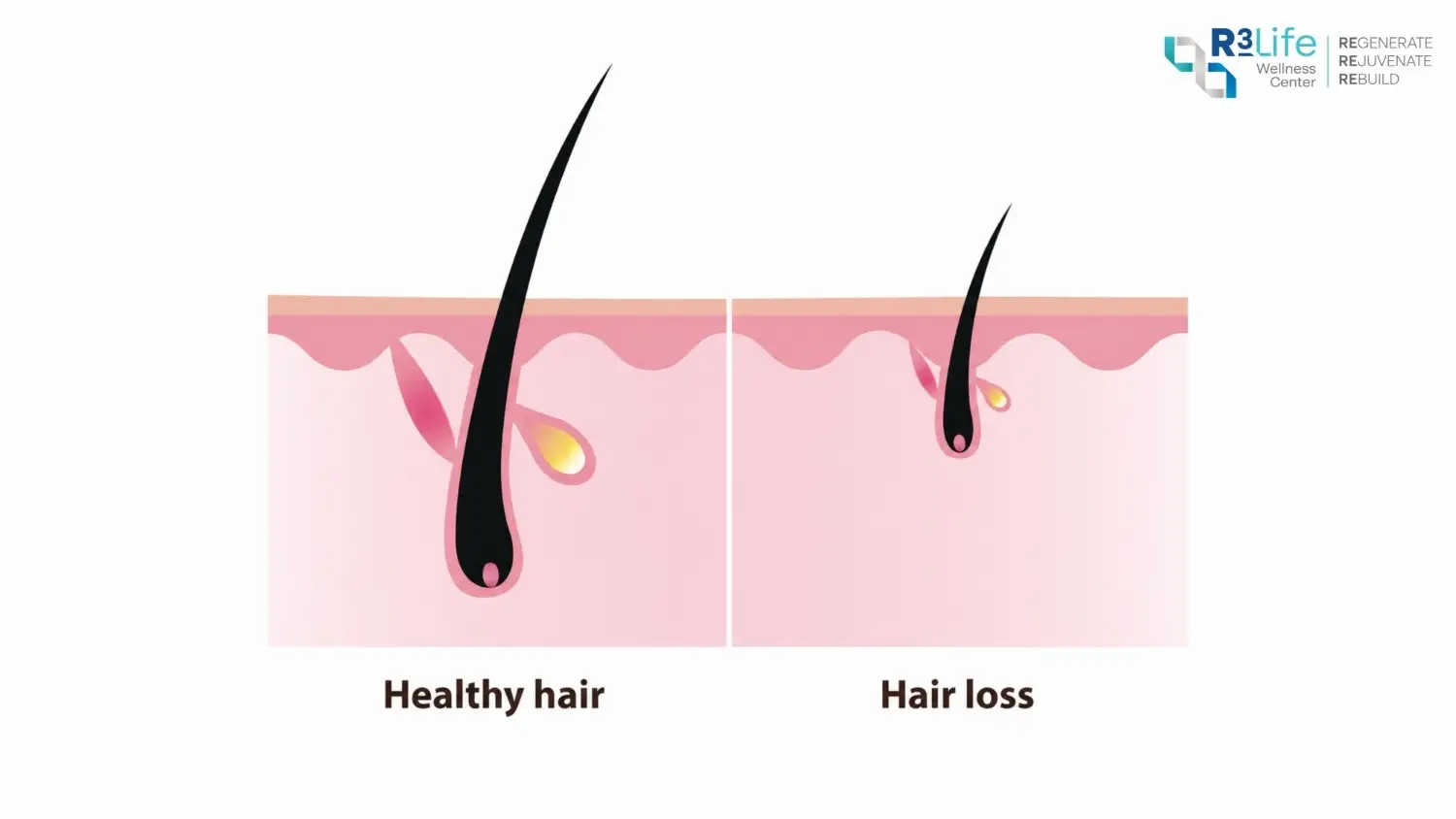
Hair grows from tiny structures in the scalp called follicles. In common pattern hair loss, follicles do not simply vanish. They gradually shrink, a process known as miniaturization, producing thinner and weaker hairs over time.
Regenerative therapies aim to support these struggling follicles rather than create new ones.
- They deliver growth factors and signaling molecules that may encourage follicles to stay in their active growth phase.
- They may help improve the local environment and blood supply around the follicle.
The goal is to help existing follicles work better, not to manufacture hair from nothing.
The Realistic Outcomes Patients Report
When it works, the effect is usually improvement rather than transformation.
- Some people notice thicker, denser hair and reduced shedding.
- Results build gradually over months and are not guaranteed.
- Maintenance sessions are often needed to sustain any benefit.
Because the research is still early and results vary from person to person, honest clinics describe potential improvement, never certainty.
Why It Is Not a Hair Transplant Alternative
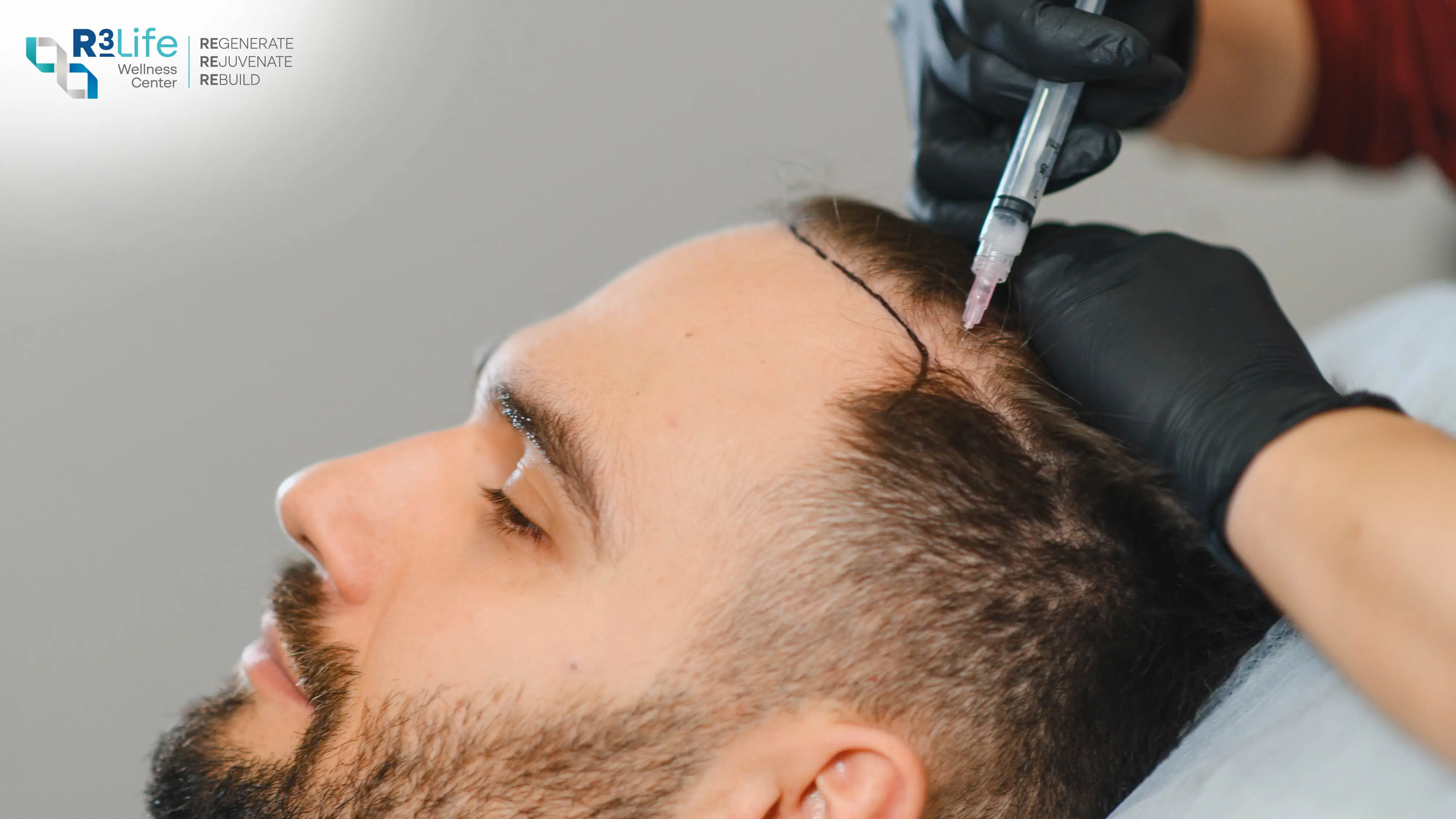
It is important not to confuse the two. A hair transplant physically relocates hair grafts from a donor area, usually the back of the head, into thinning or bald areas, and remains the established option for restoring hair where it has genuinely been lost.
Stem cell and regenerative therapies work differently. They support follicles that are still present but weakening. For someone with significant bald areas, regenerative therapy on its own is unlikely to be the answer.
The two also differ in what they ask of you. A transplant is a surgical procedure performed under anaesthesia, with a recovery period afterwards, and its results depend on the quality of your donor hair, the number of grafts, the surgeon's technique, and how well the hair you keep is looked after over the years. Regenerative therapy is non-surgical, but it works only where living follicles remain. Neither is a shortcut, and neither removes the need for long-term care.
The distinction comes down to purpose. Regenerative therapy aims to improve the environment around existing follicles and slow the progression of thinning. A hair transplant moves healthy follicles from where they are plentiful to where they are not, adding real hair to an area that has none. One works with what remains, the other relocates what survives.
What Stem Cell Hair Therapy Cannot Do
Dead Follicles Cannot Be Revived
This is the single most important truth in this field. Once a follicle has been completely lost, no current treatment, including stem cell therapy, can bring it back.
- Regenerative therapy can support follicles that are struggling but still alive.
- It cannot regrow hair from areas that have been smooth and bald for years.
This is why timing matters so much, and why acting earlier tends to leave more options open.
Why Managing Expectations Matters More Than the Treatment Itself
The biggest source of disappointment in hair restoration is not the treatment. It is unrealistic expectations.
A good outcome is often modest but meaningful: less shedding, improved density, and healthier-looking hair. Anyone promising a full head of hair from a few sessions is overselling. Understanding this from the start is what turns a treatment into a satisfying experience rather than a letdown.
The Cost Reality — and Why Bangkok Changes the Equation
Why Access and Affordability Drive Medical Tourism for Hair Restoration
Hair restoration is rarely a one-time event. Regenerative treatments often involve multiple sessions and ongoing maintenance, which is why access and value matter to most people considering them.
Thailand has become a well-established destination for wellness and medical tourism, and Bangkok in particular offers international-standard clinics alongside the ability to combine treatment with travel.
- Advanced regenerative treatments are readily accessible in modern, professionally run settings.
- Many visitors value being able to consult, begin treatment, and plan follow-up around their own schedule.
Rather than focusing on price alone, the sensible approach is to weigh the quality of care, the honesty of the advice, and whether the treatment genuinely suits your situation.
Who Is a Realistic Candidate for Stem Cell Hair Therapy
These treatments are not right for everyone, and the difference between a good and a poor candidate usually comes down to timing.
Early to Moderate Hair Thinning — The Sweet Spot
Regenerative hair therapies tend to work best for people whose hair loss is still in its earlier stages.
- Visible thinning or widening part lines, rather than large bald areas
- Follicles that are weakening but still producing some hair
- A wish to slow loss and support the hair that remains
People in this group have the most to gain, because there are still living follicles to support.
A Non-Surgical Option for Those Not Ready for Surgery
Not everyone considering hair restoration is prepared to have a procedure, and that is a reasonable position to take.
- Regenerative therapies such as PRP and stem cell treatment are non-surgical, performed in a clinic setting without anaesthesia or a recovery period.
- For people in the early stages of thinning, this can be a way to act sooner rather than waiting until the situation is more advanced.
- Starting with a non-surgical approach also leaves every other option open later.
One caveat matters here. Choosing a non-surgical route because it feels easier does not change what it can achieve. If your hair loss has reached the point where a transplant is the appropriate answer, regenerative therapy will not substitute for one, and an honest consultation will tell you so.
What a Consultation at R3 Life Wellness Center Covers
A proper assessment is the honest starting point, and it is where realistic expectations are set.
At R3 Life Wellness Center, a hair consultation typically includes:
- A review of your hair loss pattern, history, and overall health.
- An honest discussion of whether regenerative therapy is likely to help in your case.
- Guidance on suitable options, which may include PRP (Hair), a well-studied regenerative treatment that uses your own blood to support the scalp, and stem cell therapy as a newer, still-evolving approach.
Treatments are delivered by registered nurses and the medical team, with outcomes framed realistically. If a transplant or another route would serve you better, honest guidance matters more than making a sale.
Frequently Asked Questions about Stem Cell Hair Loss Treatment
Q: Is stem cell therapy for hair loss approved?
A: No. There is currently no approved stem cell hair loss treatment anywhere. These therapies are considered investigational, meaning they are still being studied, and any claim of an "approved stem cell treatment" for hair is inaccurate.
Q: Can stem cell therapy regrow hair on a completely bald scalp?
A: No. Once follicles are fully lost, no current treatment can bring them back. Regenerative therapies support follicles that are weakened but still alive, which is why they work best for early to moderate thinning.
Q: Is PRP or stem cell therapy better for hair loss?
A: PRP currently has more research behind it as a regenerative option for hair thinning, while stem cell therapy is newer and still evolving. A consultation can help determine which, if either, suits your situation.
Q: How long until I see results from stem cell hair growth treatments?
A: Results, when they occur, build gradually over a few months rather than overnight. They vary between individuals and often require maintenance sessions, so patience and realistic expectations are essential.
Q: Is stem cell hair therapy a permanent solution?
A: No treatment for pattern hair loss is truly permanent without ongoing care. Regenerative therapies may help maintain and improve existing hair, but sustaining results generally requires follow-up over time.
Conclusion
Stem cell therapy for hair loss sits in an exciting but early stage of medicine. It may genuinely help the right person with early to moderate thinning, yet it is not a miracle, not a transplant replacement, and not a way to revive follicles that are already gone. The honest truth is that expectations matter as much as the treatment.
If you are exploring your options and want a straight answer about what might actually help, the team at R3 Life Wellness Center can guide you. To learn more or arrange a consultation, visit https://r3lifewellness.com or message R3 Life Wellness Center on WhatsApp at +66 88 689 8888.
 Stem Cell Therapy in Thailand: What You Should Really Look for Before Choosing a Clinic