5 Important Health Metrics from Apple Watch, Garmin, and Wearable Devices
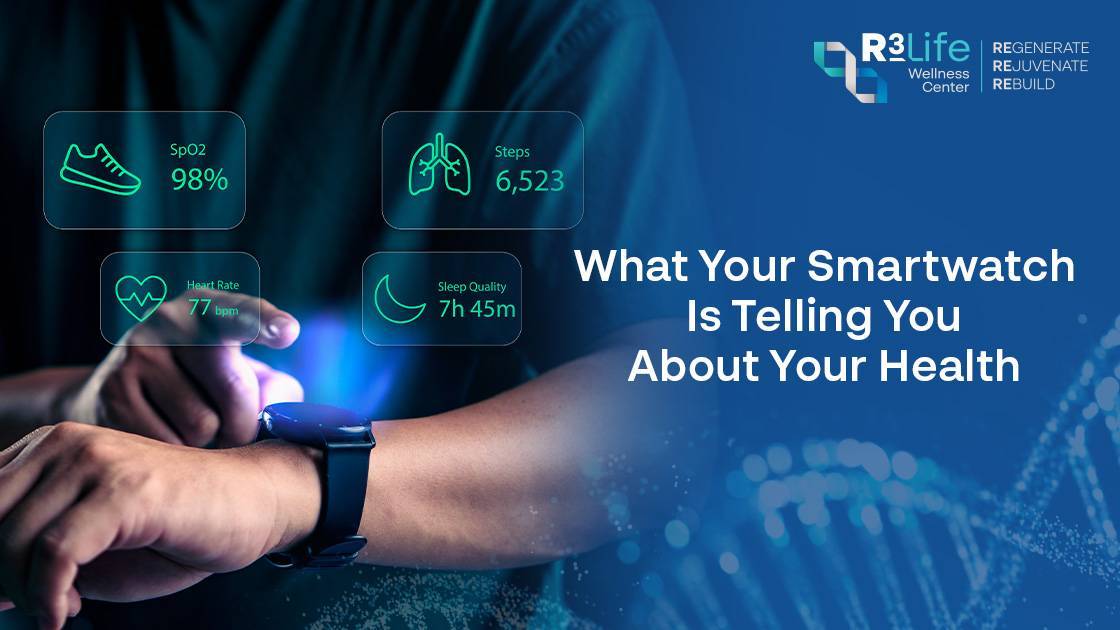
What Your Smartwatch Is Telling You About Your Health
5 Important Health Metrics from Apple Watch, Garmin, and Wearable Devices
In the past, health tracking usually meant visiting a hospital once a year for a check-up. Today, wearable devices like the Apple Watch, Garmin, and Whoop allow us to monitor our body’s signals every day.
From HRV and resting heart rate to VO₂ max and sleep quality, these health metrics can provide valuable insights into your recovery, stress levels, fitness, and overall well-being.
However, these numbers only become meaningful when we understand how to interpret them correctly.
In this article, we’ll explore 5 important health metrics measured by smartwatches and wearable devices, what they may reveal about your body, and how to use them to support better long-term health.
Key Takeaways
- Health is not defined by a single number, but by the overall condition of your body
- Your personal baseline matters more than population averages
- Trends are more important than one-time measurements
- Wearables are powerful tools for observation, not diagnosis
- Effective health optimization combines data with medical insight
1. HRV (Heart Rate Variability)
A Key Indicator of Stress and Recovery
Heart Rate Variability (HRV) measures the variation in time between each heartbeat. Many wearable devices, including Apple Watch and Whoop, use HRV to estimate recovery and stress resilience.
In general, HRV values around 20–60 ms are commonly seen in adults, but what matters most is your personal trend over time.
- A decreasing HRV may reflect stress, fatigue, poor sleep, or insufficient recovery
- An improving HRV may indicate better recovery and nervous system balance
How to Improve HRV
- Prioritize quality sleep
- Reduce chronic stress
- Avoid overtraining
- Give your body enough recovery time

2. Resting Heart Rate (RHR)
What Your Resting Heart Rate Says About Your Health
Resting Heart Rate (RHR) reflects how efficiently your heart functions while at rest.
Typical resting heart rate ranges:
- 60–80 bpm → commonly seen in adults
- 50–60 bpm → often found in physically fit individuals
More important than the number itself is how it changes relative to your baseline.
- A rising resting heart rate may signal stress, fatigue, illness, or incomplete recovery
How to Support a Healthy Resting Heart Rate
- Exercise consistently
- Improve sleep quality
- Manage stress levels
- Avoid excessive physical strain
3. VO₂ Max
A Measurement of Cardiovascular Fitness and Oxygen Capacity
VO₂ Max estimates how efficiently your body uses oxygen during exercise. Many smartwatches now estimate VO₂ Max using heart rate and movement data.
Average VO₂ Max ranges:
- Men: ~35–45
- Women: ~30–40
Higher VO₂ Max levels are generally associated with better cardiovascular health and overall fitness. However, smartwatch VO₂ Max readings are estimates and should not replace laboratory testing.
How to Improve VO₂ Max
- Regular cardio exercise
- Interval training
- Increasing overall physical activity

4. Sleep Quality
Your Body’s Most Important Recovery System
Wearable devices can now track:
- Sleep duration
- Deep sleep
- Heart rate during sleep
- Respiratory rate
Deep sleep typically accounts for around 15–25% of total sleep time. The goal is not just to sleep longer, but to recover more effectively.
How to Improve Sleep Quality
- Maintain a consistent sleep routine
- Reduce screen exposure before bed
- Optimize your sleep environment
- Limit caffeine and alcohol late in the day
5. Respiratory Rate
An Early Warning Sign Many People Overlook
Respiratory rate measures how many breaths you take per minute while at rest.
Typical resting respiratory rate:
- 12–20 breaths per minute in adults
An increase from your normal baseline may signal:
- Infection
- Fatigue
- Poor recovery
- Increased physical stress
How to Support Recovery
- Prioritize rest
- Avoid pushing through fatigue
- Monitor trends alongside HRV and resting heart rate

One Important Thing to Understand: There Is No “Perfect” Health Number for Everyone
Although standard reference ranges exist, every person has a different physiological baseline.
What matters most is:
- Understanding your normal patterns
- Monitoring changes over time
- Focusing on trends rather than isolated measurements
Are Smartwatches Accurate for Health Tracking?
Smartwatches and wearable devices make health tracking more accessible and continuous than ever before. But it’s important to understand:
- Most metrics are generated using algorithms
- Different brands use different calculation methods
- Consumer wearables are not medical-grade diagnostic devices
Wearable data should therefore be used as an early signal — not a final medical conclusion.
From Tracking Numbers → To Understanding Your Body
Wearable devices are excellent at helping people notice patterns and body signals.
But the real value comes from understanding:
- What those signals actually mean
- How your body is responding
- And what actions should come next
At R3 Life, we believe better health is not just about collecting more data but about understanding your body correctly through personalized assessment and medically appropriate guidance.
Because long-term health should feel informed, sustainable, and individualized not based on guessing from numbers alone.
FAQ
1.What is a good HRV score?
A “normal” HRV varies significantly between individuals. For many adults, values between 20–60 ms are common, but your personal trend is more important than comparing your number to others.
2.Is Apple Watch HRV accurate?
Apple Watch can be useful for tracking HRV trends over time, but it is not intended for medical diagnosis.
3.What is a healthy resting heart rate?
For most adults, a resting heart rate between 60–80 bpm is common. Physically active individuals may naturally have lower values.
4.Is smartwatch VO₂ Max reliable?
Smartwatch VO₂ Max readings are estimates based on heart rate and movement data. While not as accurate as laboratory testing, they can still be useful for tracking fitness trends.

 Summer Drip Guide: Which IV Is Right for You Before Songkran?