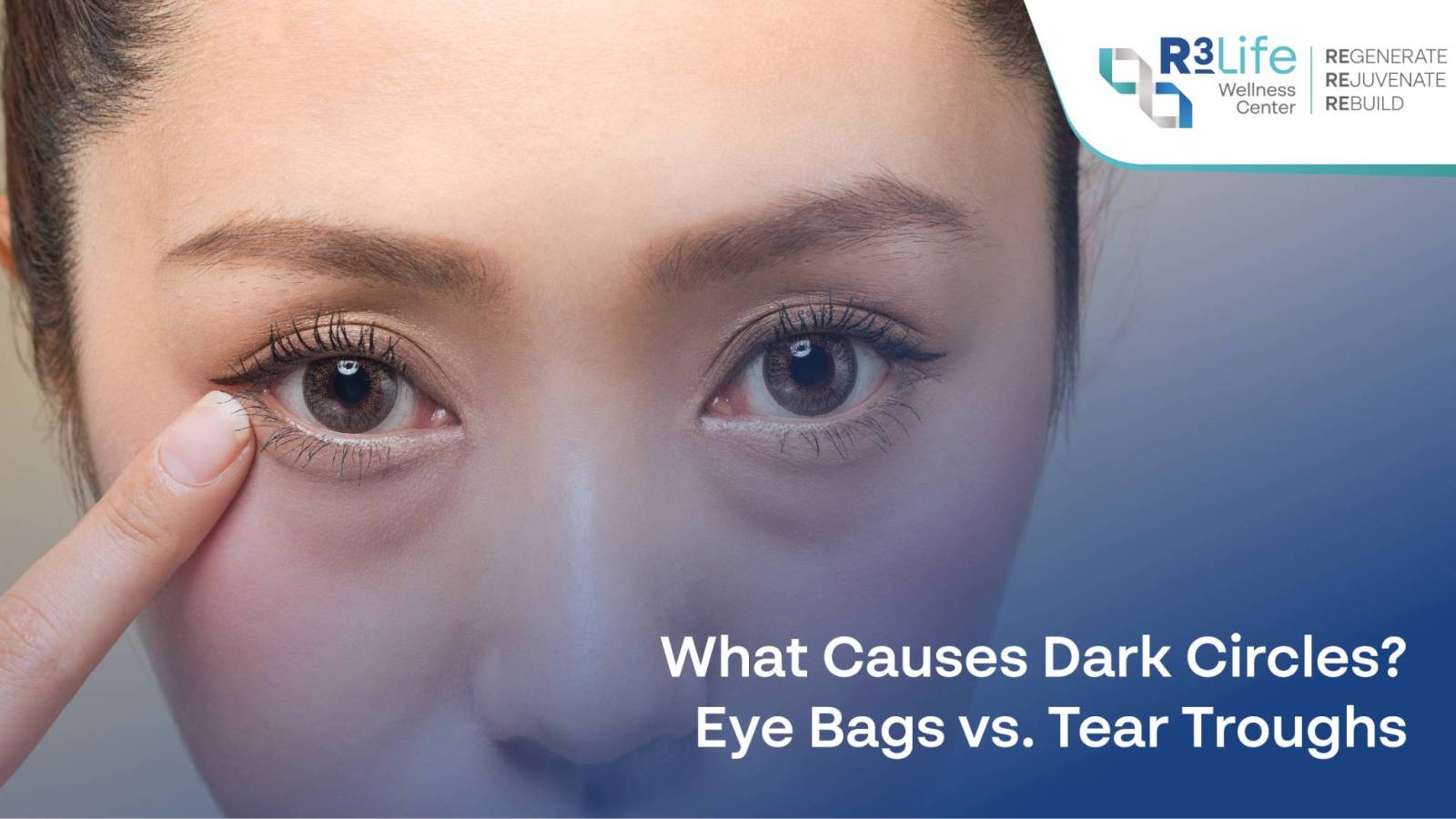
What Causes Dark Circles? Eye Bags vs. Tear Troughs | R3 Life
Dark Circles Aren’t Always Caused by Lack of Sleep: What to Check Before Choosing a Treatment
5 Things to Know Before Choosing a Treatment for Dark Circles
- Dark circles do not have a single cause. They may be related to facial structure and hollows, pigmentation, thin skin, visible blood vessels, or several factors at the same time.
- Under-eye bags and tear troughs are not the same problem, although both can make the under-eye area appear darker or more tired.
- Surgery is not appropriate for every type of dark circle. It may be considered for certain structural concerns, such as prominent fat pads, excess skin or eyelid laxity.
- Genetics can play a role, but they are not the whole explanation. Getting more sleep may therefore not resolve dark circles when the main cause is structural or pigment-related.
- Identifying the cause should come before choosing a procedure. One person may have several overlapping concerns, and each may require a different approach.
“I’m Sleeping Enough. Why Do I Still Have Dark Circles?”
Because what we commonly call “dark circles” may not be caused by lack of sleep in the first place. If you have a deep tear trough, light can create a shadow even after a full night’s sleep. If the skin is thin, underlying blood vessels may contribute to a bluish or darker appearance. Allergies, itchy eyes and repeated rubbing may also contribute to irritation and pigmentation.
Medically, dark circles can involve pigmentary, vascular and structural factors, as well as a combination of several causes (Mixed Type). This is why two people who both appear to have “dark circles” may not benefit from the same treatment.
Under-Eye Bags, Tear Troughs or Pigmentation: What’s the Difference?
Under-eye bags involve fullness of the lower eyelid area, such as protruding fat, which can create a shadow beneath the bulge. A tear trough is a depression along the transition between the lower eyelid and cheek. Light falling across this hollow can create a shadow even when the skin itself is not significantly darker.
Pigmentation or thin skin is another issue. If the skin itself is darker, or underlying blood vessels are visible through thin skin, simply filling the hollow will not necessarily remove the discoloration. Importantly, all three concerns can occur at the same time.

When Is Lower Eyelid Surgery an Option?
Lower blepharoplasty may be considered when a physician or surgeon identifies structural concerns suitable for surgery, such as prominent lower eyelid fat, excess skin or eyelid laxity. However, surgery does not address every cause of dark circles. If pigmentation, thin skin or allergies are major contributors, discoloration related to these factors may remain even after the eye bags have been treated.
Assessment therefore involves more than determining whether you “have eye bags.” The physician may also consider areas of fullness and hollowness, excess skin, eyelid support and the transition between the lower eyelid and cheek.
What If You Don’t Need Surgery?
1. Deep Tear Troughs: Filler
For people with prominent tear troughs and suitable anatomy, a physician may consider filler to restore volume and soften the transition between the lower eyelid and cheek. However, the under-eye area has thin skin and important anatomical structures, so existing eye bags, swelling, skin laxity and previous filler should be assessed first. Inappropriate treatment may result in swelling, lumps or other complications.
At R3 Life, filler treatments are performed by physicians who assess the under-eye structure, skin characteristics, swelling and previous treatments before determining whether adding volume is appropriate. Clients can also verify the product before treatment.
2. Mild Skin Laxity: Thermage Eye
For people concerned about mild skin laxity around the eyes that does not require surgical correction, a physician may consider radiofrequency (RF) technology to support skin tightening. Thermage Eye is one monopolar RF option, but it does not address every cause of dark circles. It is therefore important to first determine whether skin laxity is actually contributing to the concern.
At R3 Life, Thermage Eye is performed by physicians, and clients can verify the device and number of shots before and after treatment.

3. Thin Skin or Skin-Quality Concerns
If the main concern involves thin-looking skin or fine lines, a physician may consider treatments focused on skin quality, such as Juvelook or Collaju, depending on individual suitability. However, if the main problem is a deep tear trough, prominent eye bags, pigmentation or allergies, improving skin quality alone may not address the entire concern.
Instead of starting with “Which treatment is best?”, a more useful question may be: “What is actually causing what I see under my eyes?”
Why Under-Eye Care at R3 Life Starts With Understanding the Cause
At R3 Life, under-eye care does not begin by choosing a treatment. It begins by assessing whether the main concern involves a deep tear trough, under-eye bags, skin laxity, skin quality, or a combination of factors. The physician can then consider whether adding volume, addressing skin quality, using an energy-based treatment, or exploring another approach may be appropriate.
Our medical team includes a physician with postgraduate training in Clinical Dermatology in the UK, as well as physicians who have received training related to under-eye filler injection and the management of injectable complications. The goal is therefore not simply to answer “Which treatment should I have?” but to help you understand why a particular option may be appropriate for your under-eye concern and what its limitations are.

Frequently Asked Questions (FAQ)
1. I’ve had under-eye filler before. Can I still have another treatment?
Possibly, but the previous filler, amount injected, time since treatment and current condition of the under-eye area should be assessed first. If you still have swelling, lumps or unevenness, bring the product name, amount and treatment date to your consultation if available.
2. How many treatments will I need to see results?
It depends on the underlying cause and the treatment selected. There is no single number of sessions that applies to everyone. A physician should first identify the main concern and then discuss an appropriate treatment plan and timeframe for assessment.
3. If I have several under-eye concerns, do I need several treatments at once?
Not necessarily. Having a tear trough together with thin skin or mild laxity does not mean everything needs to be treated at the same time. A physician may recommend addressing the main concern first and then reassessing whether anything else requires treatment.
 Why Do You Look Tired at 35? The Answer May Not Be Your Skin | EMFACE & Healthy Aging Guide