What Is Immunosenescence? Why Some People Recover Slowly Before They Are Old | R3 Life
Learn about immunosenescence, or immune system aging, which may occur earlier than expected. Understand the role of Longevity Medicine and preventive healthcare in supporting long-term health and recovery.
Why Do Some People Recover More Slowly at 35 Than Others at 55? Understanding Immunosenescence and Immune System Aging
5 Key Points You Should Know
- Immunosenescence refers to changes in the immune system that may affect energy, recovery, and long-term quality of life.
- Sleep, stress, inflammation, and lifestyle may influence immune health as much as chronological age.
- Changes in immune function may appear as fatigue, slower recovery, or getting sick more often.
- Preventive healthcare helps identify imbalances before they develop into future health problems.
- R3 Life focuses on personalized health assessment to select the most suitable care approach under the supervision of a medical team specializing in Longevity Medicine.

Are You Aging by Age or by Lifestyle?
Everyone knows that as we get older, the body naturally changes.
Wounds may heal more slowly. Recovery may take longer. Daily energy may no longer feel the same.
But what is interesting is that these changes do not happen to everyone at the same speed.
Some people at 55 can still travel, work hard, exercise, and live life with strength and vitality.
Meanwhile, some people at only 35–40 may begin to feel that they recover more slowly, feel tired more easily, get sick more often, or no longer feel as refreshed as before.
The question is…
Are these changes really caused by “age” alone?
Recovery Capacity May Matter More Than the Age on Your ID Card
Today, researchers in Healthy Aging and Longevity Medicine are beginning to look at health from a different perspective.
Not everyone ages at the same speed.
Even when chronological age increases equally, the body’s ability to recover from stress, lack of sleep, travel, exercise, or illness may vary greatly from person to person.
This explains why some people can maintain good energy and quality of life even as they grow older, while others begin to feel that their body no longer responds the same way, even though they are still relatively young. One important factor related to this difference is the changing function of the immune system.
When the Immune System Can Age Too
In the field of Longevity Medicine, one concept has received increasing attention: Immunosenescence, or the gradual change of the immune system over time.
Today, Immunosenescence is being discussed more widely because the immune system does not only protect the body from infections. It also plays a role in regulating inflammation, supporting physical recovery, and monitoring abnormal cells — all of which are important components of Healthy Aging and Longevity.
Immunosenescence does not simply mean getting sick more often. It also includes the body’s reduced ability to respond to stress, inflammation, and recovery demands as efficiently as before.
The immune system plays an important role in:
- Responding to infections
- Repairing tissues
- Regulating inflammation
- Supporting physical recovery
- Monitoring abnormal cells
When these systems begin to change, many people may start to feel that:
- They sleep but do not wake up refreshed
- Recovery becomes slower
- They feel tired more easily
- Illness takes longer to recover from
This may happen even when general health checkup results still appear to be within the normal range.
Signs That May Suggest Your Immune System Is Changing
Although Immunosenescence cannot be diagnosed from symptoms alone, many people may begin to notice certain changes in their body, such as:
- Getting sick more often or recovering more slowly than before
- Sleeping enough but still not feeling refreshed
- Feeling more easily fatigued than before
- Taking longer to recover after exercise
- Feeling that the body no longer handles stress as well as before
Of course, these symptoms can be caused by many different factors and should be assessed by a physician to identify the related causes appropriately.
Inflammaging: Silent Inflammation That May Happen Without You Knowing
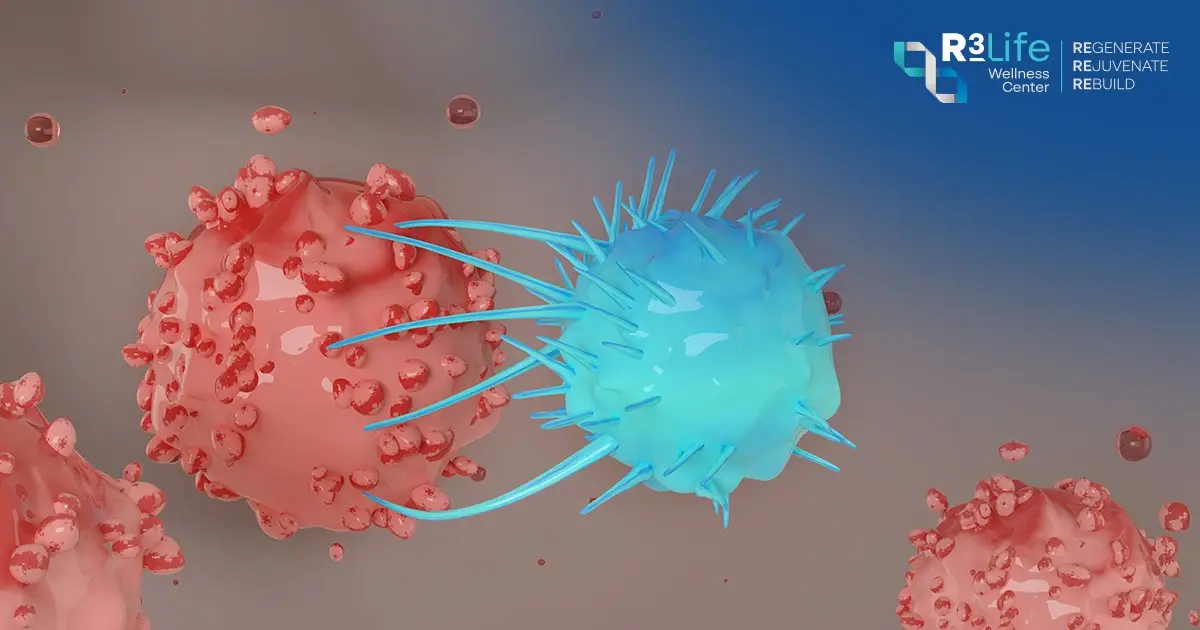
Another important concept closely connected to Immunosenescence is Inflammaging, or chronic low-grade inflammation that continues quietly inside the body over time.
Unlike inflammation from infection or injury, which is usually easy to notice, Inflammaging often develops silently and accumulates over a long period.
Factors that may be involved include:
- Insufficient sleep
- Chronic stress
- Obesity
- Highly processed foods
- Lack of exercise
- Imbalanced metabolic health
Today, Inflammaging is recognized as one of the key mechanisms associated with the aging process and many chronic diseases.
Immunosenescence May Begin Earlier Than You Think
Many people think immune system aging is only an issue for older adults.
But in reality, although Immunosenescence is associated with increasing age, researchers now understand that lifestyle factors may also accelerate the loss of recovery capacity earlier than expected.
Chronic late nights, long-term stress, frequent travel, continuous overwork, poor-quality nutrition, and chronic inflammation can all affect immune health in the long term.
This is why some people in their 30s or 40s may begin to feel that their body no longer responds the same way, even though they are not yet considered elderly.
Waiting Until Disease Appears May Be Later Than You Think
One common misconception is: “If I am not sick, I must be healthy.”
But in reality, changes in immune function may begin many years before disease symptoms appear.
This is why Preventive Medicine and Longevity Medicine focus on caring for health from an early stage.
The goal is not only to treat disease after it happens, but to help preserve the body’s potential, resilience, and quality of life for as long as possible.

How Does R3 Life View Immune Health Differently?
At R3 Life Wellness Center, we believe there is no single formula that works for everyone.
A person who feels tired easily may not need the same care plan as someone who recovers slowly, or someone who wants to support immune health and Healthy Aging in the long term.
For this reason, our medical team begins by understanding each individual’s health information, test results, and personal goals before selecting the most suitable care approach.
Under the supervision of physicians trained in ABAARM and ILM, we focus on a preventive health perspective — identifying imbalances that may affect energy, recovery, and quality of life before they develop into future health problems.
We also place importance on in-depth health assessment, including blood tests, evaluation of key vitamins and minerals, metabolic health assessment, and body composition analysis, to help create a more detailed overview of each person’s health.
Currently, R3 Life offers more than 30 IV Therapy programs to support different health needs, from energy support, recovery, immune health, and metabolic health to Healthy Aging and Longevity.
Because we believe that people with similar symptoms may not have the same root cause, and they should not always receive the same care plan.
Long-term health does not begin with choosing the most popular program. It may begin with understanding what your body truly needs and receiving proper guidance from physicians who can see your health from a comprehensive perspective.
FAQ
1. Is Immunosenescence a disease?
No. Immunosenescence is not a disease, but a process of change in the immune system that occurs over time. It may affect recovery, stress response, and overall long-term health.
2. If I am still young, should I be concerned about Immunosenescence?
Although Immunosenescence is more common with increasing age, lifestyle factors such as sleeping late, chronic stress, overwork, and lack of proper health care may also affect the body’s recovery capacity.
3. How does R3 Life support immune health?
R3 Life begins with a comprehensive health assessment to identify factors that may affect energy, recovery, and immune health. After that, the medical team will consider the most suitable approach for each individual, which may include lifestyle adjustment, nutritional support, personalized supplementation, or IV Therapy designed according to each person’s health goals.
4. What options are available for supporting immune health and long-term recovery?
In the era of Longevity Medicine, there are several approaches to supporting immune health and long-term recovery, depending on each individual’s health condition and personal goals. Examples of options that have received attention include:
- Vitamin D3 Injection from Germany
For individuals with vitamin D deficiency or those at risk of deficiency. Vitamin D plays an important role in immune system function, bone health, and overall wellness.
- ImmuneActive Vitamin D3 5,000 IU + Vitamin K2 (MK-7 All-Trans)
An oral formula designed to support immune health, bone health, and vascular health. It is suitable for ongoing daily wellness support.
- Complete VitaMineral
A vitamin and mineral program designed to replenish essential nutrients related to energy, recovery, and overall body function.
- Ozone Therapy
Another option that may be considered as part of a personalized wellness plan to support sleep quality, recovery, and overall vitality under medical supervision. By supporting oxygen availability and utilization, Ozone Therapy may be included in a broader approach to recovery and wellness based on each individual’s health assessment.
- NK Cell Therapy
A Cellular Wellness approach using Natural Killer Cells, or NK Cells, which are part of the body’s natural immune system. NK Cells play a role in monitoring abnormal cells and infected cells. Today, NK Cell Therapy has gained attention among people interested in Healthy Aging, Immune Wellness, and long-term preventive healthcare.
At R3 Life, we place great importance on medical standards in every step, especially in NK Cell Therapy. Immune health is assessed through NK Cell Activity Test and Lymphocyte Subset Analysis before receiving the service. We also work with laboratories certified by international standards such as UK NEQAS, ISO 15189, ISO 15190, and ISO 20387, together with Flow Cytometry technology for detailed immune cell analysis. This helps physicians plan care more appropriately for each individual.
 RSV, a Contagious Respiratory Disease That Can Be Prevented By Boosting Immunity