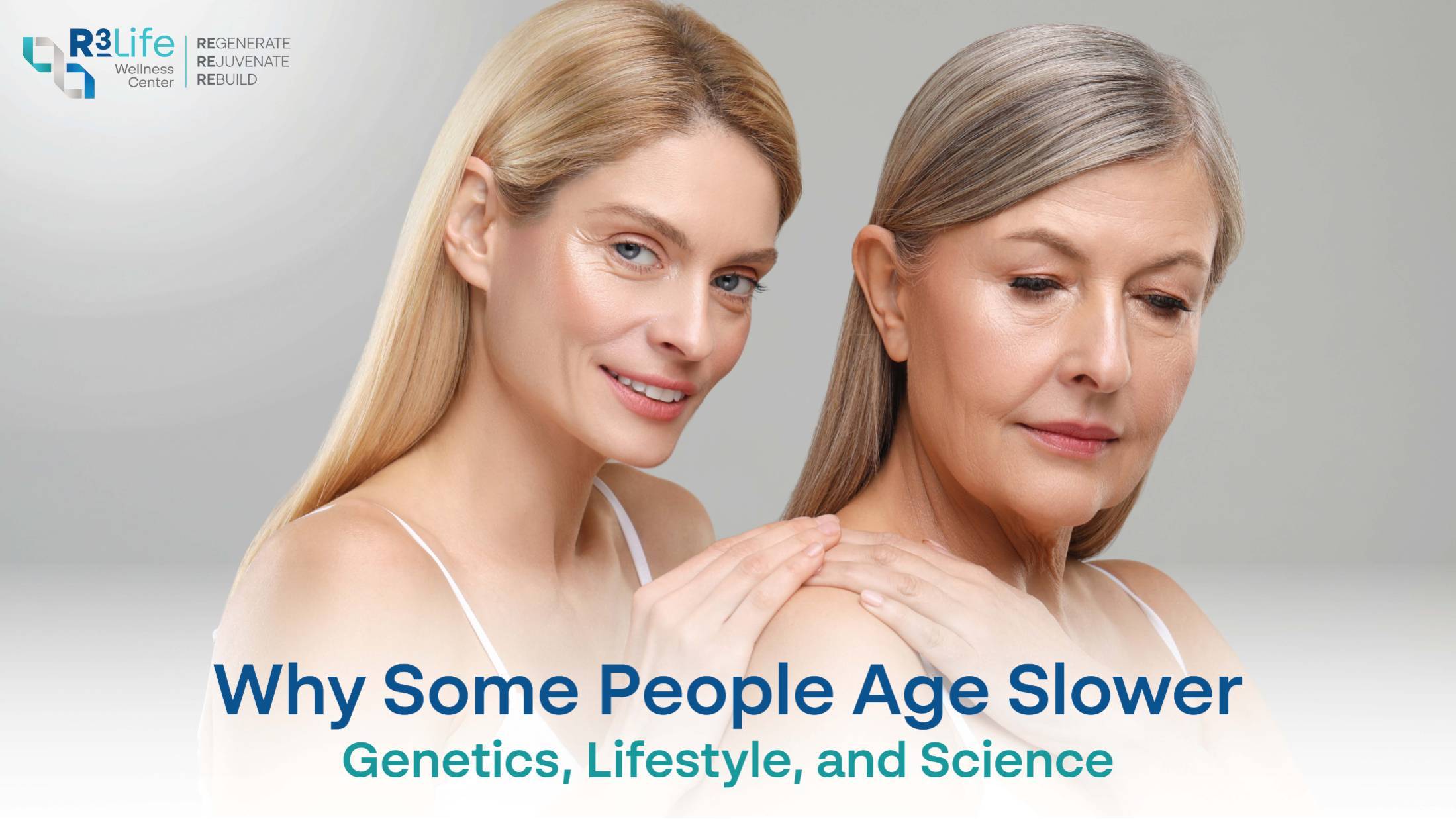
Why Some People Age Slower: Genetics, Lifestyle, and Science
Key Highlights
- Genetics explain only ~20–30% of aging — most differences come from biology, lifestyle, and measurable internal markers.
- NAD+, chronic inflammation, and oxidative stress are key drivers of aging, all shifting with age regardless of how healthy you feel.
- Biological age ≠ chronological age — people of the same age can age very differently, and it’s clinically measurable.
- Proactive screening (metabolic, cancer, cellular markers) shows your true internal health — not assumptions.
- When lifestyle isn’t enough, targeted interventions like NAD+ IV and stem cell therapy can help slow aging at the cellular level.
Introduction — Not All Bodies Age the Same Way
Two people. Same age on paper. One looks and feels a decade younger than the other.
Most people assume that the gap comes down to genetics — good genes, lucky draw, not much you can do about it. Science tells a more useful story. Genetics sets a framework, but the internal biological environment you carry determines how quickly or slowly that framework deteriorates. And unlike your DNA, your biological environment is measurable, addressable, and — to a meaningful degree — within your control.
This article explains what actually drives the difference between people who age slowly and those who don't, what the science behind slower aging looks like at a cellular level, and how to move from assumptions about your health to evidence about it.
What Actually Determines How Fast You Age
Genetics — How Much Does It Really Matter?
Genetics is a real factor in aging — but a smaller one than most people assume. Research consistently estimates that inherited genetic variation accounts for roughly 20–30% of the difference in how people age. The remaining 70–80% is driven by biological and environmental factors that accumulate over a lifetime — and most of them are modifiable.
What genetics does influence is your baseline susceptibility: how efficiently your cells repair DNA damage, how robustly your immune system manages inflammation, and how quickly your antioxidant systems respond to stress. These are real advantages where they exist. But they are not fixed outcomes. Someone with strong genetic foundations can age poorly through chronic lifestyle stress. Someone without them can age slowly through consistent biological maintenance.
The Three Internal Drivers Most People Overlook
Beyond genetics, the aging gap between people comes down to three internal processes that operate largely below the threshold of how you feel day to day:
- NAD+ decline: a coenzyme essential to cellular energy production and DNA repair that drops significantly with age, reducing the body's capacity to maintain and restore itself
- Chronic inflammation: a low-grade, persistent immune activation that quietly damages tissues, accelerates cellular aging, and underlies most age-related conditions
- Oxidative stress: the accumulation of free radical damage that outpaces the body's antioxidant defenses over time, degrading cellular function across multiple systems simultaneously
Telomere shortening; the gradual erosion of the protective caps on chromosomes, is one visible downstream result of all three of these processes. For a detailed look at telomeres specifically, R3 Life's dedicated article covers the mechanisms and measurement in full. Here, the focus is on the upstream drivers that determine how fast telomeres — and everything else — deteriorate.
What Slow Agers Do Differently
Habits That Protect Cellular Health
The lifestyle patterns consistently associated with slower biological aging are not surprising — but the mechanisms behind them are worth understanding:
- Consistent, quality sleep: the primary window for cellular repair, NAD+ restoration, and inflammatory regulation. Chronic sleep disruption accelerates biological aging measurably
- Anti-inflammatory nutrition: reducing processed food, refined sugar, and excess alcohol limits the chronic inflammation load that quietly drives cellular deterioration
- Regular physical movement: exercise stimulates NAD+ production, reduces oxidative stress, and maintains the metabolic efficiency that declines with sedentary aging
- Stress regulation: chronic psychological stress elevates cortisol, promotes inflammation, and accelerates oxidative damage in ways that compound significantly over years
- Consistent sun protection: particularly relevant in Bangkok, where UV exposure is among the highest year-round globally
The Biology of Slower Aging
How NAD+ Decline Accelerates the Aging Process
NAD+ is a coenzyme present in every cell of the body. It plays a central role in converting nutrients into cellular energy, activating proteins involved in DNA repair, and regulating the cellular stress response. By the time most people reach their forties, NAD+ levels have dropped to roughly half of what they were at twenty — and the effects compound from there.
Cells with depleted NAD+ repair DNA damage more slowly, produce energy less efficiently, and become more vulnerable to the kind of dysfunction that accelerates visible and physiological aging. Alongside chronic inflammation and oxidative stress, NAD+ decline is one of the most well-documented biological reasons why two people the same age can feel and function so differently — and one of the few that can be directly and measurably replenished.
Chronic Inflammation — The Silent Accelerator
Acute inflammation helps the body heal, but chronic inflammation is a persistent, low-grade response that quietly damages tissues, disrupts hormones, and accelerates aging. It often has no clear symptoms, allowing it to build over time as factors like poor diet, stress, sleep disruption, toxins, and excess body fat compound its effects.
Why Oxidative Stress Compounds Over Time
Oxidative stress occurs when free radicals outpace the body’s ability to neutralize them. As exposure from UV, alcohol, pollution, and stress increases, antioxidant defenses also decline with age. Damage accumulates overtime, impacting skin, organs, cognition, and immune function.
Biological Age vs. Chronological Age
Why Two People the Same Age Can Feel Decades Apart
Chronological age is how long you’ve lived; biological age reflects how well your body actually functions—and they often differ. Factors like chronic inflammation, low NAD+, and oxidative stress can make someone biologically older, while strong internal health can make them younger.
This gap is measurable and shows up in energy, cognition, recovery, immunity, skin quality, and long-term disease risk—so it requires testing, not assumption.
When Lifestyle Alone Isn't Enough
Lifestyle can slow aging, but it can't fully reverse accumulated damage or offset age-related biological decline. NAD+ levels drop, inflammation builds, and cellular repair becomes less efficient over time. At that point, targeted interventions can help:
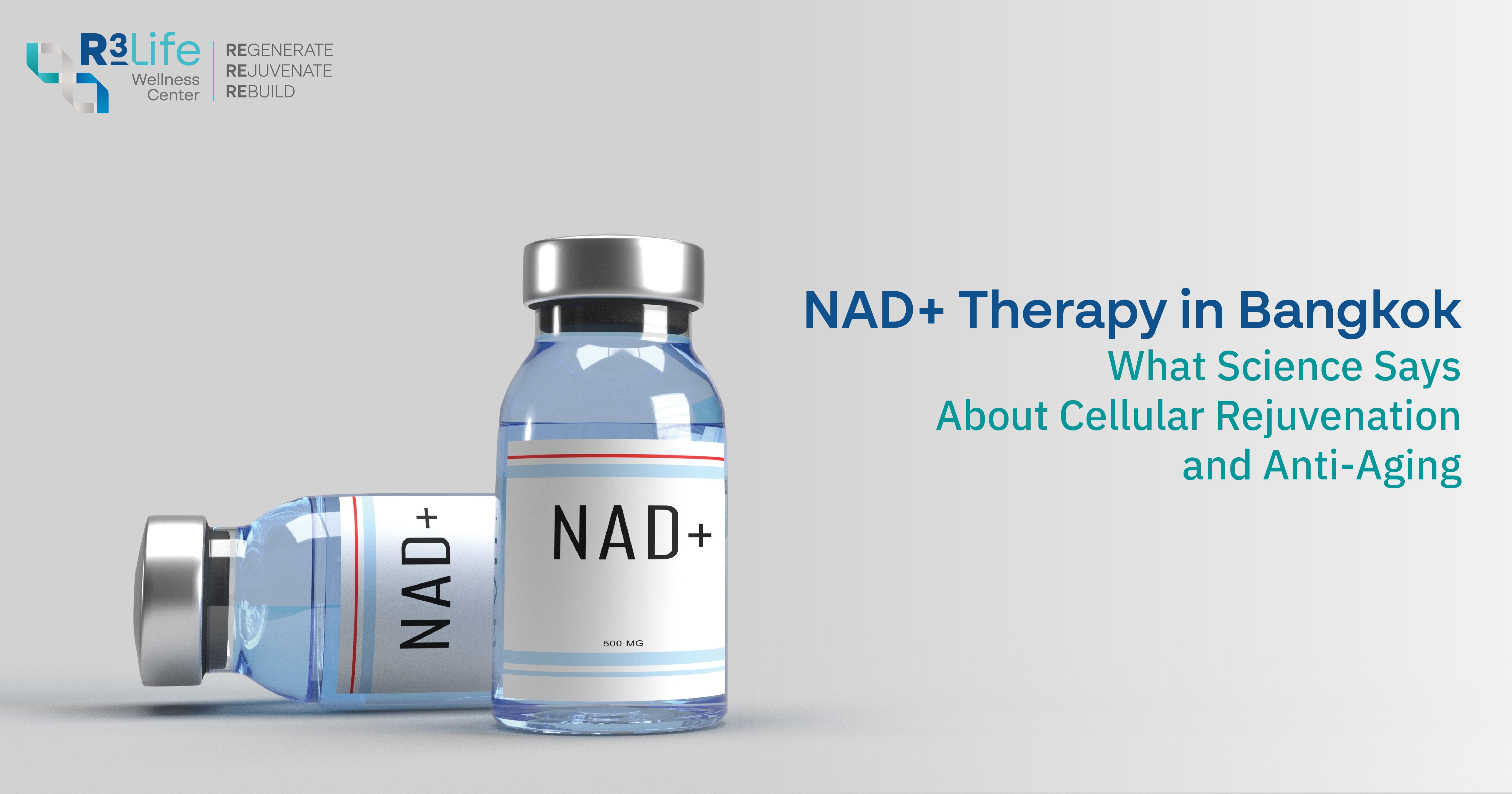
- Super Power NAD+ - R3 Life's signature NAD+ IV that restores NAD+ levels directly, with high absorption that bypasses the limitations of oral supplementation
- Amnion Stem Cell Therapy - works on a deeper level by delivering regenerative cells that not only rejuvenate the body, but also carry natural NAD+ precursors that support the body's own ability to produce NAD+ over time
Together, they create a two-in-one effect: stem cell renewal and a built-in mechanism that helps sustain NAD+ levels long after the treatment.
So What Actually Matters Most — Genetics, Lifestyle, or Science?
Research on aging consistently estimates that genetics accounts for roughly 25% of how a person ages physically, visibly, and biologically, while lifestyle and environment account for around 75%. The framework you're born with matters far less than what you do with it.
Science doesn't fit cleanly in either category; it acts as an amplifier across both. Diagnostic tools reveal what's actually happening inside your body, and clinical interventions give you ways to act on what they find. All three matter, but in different ways:
- Genetics sets the baseline limited control, but worth knowing
- Lifestyle does the heaviest lifting and is the most within your control day to day
- Science sharpens both by replacing assumptions with evidence, and by addressing what lifestyle alone can't reach
People who age slowly aren't usually genetic outliers. They're people who treat their lifestyle as the lever it actually is, and use science to get more out of it.
FAQ
Q: Can you actually slow down aging?
Yes—biological aging can be slowed. The most effective approach combines healthy lifestyle habits, early diagnostics, and targeted interventions that address what lifestyle alone can’t reverse.
Q: What is the biggest factor in how fast you age?
A: Genetics account for ~20–30%, but key drivers are NAD+ decline, chronic inflammation, and oxidative stress—especially long-term low-grade inflammation.
Q: Is aging faster than normal a sign of something serious?
A: It can be. Signs like fatigue, poor recovery, or rapid visible aging may reflect internal imbalances or early-stage conditions—making clinical screening important.
Q: At what age does aging start to accelerate?
A: Typically around the mid-30s and again near 60, though lifestyle and internal health heavily influence how strongly these shifts are felt.
Conclusion — Aging Is Partly a Choice
The difference between people who age slowly and those who don't is not primarily written in their DNA. It is built — or eroded — over years of biological processes that operate largely below the surface of how you feel.
NAD+ levels, inflammatory burden, oxidative stress accumulation, and the early signals that cancer screening panels are designed to detect, these are the real story behind the aging gap. And unlike genetics, they are measurable, addressable, and within reach of anyone willing to move from assumption to evidence.
If you want to know where your body actually stands; not where you hope it does, R3 Life Wellness Center's medical team is available to assess, test, and build a protocol matched to your biology. Book a free consultation at r3lifewellness.com or reach out via WhatsApp at +66 88 689 8888.
 Biological Age Test: Advanced Blood Tests for Aging | R3 Life Wellness Center