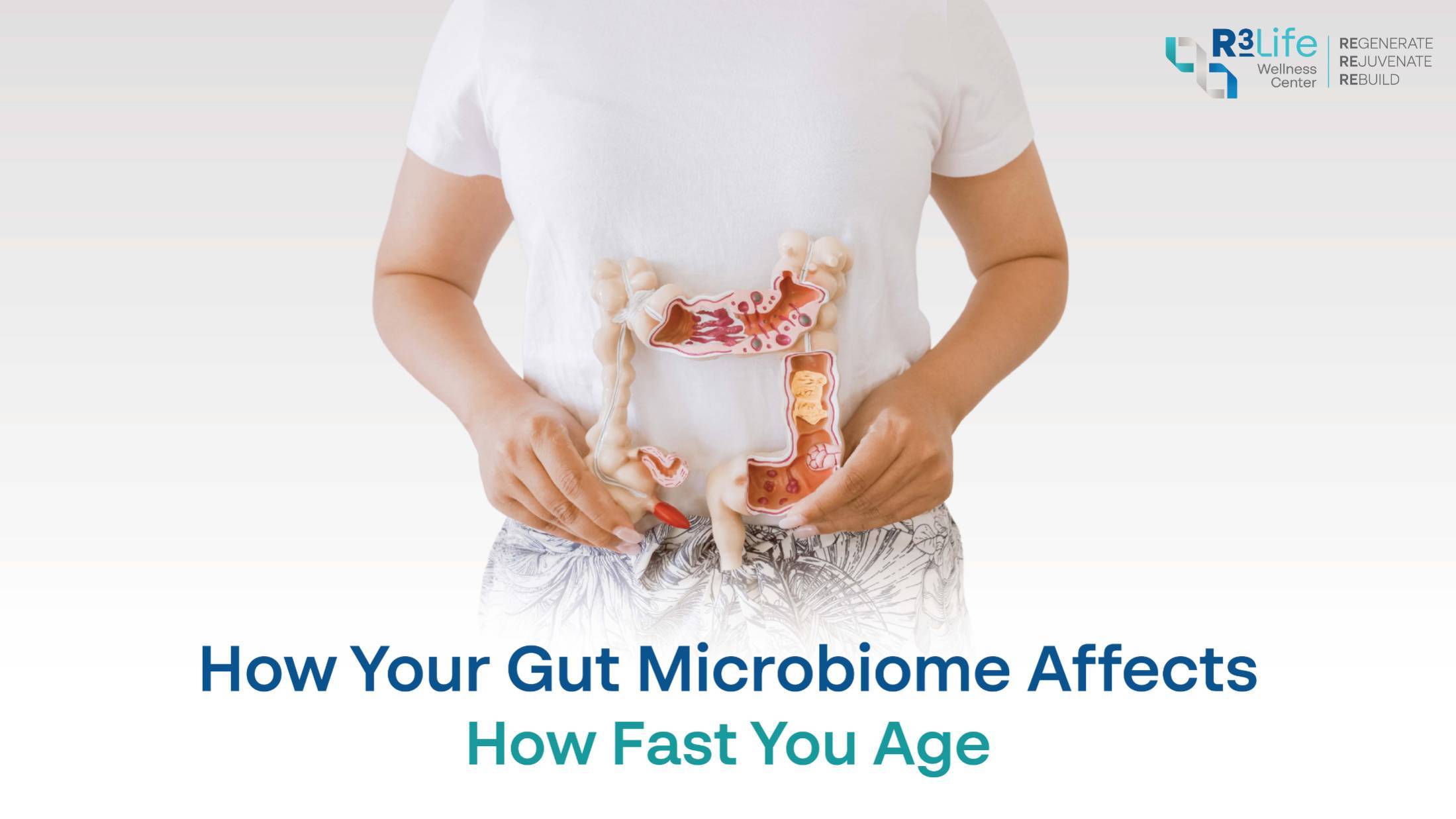
How Your Gut Microbiome Affects How Fast You Age
Key Highlights
- The gut microbiome plays a key role in inflammation, aging, and overall health—not just digestion.
- Dysbiosis (imbalance in gut bacteria) can accelerate biological aging and chronic inflammation.
- A weakened gut lining allows toxins into the bloodstream, driving systemic damage.
- Diet, alcohol, stress, poor sleep, and antibiotics disrupt microbiome balance over time.
- Supporting gut health is a proven strategy for improving long-term healthspan.
Introduction — Your Gut Is Doing More Than Digesting Food
Most people associate gut health with digestion—but that’s only the surface. The gut microbiome regulates immunity, produces key neurotransmitters and vitamins, and plays a major role in controlling systemic inflammation.
This is where its link to aging lies. An imbalanced microbiome can accelerate long-term biological decline, which is why it’s now seen as a key factor in how fast we age—and what we can do to influence it.
What the Gut Microbiome Actually Is
The Trillions of Microorganisms Living Inside You
The gut microbiome is a vast ecosystem of trillions of microorganisms in the digestive tract, mainly the large intestine. Far from passive, it actively interacts with the immune, nervous, and endocrine systems—affecting nutrient metabolism, inflammation, and overall health.
Its composition—what species are present and how diverse they are—has measurable impacts on aging and long-term health well beyond digestion.
Why Microbiome Balance Matters Beyond Digestion
A balanced microbiome — one with high species diversity and a healthy ratio of beneficial to harmful bacteria — performs several functions that are directly relevant to how fast you age:
- Immune regulation: approximately 70% of the immune system is housed in gut-associated lymphoid tissue. The microbiome trains and calibrates immune responses, helping the body distinguish between genuine threats and normal cellular activity
- Inflammation control: beneficial gut bacteria produce short-chain fatty acids that actively suppress inflammatory signalling throughout the body
- Neurotransmitter production: the gut produces the majority of the body's serotonin and significant quantities of other neurotransmitters, directly affecting mood, sleep quality, and cognitive function
- Nutrient synthesis: key vitamins including B12, K2, and folate are produced or activated by gut bacteria, supporting cellular repair processes that slow with age
When this balance is disrupted — a state known as gut dysbiosis — all of these functions are compromised simultaneously.
The Gut-Aging Connection Explained
How Gut Bacteria Regulate Inflammation Systemically
Chronic low-grade inflammation—often called “inflammaging”—is a key link between gut health and how fast we age:
- It drives major age-related conditions, including cardiovascular disease, neurodegeneration, and metabolic decline.
- The gut microbiome is one of its main regulators.
- Beneficial bacteria produce compounds like butyrate that keep inflammation in check.
- When these bacteria decline, anti-inflammatory signaling weakens and immune activity rises.
- Over time, this persistent inflammation accelerates cellular damage and biological aging.
The Link Between Microbiome Decline and Cellular Aging
Gut dysbiosis has been directly linked to several of the hallmarks of biological aging — the cellular and molecular processes that determine how fast the body deteriorates. Specifically:
- Mitochondrial dysfunction — dysbiosis impairs nutrient absorption and increases oxidative stress, reducing the efficiency of cellular energy production
- Cellular senescence — chronic gut-derived inflammation accelerates the accumulation of senescent cells — damaged cells that stop dividing but remain metabolically active, releasing inflammatory signals that damage surrounding tissue
- Epigenetic alterations — microbial metabolites influence gene expression patterns associated with aging, meaning the state of your microbiome is literally shaping how your cells behave at a genetic level
People with lower microbiome diversity consistently show accelerated biological aging markers compared to those with diverse, balanced gut ecosystems — regardless of chronological age.
Why Gut Permeability Accelerates the Aging Process
A healthy gut lining acts as a barrier—letting nutrients in while keeping toxins out. When it’s compromised (“leaky gut”), bacterial toxins like LPS enter the bloodstream, triggering chronic inflammation that accelerates aging.
This is why effective gut health strategies focus not just on balancing bacteria, but also on repairing the gut barrier itself.
What Disrupts Your Microbiome as You Age
Diet, Alcohol, and the Gut Microbiome
The microbiome is highly shaped by diet—processed foods, sugar, and saturated fats reduce diversity and promote inflammatory bacteria over time, often without obvious symptoms. Alcohol further disrupts this balance by damaging the gut lining, lowering beneficial bacteria, and increasing permeability, accelerating inflammation with repeated exposure.
Stress, Sleep, and Their Impact on Gut Balance
The gut–brain axis links stress and sleep directly to microbiome health. Chronic stress and elevated cortisol reduce beneficial bacteria and increase gut permeability, while poor sleep quickly disrupts microbial balance.
Over time, high stress and poor sleep, common in busy urban lifestyles, can lead to significant microbiome decline, even without obvious digestive symptoms.
Antibiotics and the Long-Term Cost to Your Microbiome
Antibiotics are sometimes necessary — but their impact on the microbiome is significant and frequently underestimated. A single course of broad-spectrum antibiotics can reduce microbial diversity considerably, with some species taking months to recover. Repeated courses over a lifetime create cumulative depletion that accelerates the microbiome aging trajectory.
The foundation of post-antibiotic recovery is dietary — increasing fiber intake, plant diversity, and fermented foods gives surviving beneficial bacteria the substrate they need to repopulate. For people with repeated antibiotic history or significant cumulative disruption, clinical support may provide an additional layer — but diet comes first.
How to Support Your Gut for Longevity
What the Research Says About Gut Health Interventions
Microbiome restoration for longevity focuses on three priorities: rebuilding diversity, repairing the gut lining, and supporting conditions for beneficial bacteria. Diet; more fiber, fermented foods, and plant variety, less processed food and alcohol, is essential but often slow and insufficient alone for deeper issues.
Improving gut health, however, has measurable benefits—reducing inflammation, supporting mitochondrial function, and enhancing overall healthspan; making it one of the most evidence-based non-pharmaceutical longevity strategies.
When IV-Based Gut Support Makes Sense
For individuals with established dysbiosis, compromised gut lining, or years of accumulated microbiome disruption, clinical support addresses what diet alone cannot.
R3 Life's GutZen Blend IV drip delivers L-alanyl-L-glutamine; a stable, highly absorbable form of glutamine that supports gut healing from the inside out:
- Main energy source for intestinal cells (enterocytes) and parts of the immune system
- Naturally depleted during stress, illness, or post-surgery recovery, replenishment restores what the body draws down
- Delivered intravenously for direct absorption, bypassing the digestive system that is often already compromised in these cases
Where GutZen addresses repair, Profloramax supports ongoing maintenance. It's built around Tetrabiotics, a clinical-grade blend of:
- Probiotics: live beneficial bacteria that colonise the gut
- Prebiotics: fibres that feed those bacteria
- Postbiotics: beneficial compounds produced during bacterial fermentation
- Parabiotics: inactivated bacterial components that deliver immune and gut-health benefits
The formula is delivered in vegan pine-bark capsules that protect live strains until they reach the gut. Together, GutZen and Profloramax address both the acute restoration and the long-term ecosystem maintenance that genuine gut longevity requires.
FAQ
Q: What is gut dysbiosis and how does it affect aging?
A: Gut dysbiosis is an imbalance in gut bacteria. It accelerates aging by driving inflammation, weakening the gut lining, and disrupting immune and cellular function.
Q: Can improving gut health slow down aging?
A: A: Yes—while it doesn’t change chronological age, improving gut health reduces inflammation and supports better metabolic and longevity outcomes.
Q: What foods are worst for the gut microbiome?
A: Processed foods, sugar, artificial sweeteners, low-fiber diets, and excess alcohol all reduce beneficial bacteria and increase inflammation. The single most disruptive factor, however, isn't food at all — but it is antibiotics that can dramatically reduce microbial diversity in just a few days, and full recovery often takes weeks to months. When antibiotics are medically necessary, focused gut support afterwards becomes especially important.
Q: How do I know if my gut health is affecting my aging?
A: Symptoms are often subtle—fatigue, brain fog, low mood, and poor recovery. The most reliable way to assess it is through clinical testing and evaluation.
Longevity Might Start in Your Gut
The gut microbiome is not a digestive detail, it is a central regulator of how fast your body ages. The inflammation it generates or suppresses, the cellular processes it supports or accelerates, and the barrier it maintains or allows to break down all shape your biological age in ways that accumulate quietly over decades.
Gut dysbiosis is not inevitable. It is measurable, addressable, and — with the right clinical support — reversible to a meaningful degree. The earlier that process begins, the more of your health span it protects.
If you want to understand what your gut health is contributing to your biological aging trajectory, R3 Life Wellness Center's medical team is available to assess and build a protocol matched to your specific needs. Book a free consultation at r3lifewellness.com or reach out via WhatsApp at +66 88 689 8888.
 ProFloraMax Tetrabiotics | Advanced Gut Health Beyond Probiotics