What Is the Food Pyramid? Nutrition for Healthy Aging and Long-Term Health | R3 Life
Understand the Food Pyramid and modern nutrition concepts that focus on food quality, protein, healthy fats, fiber, and reducing ultra-processed foods to support metabolic health, Healthy Aging, and long-term wellness.
What Is the Food Pyramid? A Nutrition Guide for Healthy Aging and Long-Term Health
Key Takeaways
- The modern Food Pyramid is no longer only about food quantity. It now places greater emphasis on food quality, nutrient density, and long-term health impact.
- Protein and muscle mass are important factors in Healthy Aging. Many anti-aging experts suggest around 1.2–1.5 grams of protein per kilogram of body weight per day, depending on each individual’s needs.
- High-quality carbohydrates and dietary fiber play an important role in metabolic health and gut health. The goal is not always to eliminate carbohydrates, but to choose better sources.
- Healthy fats, such as omega-3 fatty acids, can be part of a balanced eating pattern, while trans fats, repeatedly fried foods, and ultra-processed foods should be limited.
- Long-term health is not shaped by diet alone. Sleep, exercise, stress management, and personalized health care also play important roles.
Why Is Health Care Today Starting More with Nutrition?
Although medical technology has advanced rapidly, including in-depth health screenings, disease risk assessments, and modern health-tracking devices, non-communicable diseases such as heart disease, type 2 diabetes, and obesity remain major health challenges worldwide.
This has led many health professionals to return to the foundation of health, especially nutrition, which plays an important role in long-term wellness.
Today, nutrition is no longer focused only on calorie counting or avoiding certain food groups. Modern nutrition places more emphasis on food quality, nutrient density, metabolic health, and eating habits that can be maintained sustainably.
What Is the Food Pyramid, and Is It Still Important?
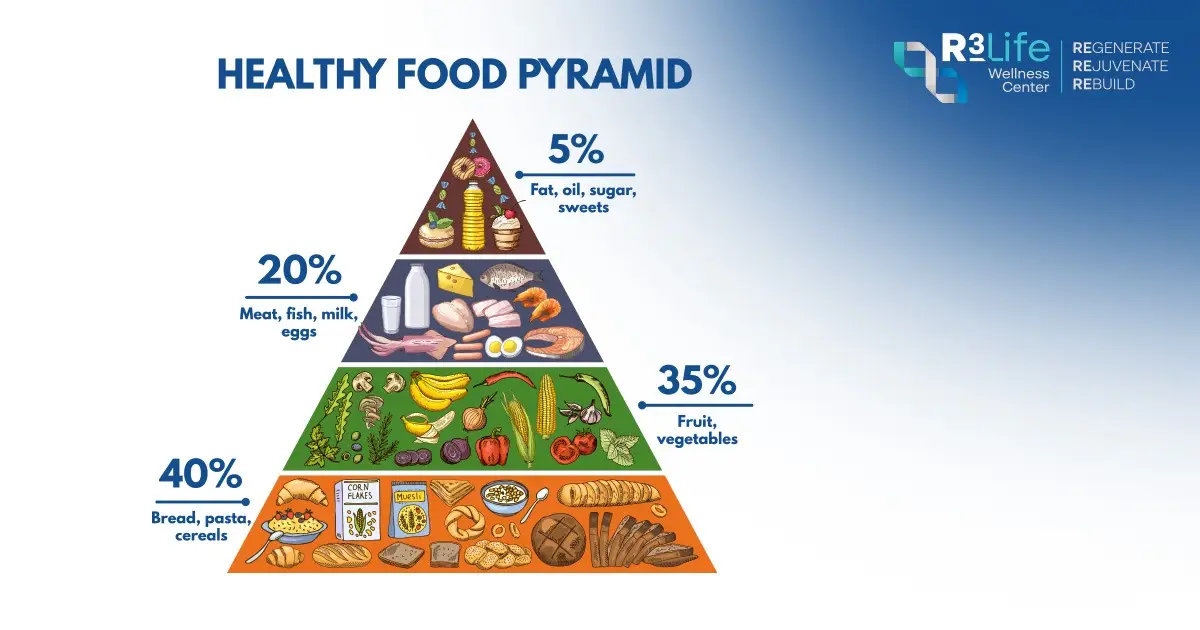
The Food Pyramid is a guide that helps explain the principles of balanced eating by dividing foods into groups and suggesting appropriate proportions for daily intake.
Although nutrition knowledge has evolved over the years, the key principle remains the same: choosing a variety of foods and getting adequate nutrients.
Today, nutrition experts focus more on the quality of food. This includes choosing high-quality protein, eating more vegetables and fruits, including healthy fats, and reducing ultra-processed foods.
In other words, modern nutrition does not only ask, “How much do we eat?” It also asks, “What do we eat, and how does that food affect long-term health?”
4 Nutrition Concepts Healthy Aging Experts Are Focusing on More
1. Protein and Muscle Mass Matter More Than Ever
In the past, many people thought protein was only important for athletes or people who wanted to build muscle. Today, experts in Healthy Aging and Longevity Medicine see muscle mass as one of the key indicators of long-term health.
Muscle does more than help the body stay strong. It also supports energy metabolism, blood sugar regulation, movement, mobility, and quality of life as we age.
After around the age of 30–40, the body naturally begins to lose muscle mass. If protein intake is insufficient or there is no resistance training, muscle loss may happen faster.
For this reason, many anti-aging experts suggest protein intake of around 1.2–1.5 grams per kilogram of body weight per day for those who want to support long-term health. However, individual needs may vary depending on age, activity level, health condition, and personal goals.
For example, a person who weighs 60 kilograms may aim for around 72–90 grams of protein per day.
2. Carbohydrate Quality and Fiber Matter More Than Avoiding Carbs Completely
Low-carb diets have become popular in recent years. However, many experts are now focusing more on carbohydrate quality rather than eliminating carbohydrates completely.
Carbohydrates from vegetables, whole fruits, whole grains, and legumes often provide fiber, vitamins, minerals, and phytonutrients that support health.
Dietary fiber also plays an important role in gut health and metabolic health, both of which are increasingly important topics in Healthy Aging.
Most adults should aim for around 25–35 grams of fiber per day, but many people consume less than the recommended amount.
Examples of high-quality carbohydrates include brown rice, oats, sweet potatoes, whole fruits, and legumes. These foods usually provide more fiber and nutrients than highly processed carbohydrates.
3. Choose Healthy Fats and Pay Attention to Essential Fatty Acids
Modern nutrition does not recommend avoiding all fats. Instead, it focuses on choosing the right types of fat.
Omega-3 fatty acids, found in foods such as salmon, sardines, mackerel, and some deep-sea fish, are among the most well-known healthy fats.
Omega-3 has gained attention in Healthy Aging because it plays a role in heart health, brain health, and the normal function of different systems in the body.
In recent years, researchers have also shown interest in other fatty acids, such as omega-7.
Omega-7 is a monounsaturated fatty acid found in sea buckthorn oil and some types of macadamia. It is being studied for its possible role in mucosal health, oral health, eye health, skin health, and metabolic health. However, current scientific evidence for omega-7 is still more limited than omega-3, and more long-term studies are needed.
At the same time, it is recommended to reduce trans fats, repeatedly fried foods, and ultra-processed foods, especially when consumed frequently or in large amounts.
4. Reduce Ultra-Processed Foods and Support Metabolic Health
One of the most important topics in modern nutrition is reducing ultra-processed foods.
These foods often contain added sugar, salt, unhealthy fats, and additives designed to improve taste, texture, and shelf life. In many cases, they are high in energy but low in nutrient density.
Today, anti-aging experts are paying more attention to metabolic health. This includes blood sugar control, insulin sensitivity, muscle mass, and risk factors related to chronic diseases.
Instead of focusing only on calorie counting, modern nutrition looks more closely at food quality, nutrient balance, and long-term health impact.
A simple example is choosing foods that are closer to their natural form, such as vegetables, fruits, quality protein, nuts, and whole grains, instead of relying heavily on ready-made or ultra-processed foods.

How Is Nutrition Connected to Cellular Health?
Beyond body shape or cholesterol levels, what we eat every day may influence biological processes at the cellular level, which are important for long-term health.
Current research suggests that nutrition may be related to several key processes in the body, including metabolic health, oxidative stress, low-grade inflammation, and mitochondrial function.
Lifestyle factors such as nutrition, exercise, sleep, and stress management all contribute to cellular health and long-term quality of life.
Today, Healthy Aging is not only about living longer. It is also about maintaining balance in the body, from cellular function to metabolic health, so that we can live with energy and quality throughout different stages of life.
How Does R3 Life View Nutrition in Healthy Aging?
At R3 Life, we believe long-term health does not begin only when illness appears. It begins with understanding the body and taking care of the basic foundations of health.
Nutrition is one of the key elements of Healthy Aging, together with sleep, exercise, stress management, metabolic health, and overall lifestyle.
However, in real life, some people may eat well and take care of their health consistently, but still have personal health goals or concerns about energy levels, recovery, sleep quality, or long-term wellness.
This is why Personalized Health is becoming more important. By using health information and doctor-led assessment, individuals may better understand their overall health and identify what their body may need.
For some people, even with good nutrition and regular exercise, a medical consultation may help clarify personal factors related to energy, sleep, recovery, metabolic health, or Healthy Aging goals.
At R3 Life, we focus on holistic health assessment. Our medical team helps evaluate each person’s overall health picture and provides guidance that is suitable for individual needs, including lifestyle, metabolic health, Wellness, and Preventive Health options.
Good health does not always begin with following trends or general advice. It may begin with understanding your own body and choosing an approach based on reliable health information and medical guidance.
FAQ
1. Is the Food Pyramid still useful today?
Yes. Although nutrition concepts have evolved, the Food Pyramid remains a useful basic guide for understanding balanced eating. However, modern experts now place more emphasis on food quality, nutrient density, and reducing ultra-processed foods.
2. How much protein should a person consume per day?
Protein needs vary depending on age, body weight, activity level, and health goals. In Healthy Aging, many experts suggest around 1.2–1.5 grams of protein per kilogram of body weight per day, depending on individual suitability.
3. If I already eat well and exercise, do I still need to consult a Healthy Aging doctor?
For many people, balanced nutrition and regular exercise are already strong foundations for health. However, if you have specific goals such as long-term health, better energy, recovery, sleep quality, or preventive health planning, consulting a doctor may help you better understand your overall health and choose a more personalized approach.

 Is Health Really Wealth? R3 Life Wellness Invites You to Invest in Your Health “Smartly”