World Digestive Health Day 2026 | Gut Health, Immunity & Longevity Medicine
On 29 May, World Digestive Health Day highlights a truth that leading medical institutions worldwide increasingly recognize:
Long-term health does not begin with symptom management. It begins at the root.
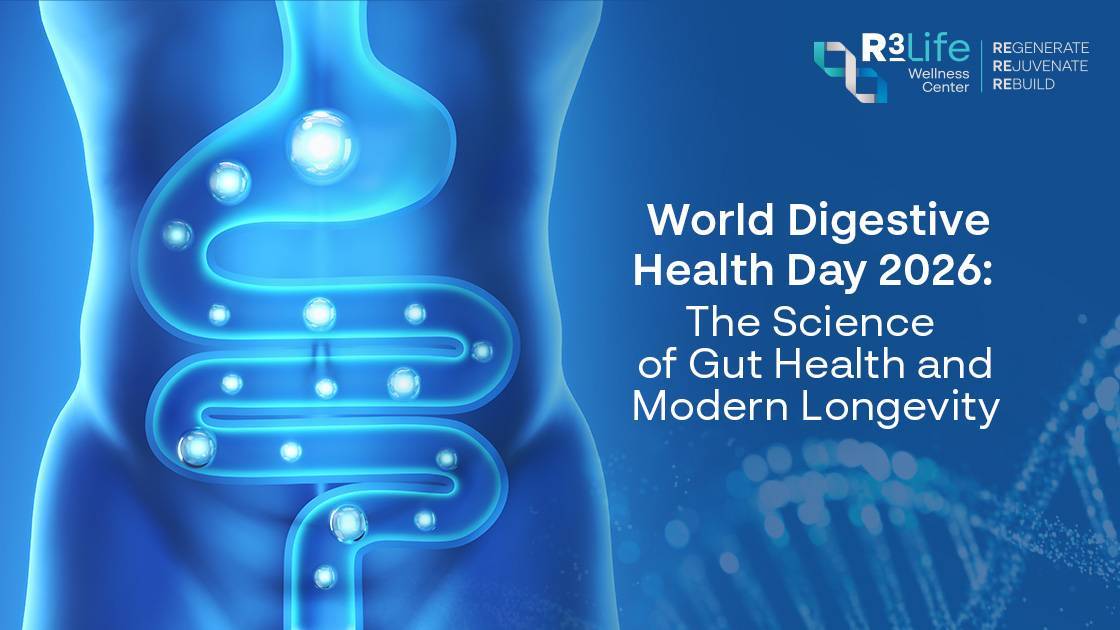
In modern preventive and longevity medicine, the gut is no longer considered merely a digestive organ. It is a regulatory center influencing immunity, metabolic efficiency, inflammatory balance, hormonal signaling, and even cognitive clarity.
Nearly 70% of the immune system resides within the gastrointestinal tract. The gut microbiome, a complex ecosystem of trillions of microorganisms, plays a decisive role in how the body defends itself, produces energy, absorbs nutrients, and modulates inflammation.
When gut balance is optimized, the body operates with resilience.
When it is disrupted, systemic consequences often follow.
Gut Health Is Foundational, Not Secondary!
We routinely prioritize organs such as the brain, liver, kidneys, and heart. Yet the digestive system operates in continuous dialogue with each of them.
Through the gut–brain axis, intestinal balance influences mood regulation, cognitive function, and stress response.
Through metabolic pathways, it governs nutrient assimilation and mitochondrial energy production.
Through immune modulation, it determines how the body responds to pathogens and chronic inflammatory triggers.
Emerging longevity research consistently shows that microbial diversity and gut integrity correlate with reduced inflammatory burden and improved biological aging markers.
In other words, digestive health is not peripheral. It is foundational to systemic equilibrium.
Why Symptom-Based Approaches Fall Short
Fatigue. Brain fog. Recurrent infections. Skin inflammation. Hormonal fluctuations.
These concerns are often treated individually. Yet in many cases, they share a common origin: chronic gut imbalance.

Short-term solutions may provide temporary relief. However, sustainable improvement requires identifying and correcting the underlying disruption within the gastrointestinal environment.
This is where medically guided preventive care becomes essential.
Restoring Gut Balance Through Precision Preventive Medicine
A clinically supervised gut optimization strategy may include:
- Comprehensive digestive and microbiome evaluation
- Inflammatory and metabolic marker analysis
- Personalized nutritional protocols
- Targeted microbiome modulation
- Stress and lifestyle recalibration
Rather than emphasizing quick fixes, this approach focuses on restoring physiological balance at the source, reducing inflammatory load, enhancing immune resilience, and supporting sustainable energy production.
When the gut environment stabilizes, improvements often extend beyond digestion alone. Patients frequently report clearer cognition, steadier energy, stronger immune function, and improved overall vitality.

A Global Shift Toward Root-Cause Medicine
Across the world, leading preventive health centers are moving away from reactive treatment models toward root-cause correction.
Digestive health has become a central pillar of modern longevity medicine not as a wellness trend, but as a scientific evolution grounded in immunology, microbiology, and metabolic research.
World Digestive Health Day serves as a timely reminder:
We rely on our gut every day of our lives yet many wait until dysfunction becomes visible before addressing it.
If there is now a medically supervised pathway to restore balance within one of the body’s most essential systems, what are you waiting for?

 Chronic Stress and Aging: How Cortisol Ages You