Facial Injection Trends in Your 30s: The Rise of Undetectable Aesthetics and Alternative Beauty Choices
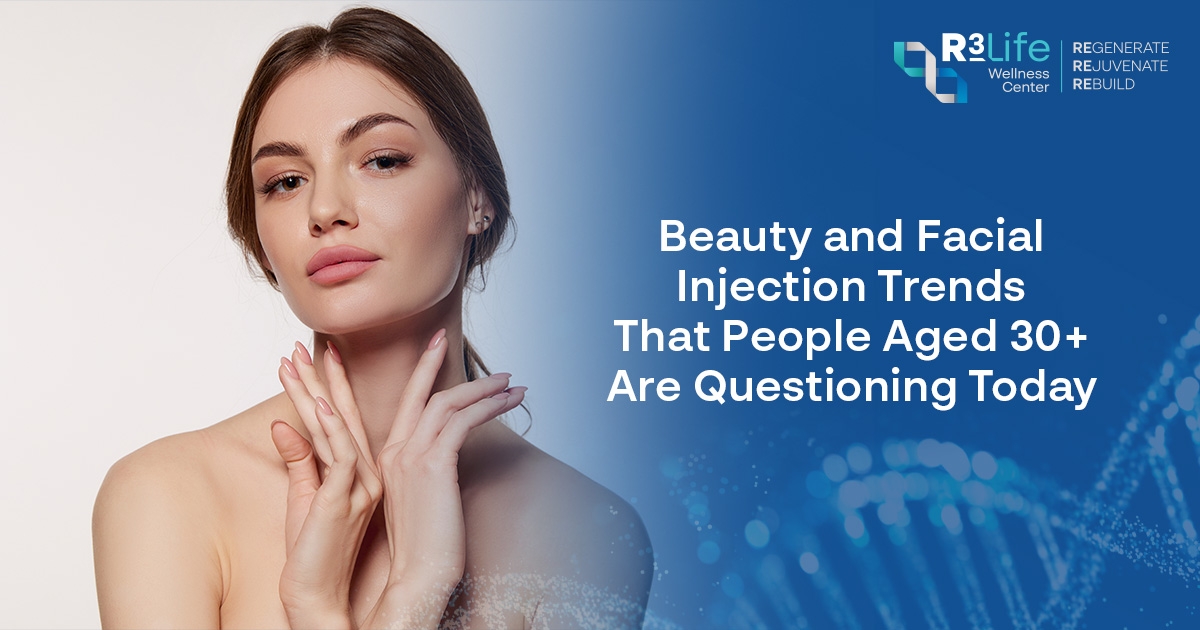
Beauty & Facial Injection Trends That People Aged 30+ Are Questioning Today
Over the past few years, Aesthetic Medicine hasn’t just evolved in terms of technology. It has fundamentally shifted in mindset.
The question is no longer “How can I look younger as fast as possible?”
But rather, more complex and thoughtful questions, such as:
- Is this treatment truly suitable for my body?
- What are the long-term effects?
- Are there alternatives beyond repeated injections?
These conversations are becoming increasingly common among people aged 30+, especially those following Alternative and Integrative Aesthetic Medicine.
1. “You can inject — but you don’t have to inject forever”
Injection Fatigue & Aesthetic Burnout
One term gaining more attention is Injection Fatigue — a state where individuals feel that:
- Their face responds less to injections over time
- Skin may appear tight, stiff, or less natural
- More frequent treatments are required to achieve the same results
As a result, many physicians are beginning to ask: Should we continue injecting simply because we always have? Or Is it time to pause and allow the skin and tissues to recover?
This has brought concepts such as facial rest, tissue recovery, and skin regeneration into the spotlight.
.jpg "2-26 Blog Cover 2.jpg")
2. From “a changed face” to “a better version of myself”
The Rise of Undetectable Aesthetics
Today’s beauty trend is no longer measured by what was done, but by whether anyone can tell.
Undetectable Aesthetics reflects the desire of people aged 30+ to:
- Look fresher
- Appear healthier
- Maintain their natural facial identity
The focus has shifted toward:
- Skin quality
- Elasticity
- Even skin tone
Rather than dramatic volume or instant tightness.
3. “Restore before you add”
Skin & Tissue Conditioning
Another key conversation centers around strengthening the skin and tissues before undergoing any aesthetic procedures.
This approach recognizes that:
- Fatigued, inflamed, or imbalanced skin may not respond well to injections
- Unsatisfactory results may stem from skin condition, not technique
As a result, terms like Skin Conditioning and Tissue Quality are increasingly discussed alongside facial injections.
.jpg "2-26 Blog Cover 3.jpg")
4. “Alternative” does not mean “anti-injection”
Integrative Aesthetic Thinking
Alternative Aesthetic Medicine today does not oppose injections. Instead, it asks a more nuanced question: Who is this treatment suitable for — and who is it not?
Some individuals benefit from injections.
Some benefit from regenerative or internal support.
Others may benefit most from doing nothing for now.
This trend reflects respect for individual biology, rather than applying a single solution to everyone.
5. People are asking: “What happens if I don’t do anything?”
The Permission to Pause
Perhaps the most interesting shift is the realization that immediate action is not always necessary.
Not injecting does not mean neglect.
It can mean:
- Observing changes in the skin
- Allowing the body time to recover
- Making informed decisions
In a world full of options, waiting has become a valid choice.
Conclusion
Beauty today does not follow a single formula.
And modern aesthetic conversations are no longer about declaring what is “best”.
They invite us to recognize that we have choices.
At certain stages of life, injections may provide fast, visible results.
At others, deeper questions arise:
Should healthy, resilient skin rely only on external enhancement?
Or should it begin with supporting the body from within?
This is why IV Drip therapy is increasingly viewed not as an add-on beauty treatment,
but as a method of preparing the foundation of skin health supporting circulation, nutrient delivery, cellular repair, and long-term skin resilience.
For some, consistent internal care may be enough without the need to rush into additional facial procedures.
Clinics that build trust may not be those that focus solely on selling injections,
but those that explain the full picture from IV Drip therapy for internal restoration
to aesthetic procedures chosen thoughtfully, at the right time.
The decision is guided by information, not pressure.
.jpg "2-26 Blog Cover 4.jpg")
FAQ Common Questions
1.If I already receive facial injections, do I still need IV Drip therapy?
Answer: Not necessarily for everyone, but it is an option many people now consider.
IV Drip therapy does not replace injections, which focus on targeted aesthetic outcomes.
Instead, it supports internal skin health, including circulation, recovery, and cellular nutrition potentially helping the skin respond better to procedures and recover more evenly over time.
2.Why choose R3 Life for IV Drip skin care?
Answer: IV Drip therapy is not only about the formula, it’s about the standard of care.
- Physician-led assessment
Every IV Drip program begins with a medical evaluation to select the most appropriate formula for your body and skin goals. - Exclusive formulas designed by an American Board-certified doctor in Anti-Aging Medicine
R3 Life offers a variety of IV Drip formulas designed to support skin regeneration, radiance, and overall balance from within. - Safety as a core principle
Carefully selected ingredients and medical-grade equipment, supervised by doctor and licensed nurses. - Private, attentive experience
Treatments are provided in a private room, with dedicated Client Service support, professional nursing care, and thoughtful amenities for comfort.
 The Future Healthcare Technology for Rejuvenation