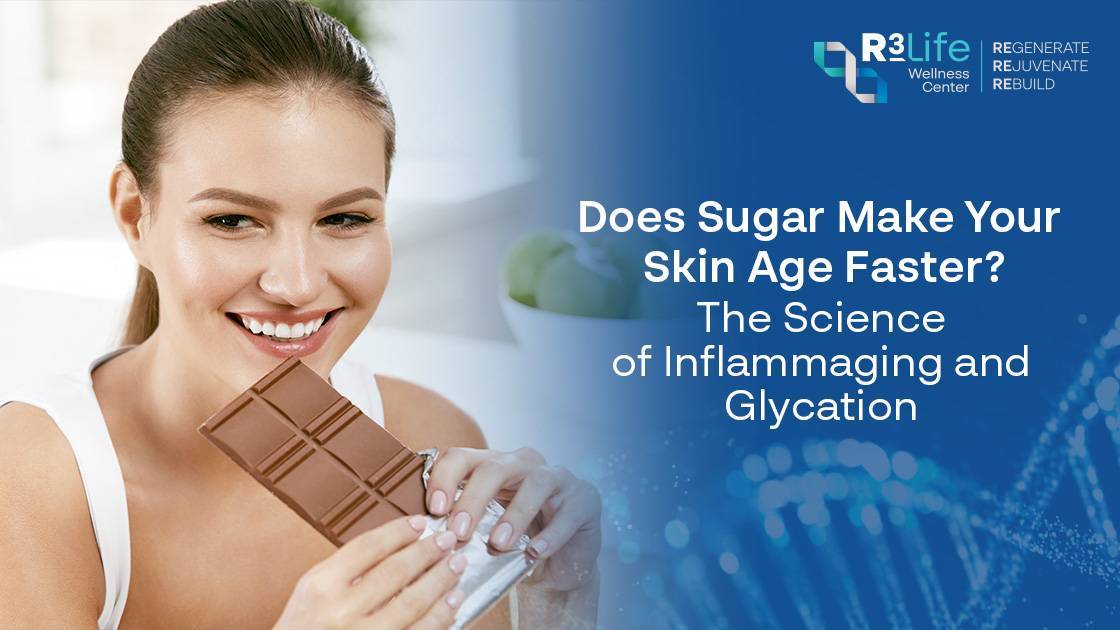
Does Sugar Make Your Skin Age Faster? The Science of Inflammaging and Glycation
Does sugar make your skin age faster? Understand inflammaging, glycation, and how chronic inflammation impacts your skin at a deeper level.
Quick Summary: Why Sugar Accelerates Skin Aging
- Skin aging is not caused by age alone, but also by chronic inflammation at the cellular level
- Excess sugar intake leads to glycation, a process that damages collagen
- Harmful compounds called AGEs accelerate inflammation and skin deterioration
- Chronic inflammation (inflammaging) slows skin repair and reduces elasticity
- Modern skin care focuses on reducing inflammation and restoring cellular balance, not just surface treatments
Why Does Skin Age Differently in Each Person?
Have you ever noticed that some people in their 40s still have radiant, healthy-looking skin, while others begin to show signs of aging much earlier?
For a long time, aging was believed to be simply a result of time. However, modern longevity research suggests that aging is deeply influenced by biological processes at the cellular level.
One of the key concepts gaining attention today is inflammaging, a form of chronic, low-grade inflammation that develops gradually over time.
Unlike acute inflammation, which occurs when the body is injured or infected, inflammaging is subtle and persistent. Over time, it affects:
- the body’s ability to repair cells
- immune system balance
- and the overall health of tissues
Because the skin is the largest organ in the body, it is often one of the first places where these internal changes become visible.
What is Inflammaging?
The term inflammaging combines two words Inflammation and aging
It was first introduced by Italian scientist Claudio Franceschi in 2000, after observing that inflammation tends to increase gradually with age even without obvious illness.
Research published in Nature Reviews Immunology suggests that this chronic inflammation is linked to age-related conditions such as:
- cardiovascular disease
- diabetes
- neurodegenerative disorders
- and tissue degeneration
As inflammation persists, the body produces more inflammatory signals, which can:
- slow down cellular repair
- disrupt normal cell function
- accelerate tissue aging
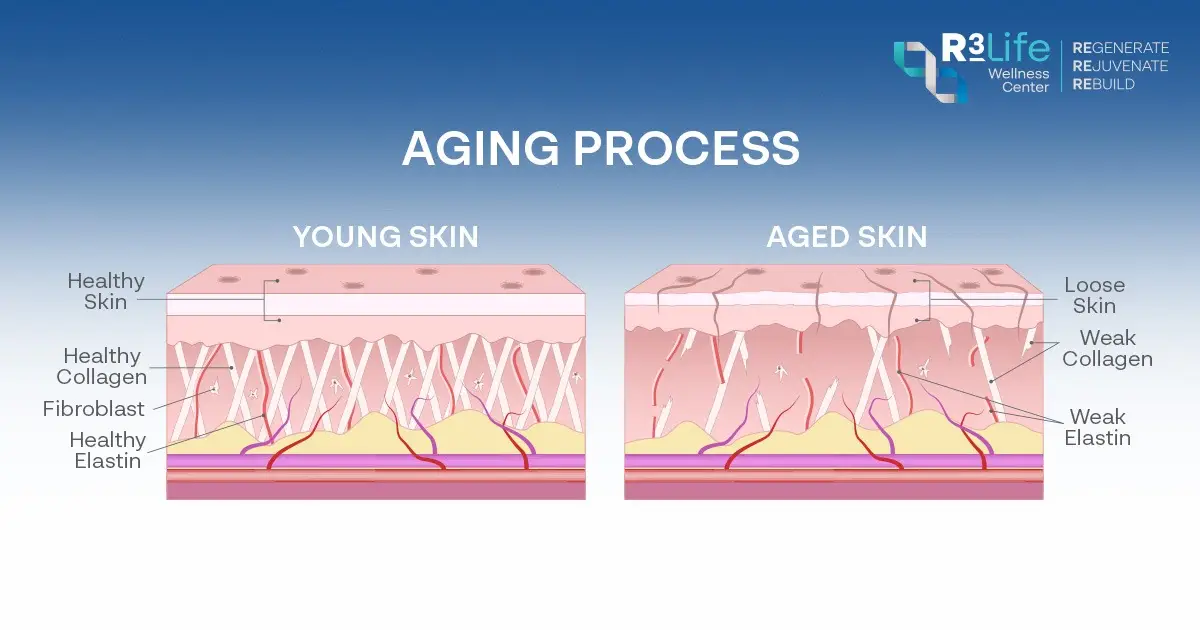
Inflammaging and Skin Aging
Skin aging is not only influenced by external factors such as sunlight or pollution. It is also strongly affected by internal inflammation.
Research in the Journal of Investigative Dermatology shows that chronic inflammation can accelerate the breakdown of collagen, the protein responsible for skin strength and elasticity.
As collagen degrades, the skin may begin to show:
- fine lines and wrinkles
- loss of firmness
- reduced elasticity
- slower recovery and healing
This has led to a new understanding that aging skin reflects internal biological conditions, not just external damage.

Sugar and Skin Aging
One of the most important drivers of inflammaging is excess sugar consumption.
When blood sugar levels are consistently high, sugar molecules can bind to proteins such as collagen through a process called glycation.
This process produces harmful compounds known as Advanced Glycation End Products (AGEs).
Research published in Dermato-Endocrinology shows that AGEs can alter the structure of collagen, making it:
- stiffer
- more fragile
- less elastic
As a result, the skin may experience:
- faster wrinkle formation
- sagging
- dull appearance
- slower regeneration
In addition, AGEs can trigger inflammatory responses in the body, further accelerating inflammaging.
In simple terms, sugar does not age your skin overnight, but over time, it can affect your skin at a deeper, structural level.
Why Surface Level Treatments May Not Be Enough
Many aesthetic treatments focus on improving visible signs of aging, such as:
- Botox
- dermal fillers
- laser treatments
While these can enhance appearance temporarily, they mainly address symptoms on the surface.
If underlying inflammation and metabolic imbalance remain, the aging process may continue beneath the skin.
This is why modern approaches to skin health are shifting toward supporting the body’s internal balance, rather than only treating external signs.
The Role of Stem Cells in Regenerative Medicine
In regenerative medicine, stem cells particularly mesenchymal stem cells found in tissues such as umbilical cord tissue and amnion (amniotic membrane) are being studied for their role in supporting tissue repair and balance.
What makes these cells unique is their ability to modulate inflammation and influence the environment surrounding other cells.
Rather than replacing damaged cells directly, they act more like “environment regulators,” helping to restore balance by:
- reducing inflammatory signals
- supporting natural repair processes
- and improving overall cellular function
When the cellular environment becomes healthier, existing skin cells may function more effectively, which can contribute to:
- improved skin recovery
- stronger skin structure
- and a more balanced, healthier appearance
This approach does not aim to “reverse aging instantly,” but rather to support the body’s ability to repair itself more efficiently.
And importantly…
Whether we have consumed excess sugar knowingly or unknowingly in the past, or were never aware of its long-term effects, modern science now offers new possibilities.
Not to turn back time, but to help the body regain balance and restore its natural ability to heal.

A New Perspective on Skin Health
Today, skin care is evolving beyond surface treatments.
Healthy, youthful skin is increasingly seen as a reflection of overall internal balance, influenced by factors such as:
- inflammation levels
- metabolic health
- blood sugar control
- cellular repair capacity
This shift has led to growing interest in regenerative and integrative approaches to long-term skin health.
FAQ: Inflammaging and Skin Aging
1. Does sugar really make your skin age faster?
Yes. Excess sugar can trigger glycation, a process that damages collagen and weakens the skin’s structure. Over time, this may lead to wrinkles, sagging, and faster skin aging. It can also promote inflammation, which contributes to inflammaging.
2. What is inflammaging and how does it affect the skin?
Inflammaging is a form of chronic, low-grade inflammation that develops with age. It does not cause immediate symptoms but gradually affects how cells function. In the skin, it can accelerate collagen breakdown and slow down repair processes.
3. Can stem cell therapy help improve skin aging?
Stem cells do not reverse aging instantly, but they may help support the body’s natural repair processes. By reducing inflammation and improving the cellular environment, they may contribute to healthier skin function over time. Results vary depending on overall health, lifestyle, and consistency of care.

 Restore Your Metabolism With Meso Fat and Infrared Sauna