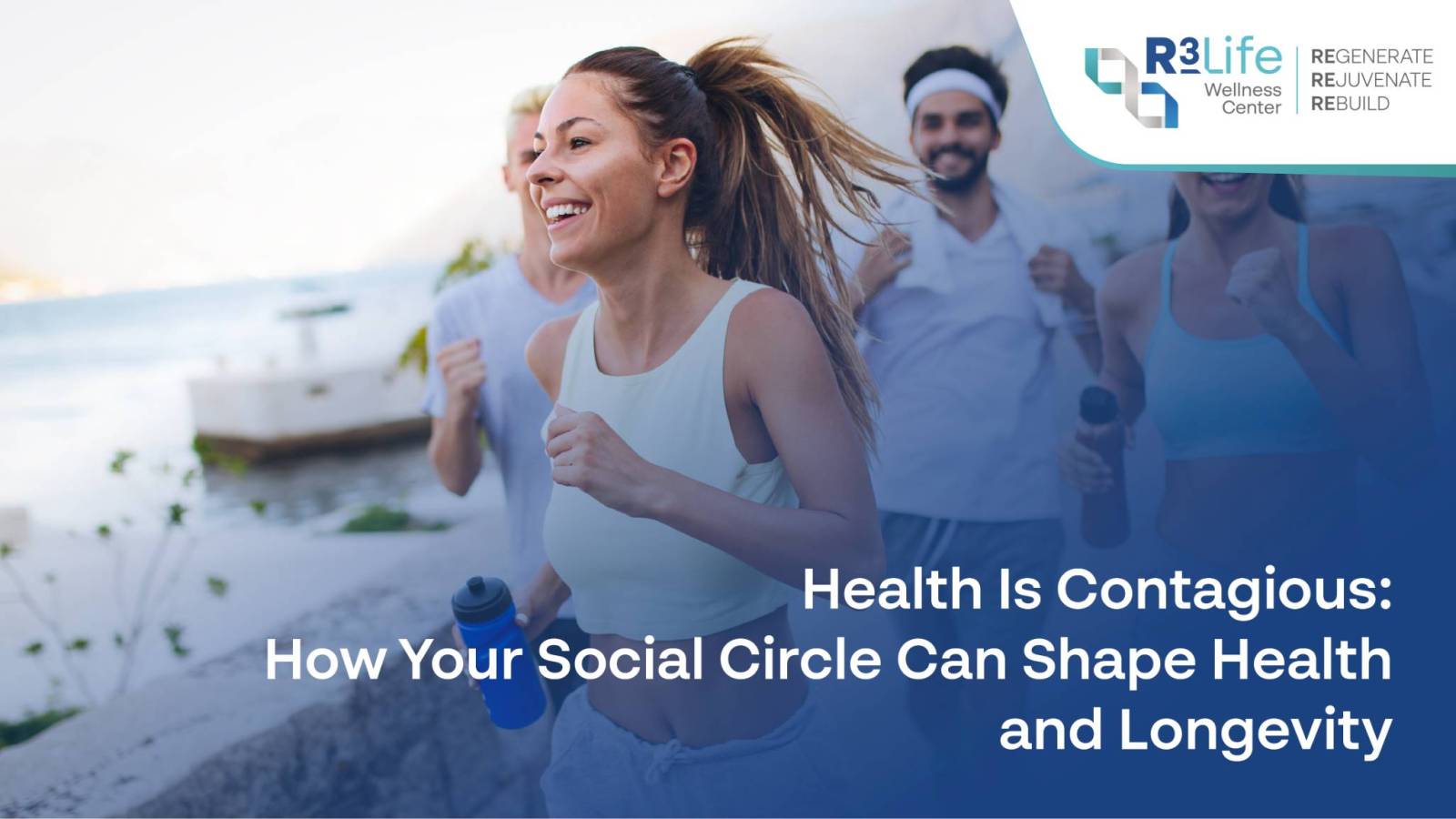
Health Is Contagious: How Your Social Circle Can Shape Health and Longevity
Health Is Contagious: How Your Social Circle Can Shape Health and Longevity
5 Key Takeaways
- The people around us can influence our health behaviors. Exercise, eating habits, sleep routines and even the way we think about wellness can be shaped partly by our social environment.
- Social influence is not instruction. Social norms, emotional contagion and group identity can affect our choices, but they do not decide what is right for our individual health.
- Social connection is becoming an important part of the healthy-aging conversation. Research increasingly recognizes relationships and supportive environments as relevant to long-term health and well-being.
- Shared wellness should not become shared pressure. Someone else's progress is not a deadline for your body, and readiness to change can differ from person to person.
- You can start a healthy journey together without starting in the same way. Different health baselines, risks, lifestyles and goals require individualized assessment and planning.
Your closest friend starts running before sunrise. Your partner suddenly cares about sleep quality. The group chat that once revolved around restaurants and weekend plans now includes blood tests, protein, Pilates, wearables and longevity.
And slowly, something changes. You start thinking about your own health differently.
This reflects a broader shift happening in wellness today. After years dominated by individual optimization tracking steps, sleep scores, supplements and biological age the conversation is expanding toward social wellness, community and human connection.
But there is another side to this trend. Sometimes watching people around us become healthier feels inspiring. Sometimes it makes us feel as though we are falling behind.
Health may be contagious. Pressure shouldn't be.
The people around us can influence how we think and behave. But influence should create opportunity not decide what our own health journey needs to look like.

Are Healthy Habits Really Contagious?
The idea of social contagion has been studied extensively in social-network and behavioral research.
One widely discussed observational study following more than 12,000 people over 32 years found that obesity appeared to cluster within social networks. Research using the same broader dataset also found patterns of happiness clustering among connected individuals (Christakis & Fowler, 2007; Fowler & Christakis, 2008).
But these findings need careful interpretation. Friends may influence one another, but people with similar lifestyles may also become friends in the first place. They may share neighborhoods, socioeconomic circumstances, food environments or daily routines.
More compelling evidence for social influence came from research analyzing running behavior among approximately 1.1 million people over five years. Researchers found evidence that friends' running behavior could influence another person's distance, duration and pace, although the effect varied between individuals and relationships (Aral & Nicolaides, 2017).
So science does not tell us: “If your friends become healthy, you will become healthy too.”
A more accurate conclusion is: The people around us can shift the probability of certain health behaviors—but they do not remove our ability to choose.
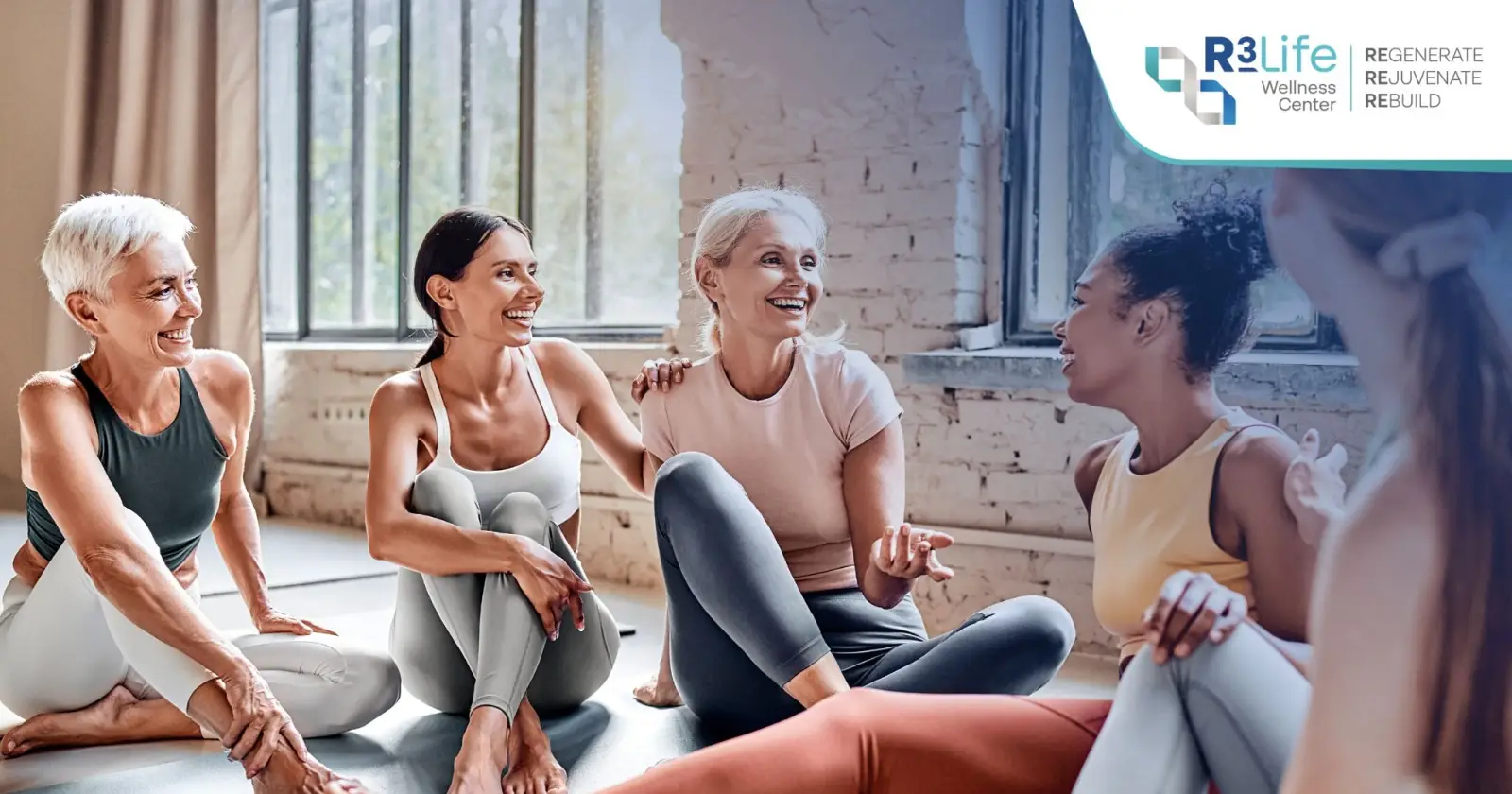
Why Can Other People's Health Habits Influence Us?
There are several psychological mechanisms that may help explain why.
1. Social Norms: What Feels “Normal” Can Change
Social norms are the unwritten expectations that help us understand what people around us commonly do.
When several friends begin exercising regularly, going to the gym may start to feel more ordinary. When colleagues begin discussing annual health screenings or sleep quality, we may start wondering whether we should pay more attention too.
But seeing a behavior repeatedly does not automatically make us adopt it.
A 2025 systematic review and meta-analysis of 89 randomized studies found that simply communicating what other people do did not reliably change health behavior overall after accounting for publication bias (Papakonstantinou et al., 2025).
Social influence can open the door. We still decide whether to walk through it.
2. Emotions Can Spread Through a Group
Emotional contagion describes the tendency for people's expressions, tone, movement or emotional states to influence one another.
An enthusiastic workout partner may make exercise feel easier to begin. Spending time with people who genuinely enjoy taking care of themselves may make healthy behaviors feel more approachable.
But emotional contagion is not automatic or universal. Research continues to examine how strongly it occurs and how context, relationships and individual differences affect it.
3. Health Can Become Part of Group Identity
Sometimes the question is not only: “Is this healthy?”
It becomes: “Is this what people like us do?”
Run clubs, Pilates communities, wellness retreats and other shared health experiences can create belonging around healthy behaviors.
That can be powerful. But belonging should not require everyone to eat the same food, follow the same workout, take the same supplements or pursue the same longevity routine.
Social Connection Is Becoming Part of the Longevity Conversation
For years, longevity conversations focused heavily on what individuals could optimize: nutrition, exercise, sleep, biomarkers, supplements and technology.
Increasingly, social connection and community are also being recognized as part of healthy aging.
A major meta-analysis involving more than 300,000 participants found a significant association between stronger social relationships and survival. More recently, the World Health Organization has highlighted social connection as an important dimension of health and well-being.
This does not mean that having more friends guarantees a longer life. Nor does it mean that joining a wellness community is a longevity treatment.
Instead, relationships can shape the environment in which our health behaviors happen. The people around us may provide encouragement, companionship, accountability or simply make certain behaviors easier to sustain.
This is why social wellness may be more meaningful than simply “doing health together.” A supportive environment does not require everyone to move at the same speed.
When Inspiration Starts Feeling Like Pressure
There is a fine line between: “Maybe I want to take better care of myself too.”
And “Everyone else is doing better than me. I should have started already.”
The second thought deserves attention. Someone else's health journey may begin from a completely different baseline.
One person may exercise five days a week but have metabolic risk factors they do not know about. Another may rarely exercise but have good metabolic markers. Someone may be prioritizing muscle gain; someone else may be managing chronic stress or poor sleep.
That is why readiness is useful information.
Before copying someone else's routine, it may be worth asking:
- Does this change genuinely matter to me?
- Does it fit my health, lifestyle and responsibilities?
- Am I doing this because I want to or because I feel behind?
- What is the smallest change that would still feel like my own decision?
Research informed by self-determination theory suggests that health behavior is more sustainable when motivation feels personally meaningful and when people experience autonomy, connection and competence rather than pressure alone (Fortier et al., 2012).

You Can Start Together Without Starting the Same Way
This may be one of the most useful lessons from the rise of social wellness.
Two partners can decide to become healthier together. Two friends can book a health assessment on the same day. A family can decide that longevity matters to them. But they do not necessarily need the same plan. One person may need to focus on sleep and stress. Another may need to understand metabolic risk. Someone else may already have strong lifestyle habits but want to explore their health baseline more deeply.
Shared motivation does not mean shared biology.
At R3 Life Wellness Center in Bangkok, personalized healthy aging begins by assessing each individual separately. A physician may consider medical history, lifestyle, existing health information, risk factors, concerns and personal goals before discussing an appropriate next step.
This is particularly relevant for couples, friends or family members who want to begin caring for their health together.
You can encourage each other.
You can make healthy habits easier for each other.
You can even begin on the same day.
But your health plans do not have to be identical.
For international residents in Thailand or those exploring preventive health and longevity care in Bangkok, an individual physician consultation can help establish a starting point based on your own health rather than someone else's routine.
Good health may gain momentum from the people around you. But the path should still belong to you.
FAQ
1. Can healthy habits really be contagious?
Health behaviors can be influenced by friends, partners, social networks and shared environments. However, “contagious” is a metaphor. It does not mean that healthy behavior automatically passes from one person to another.
2. Can social connection help you live longer?
Research has found associations between stronger social relationships and better health and survival outcomes. However, this does not prove that social connection alone causes a person to live longer or guarantee longevity.
3. What is social wellness?
Social wellness broadly refers to the quality of our relationships, sense of connection and social environment. In healthy-aging discussions, it is increasingly considered alongside physical and mental aspects of well-being.
4. Why do I want to copy my friends' healthy habits?
Social norms, emotional influence and group identity can all affect what feels attractive or normal. These influences can encourage change, but they do not determine what is medically or personally appropriate for you.
5. Can couples or friends follow the same longevity plan?
They can support one another, but they may not need the same plan. Health history, metabolic risk, lifestyle, physical condition and goals can differ considerably, which is why individual assessment remains important.
 R3 Life Wellness Partners with MiDO4 Medical to Elevate Luxury Medical Tourism in Bangkok