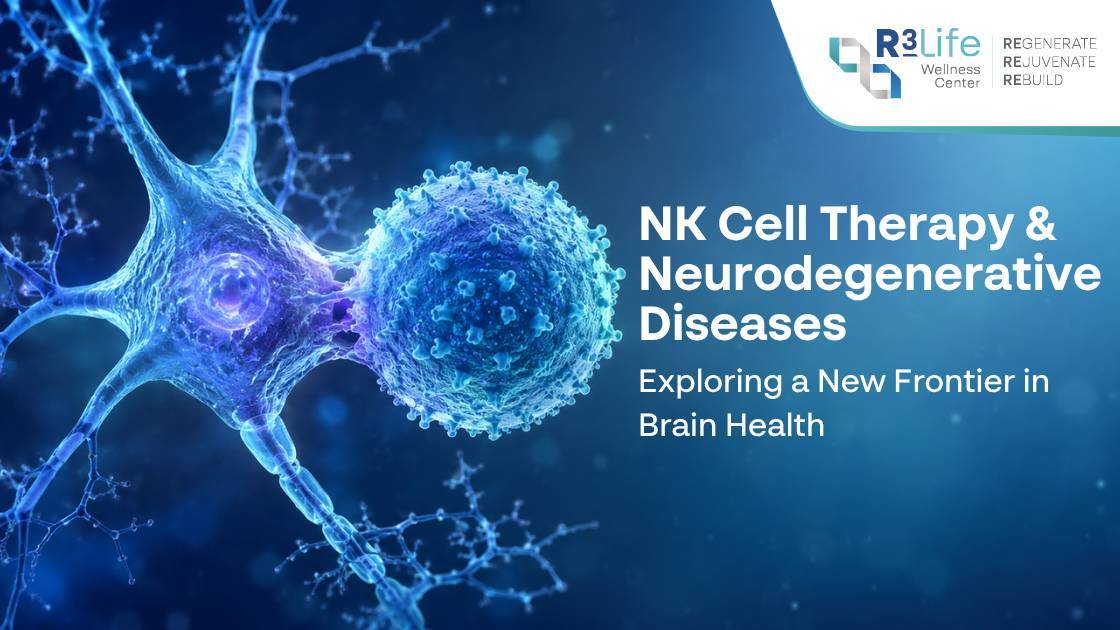
NK Cell Therapy and Neurodegenerative Diseases: Exploring a New Frontier in Brain Health
Explore the emerging science behind NK Cell Therapy and its potential role in neurodegenerative diseases, including Alzheimer’s and Parkinson’s disease.
Could NK Cells Play a Role in Brain Health?
When most people hear the term Natural Killer (NK) Cells, they think of immune cells that identify and eliminate infected or abnormal cells.
But modern research is revealing a much more complex role.
NK cells are now being studied for their potential involvement in neuroinflammation, immune regulation, and the clearance of abnormal protein aggregates—all processes that are increasingly recognized as important in neurodegenerative diseases.
This has led researchers to investigate an intriguing question:
Could NK cells become part of a future approach to supporting brain health and addressing neurodegenerative disease?
The answer is not yet definitive. However, emerging laboratory, animal, and early clinical research is beginning to provide important clues.
Understanding Neurodegenerative Diseases
Neurodegenerative diseases are a group of conditions characterized by the progressive dysfunction or loss of neurons.
They include conditions such as:
- Alzheimer’s disease
- Parkinson’s disease
- Amyotrophic lateral sclerosis (ALS)
- Multiple sclerosis and other neuroinflammatory disorders
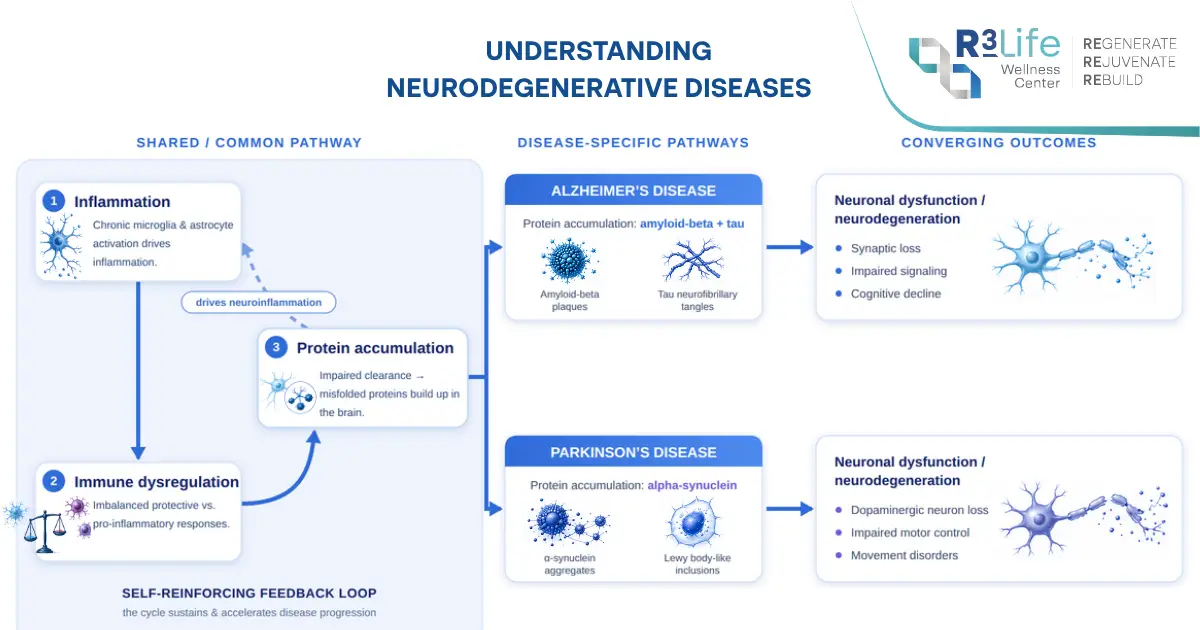
Although these diseases differ in their underlying pathology, researchers increasingly recognize several interconnected processes, including:
Chronic inflammation → immune dysregulation → abnormal protein accumulation → neuronal dysfunction
For example, Alzheimer’s disease is associated with abnormal accumulation of amyloid-beta and tau, while Parkinson’s disease is strongly associated with abnormal alpha-synuclein accumulation, the primary component of Lewy bodies.
This has shifted scientific attention beyond neurons alone toward the relationship between the immune system and the brain.
What Are Natural Killer (NK) Cells?
Natural Killer Cells are a specialized population of immune cells belonging to the innate immune system.
Their best-known function is immune surveillance: identifying and responding to cells that appear abnormal, including certain virus-infected cells and tumor cells.
However, NK cells also have important immunoregulatory functions.
Depending on their phenotype and environment, they can:
- Release cytokines
- Regulate inflammatory responses
- Interact with T cells and other immune cells
- Respond to abnormal or stressed cells
- Participate in immune surveillance within tissues
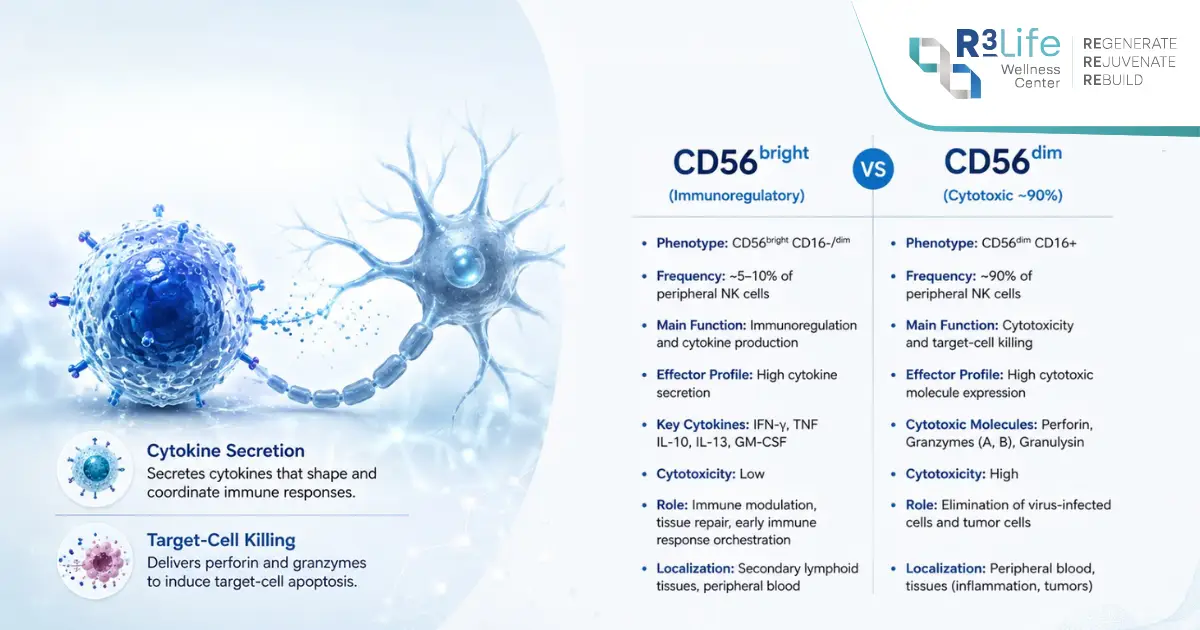
Importantly, NK cells are not a single uniform population.
Two major subsets are commonly discussed:
CD56bright NK cells: Generally more immunoregulatory and act as potent cytokine producers.
CD56dim NK cells: Account for approximately 90% of circulating NK cells and are primarily characterized by their strong cytotoxic activity.
This distinction is particularly important when discussing NK cells and neurodegenerative disease because their effects may differ depending on the disease and cellular environment.
Why Are NK Cells Being Studied in Neurodegenerative Disease?
One of the most interesting areas of research is the relationship between immune dysfunction and neuroinflammation.
The brain has its own immune environment, involving cells such as microglia and astrocytes. When inflammatory signaling becomes persistent or dysregulated, it may contribute to the progression of neurological damage.
Researchers are therefore investigating whether NK cells may influence this environment through several mechanisms.
1. Immune Regulation
NK cells can interact with other immune cells, including activated T cells, potentially influencing inflammatory signaling.
2. Neuroinflammation
Certain NK cell populations may influence the inflammatory environment within or around the central nervous system.
3. Protein Aggregate Clearance
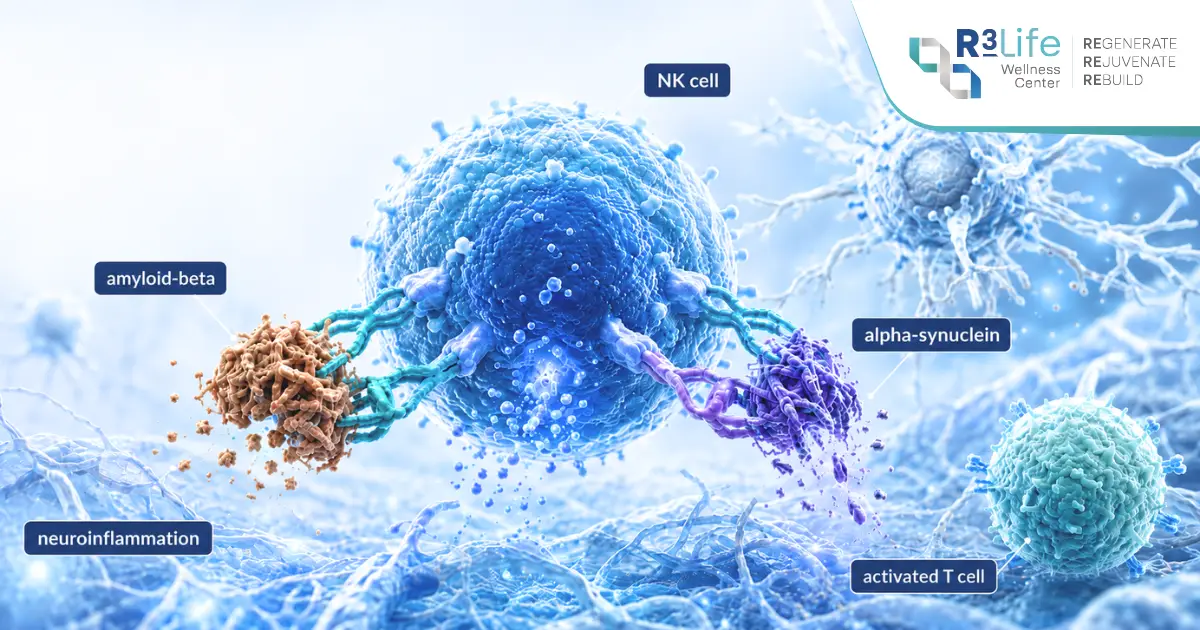
Some experimental studies suggest that NK cells may recognize and internalize abnormal protein aggregates, including amyloid-beta and alpha-synuclein.
4. Immune Surveillance
NK cells may contribute to the broader process of identifying and responding to abnormal cellular activity.
These mechanisms remain under active investigation and should not yet be interpreted as proven therapeutic effects in patients.
NK Cells and Parkinson’s Disease
Parkinson’s disease is characterized by progressive dysfunction of dopaminergic neurons and is strongly associated with the accumulation of abnormal alpha-synuclein.
This has made Parkinson’s disease particularly interesting to researchers studying NK cells.
Preclinical research has demonstrated that NK cells can interact with alpha-synuclein aggregates and may contribute to their uptake and degradation.
In experimental models, depletion of NK cells has also been associated with increased alpha-synuclein pathology and neuroinflammation, suggesting that NK cells may have a role in maintaining immune balance within the nervous system.
However, this distinction is critical:
Evidence that NK cells may participate in disease biology does not mean that NK Cell Therapy has been proven to treat Parkinson’s disease.
Human clinical evidence remains limited, and further research is required.
NK Cells and Alzheimer’s Disease
Alzheimer’s disease has also become an important area of NK cell research.
Researchers are particularly interested in the relationship between NK cells, neuroinflammation, and abnormal protein aggregates such as amyloid-beta and tau.
One of the most notable developments came in 2025, when researchers published a Phase I clinical study evaluating SNK01, an autologous, non-genetically modified expanded NK cell product, in patients with Alzheimer’s disease.
The study included 11 participants, with 10 evaluable for analysis. Participants received intravenous NK cell infusions every three weeks for four treatments.
The primary objective was safety, while researchers also evaluated cognitive measures and cerebrospinal fluid biomarkers related to amyloid, tau, neurodegeneration, and neuroinflammation.
In laboratory experiments, the expanded NK cells demonstrated the ability to:
- Take up and degrade amyloid-beta aggregates
- Take up and degrade alpha-synuclein aggregates
- Eliminate activated T cells
- Produce anti-inflammatory cytokines
In the clinical study, no treatment-related adverse events were reported. Some participants showed stable or improved cognitive scores, while certain cerebrospinal fluid biomarkers, including pTau181 and GFAP, showed potentially favorable changes.
But what does this mean?
It means that NK cell therapy has entered early-stage human research for Alzheimer’s disease.
It does not yet mean that NK cell therapy has been proven to slow, stop, or reverse Alzheimer’s disease.
The study was a small Phase I trial, primarily designed to evaluate safety and explore preliminary biological and clinical signals. Larger and longer clinical trials are still necessary.
The Connection Between NK Cells and Neuroinflammation
One of the most compelling concepts in this field is neuroinflammation.
Inflammation is not inherently harmful. In fact, an appropriate immune response is essential for protecting tissues.
The concern arises when inflammatory signaling becomes persistent or poorly regulated.
Researchers are therefore studying whether specific NK cell populations could help regulate this immune environment.
A 2024 review published in the Journal of Neuroinflammation examined the role of CD56bright NK cells across several neurodegenerative and neuroinflammatory disorders, including Alzheimer’s disease, Parkinson’s disease, multiple sclerosis, and ALS.
The authors emphasized that the role of NK cells remains complex and may be either beneficial or detrimental depending on the disease, NK cell subset, and stage of disease.
This is an important scientific distinction.
NK cells should not simply be viewed as “good cells” that should always be increased.
Their biological effect depends on which NK cells are present, how they are activated, and what is happening in the surrounding tissue.
From Immune Cells to Regenerative Medicine
This emerging research represents a broader shift in regenerative and longevity medicine.
Rather than focusing exclusively on replacing damaged tissue, researchers are increasingly studying how to influence the body's own biological systems—including the immune system.
NK cells are particularly interesting because they sit at the intersection of:
Immune surveillance
↓
Inflammation
↓
Cellular health
↓
Tissue environment
↓
Healthy aging
This does not mean that NK cell therapy is a proven longevity treatment.
Instead, it represents an emerging area of cellular medicine research that may eventually help researchers better understand the relationship between immune health, aging, and neurological disease.
Could NK Cell Therapy Become Part of Future Brain Health Strategies?
Possibly. But more evidence is needed.
Future research will need to answer several important questions:
- Which NK cell subsets are most beneficial?
- What is the optimal dose and treatment schedule?
- How long do infused NK cells remain functional?
- Can NK cells effectively influence the central nervous system?
- Which patients are most likely to benefit?
- Can treatment meaningfully change disease progression rather than only biomarkers?
- What are the long-term safety implications?
These questions are especially important because neurodegenerative diseases are highly complex and develop over many years.
A therapy that changes an inflammatory biomarker does not necessarily mean that it will change long-term cognitive or neurological outcomes.
That is why larger randomized controlled trials will be essential.
What Does the Current Evidence Actually Tell Us?
At this stage, the evidence can be summarized in three levels.
What we know
NK cells are biologically active immune cells with important immunoregulatory and cytotoxic functions.
What emerging research suggests
NK cells may interact with neuroinflammation and abnormal protein aggregates associated with neurodegenerative diseases.
What remains unproven
Whether NK Cell Therapy can prevent, slow, reverse, or cure neurodegenerative diseases in humans.
This distinction is essential when evaluating any cellular therapy.
A New Perspective on Healthy Brain Aging
Brain health is influenced by much more than one biological pathway.
From a preventive and longevity medicine perspective, maintaining cognitive health involves addressing multiple factors, including:
- Cardiometabolic health
- Physical activity
- Sleep quality
- Nutrition
- Stress management
- Cognitive stimulation
- Vascular health
- Metabolic health
- Healthy immune function
NK cells represent one piece of this much larger picture.
As research continues, understanding immune function may become increasingly important in our understanding of biological aging and neurological health.
The Future of NK Cell Therapy
NK Cell Therapy is moving from an area of laboratory research toward early clinical investigation.
The 2025 Phase I study in Alzheimer’s disease represents an important step because it demonstrates that researchers are beginning to evaluate expanded NK cells directly in patients—not only in laboratory models.
At the same time, reviews of the field emphasize that our understanding of NK cells in neurodegeneration remains incomplete, particularly regarding the different functions of CD56bright and CD56dim populations.
For now, the most scientifically accurate way to describe NK Cell Therapy is:
An emerging cellular therapy being investigated for its potential role in immune regulation, neuroinflammation, and neurodegenerative disease.
It is an exciting field, but one that still needs robust clinical evidence.
Frequently Asked Questions
1.Can NK Cell Therapy treat Alzheimer’s disease?
Not yet. Early clinical research is investigating the safety and potential biological effects of NK Cell Therapy in Alzheimer’s disease, but there is currently insufficient evidence to establish it as a proven treatment.
2.Can NK Cells help with Parkinson’s disease?
Preclinical studies suggest that NK cells may interact with alpha-synuclein and influence neuroinflammation. However, clinical evidence demonstrating that NK Cell Therapy can treat Parkinson’s disease is currently insufficient.
3.Can NK Cells cross into the brain?
NK cells have been detected in the central nervous system under certain inflammatory and pathological conditions. However, how different NK cell subsets enter and function within the CNS remains an active area of research.
4.Are all NK Cell Therapies the same?
No. NK cell products can differ substantially in terms of their source, expansion process, phenotype, activation state, manufacturing standards, and quality controls.
Therefore, the term “NK Cell Therapy” alone does not describe a single standardized treatment.
5.Is NK Cell Therapy a proven longevity treatment?
No. NK cell biology is an active area of longevity and aging research, but there is currently insufficient clinical evidence to consider NK Cell Therapy a proven longevity treatment.
Final Takeaway
The relationship between the immune system and the brain is one of the most fascinating areas of modern regenerative medicine.
NK cells may play a role in regulating neuroinflammation, interacting with abnormal protein aggregates, and maintaining immune surveillance. Early research in Alzheimer’s and Parkinson’s disease has generated promising hypotheses, while the first human clinical studies are beginning to explore whether these mechanisms can translate into meaningful therapeutic effects.
But science has not reached the finish line.
NK Cell Therapy is promising—but still investigational in neurodegenerative disease.
For patients considering cellular therapies, the most important step is not simply asking whether a treatment is “new” or “regenerative,” but understanding the scientific evidence, the specific cell product being used, its quality and safety profile, and whether the proposed treatment is appropriate for the individual's medical circumstances.
In regenerative medicine, promising science deserves attention—but evidence should always guide expectations.

 Why Is My Immune System So Weak? Causes & Solutions