Not Every Wrinkle Needs Filler: Understanding Facial Aging Before Choosing the Right Treatment
Not Every Wrinkle Needs Filler: Understanding Facial Aging Before Choosing the Right Treatment
5 Key Takeaways
- Wrinkles or folds in the same area may have different underlying causes.
- Dermal filler can be appropriate for facial volume loss, but it is not the answer to every concern.
- Skin laxity, skin quality, and facial muscle function may require different approaches.
- Most people experience several types of facial aging at the same time, but this does not mean every treatment is necessary.
- A medical assessment can help identify the main cause, explain the available options, and determine which concerns should be addressed first.
Why Filler Is Not the Answer to Every Facial Concern
When nasolabial folds become more noticeable, the jawline appears less defined, or the face looks tired despite adequate rest, many people immediately think of dermal filler.
Filler is a valuable tool in aesthetic medicine, particularly when the main concern is facial volume loss or reduced structural support. However, not every wrinkle, fold, or age-related facial change needs to be treated in the same way.
Facial aging does not occur only at the surface of the skin. It involves changes across several layers, including bone, facial fat compartments, supporting ligaments, muscles, collagen, elastin, and overall tissue quality.
This means that two people with similar-looking nasolabial folds may have entirely different underlying causes. One person may have lost volume in the upper cheek, while another may have more significant tissue laxity. Some people may have both.
The most useful question is therefore not simply:
“Which treatment should I have?”
A better place to begin is:
“What is causing this change, and which approach best suits my face, lifestyle, and goals?”
A thoughtful facial rejuvenation plan should begin with an assessment of facial structure, the underlying cause of the concern, overall health, and individual expectations—not simply with the most popular aesthetic treatment.
Facial Aging Does Not Happen in Only One Layer
The face does not change with age because of collagen loss alone. Several structures gradually change and interact with one another.
When certain facial fat compartments lose volume, the face may appear hollow, and shadows may become more noticeable under the eyes or around the nasolabial folds.
When supporting tissues change, the cheeks may sit lower and the jawline may become less defined. At the same time, changes in facial muscle function and skin quality may contribute to a tired or less refreshed appearance.
Looking only at the visible fold or wrinkle may therefore be misleading. What appears on the surface may be the result of changes occurring deeper within the face.
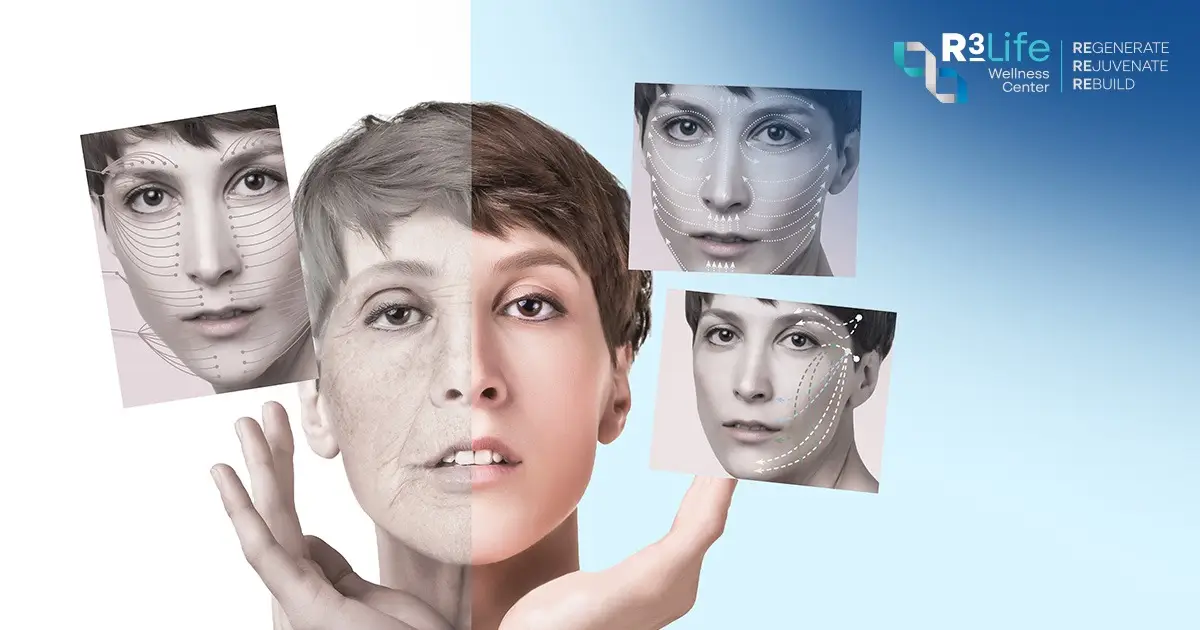
Facial aging can generally be considered across five major categories.
1. Dynamic Wrinkles: Lines Caused by Facial Movement
Dynamic wrinkles develop from repeated facial muscle contractions, such as smiling, frowning, raising the eyebrows, or squinting.
At first, these lines may appear only during facial expression and fade when the face is at rest. As skin elasticity declines, they may gradually remain visible even without movement.
When muscle activity is the primary cause, a physician may consider botulinum toxin to reduce excessive contraction in appropriate areas.
However, not every forehead line or crow’s-foot is caused by muscle activity alone. If there is also reduced skin quality, a static crease, or another structural concern, additional skin-focused care may be considered.
Assessment both at rest and during facial expression helps distinguish whether a line is related mainly to muscle activity, skin quality, or several factors combined.
The goal does not have to be a completely motionless face. Treatment can instead focus on softening lines while preserving natural facial expression.
2. Facial Volume Loss: When the Face Loses Support and Fullness
As we age, changes may occur in facial fat compartments and parts of the underlying bone structure. This can make the face look hollow, tired, or more shadowed in certain areas.
What appears to be a deep nasolabial fold may not originate from the fold itself. In some cases, it is partly related to volume loss in the upper cheek.
When the upper face loses structural support, the overlying tissues may sit lower, making the fold below appear more prominent.
Dermal filler may be appropriate when a physician determines that the main concern is volume loss or reduced structural support.
However, the objective should not be to fill every visible line. It is important to consider where the underlying change begins, how much volume may be appropriate, and how adding volume could affect overall facial balance.
In some cases, restoring support in the area where volume has been lost may improve nearby contours without injecting directly into every fold.
For one person, filler may be appropriate. For another, treating skin laxity first may be more suitable. Some people may not need additional volume at all.
3. Skin Laxity: When the Main Concern Is Sagging, Not Volume Loss
Skin and tissue laxity may be associated with changes in collagen, elastin, connective tissue, and the natural structures that support the face.
Common signs may include:
- Lower cheek position
- A less defined jawline
- Downturned corners of the mouth
- Increased fullness along the jawline or under the chin
- A heavier-looking face without obvious volume loss
When laxity is the primary concern, adding volume alone may not address the cause. In some people, too much additional volume may make the face appear fuller or heavier than intended.
Depending on tissue thickness, the layer being treated, and the individual goal, a physician may consider technologies such as Ulthera SPT or Thermage FLX.
Ulthera SPT
Ulthera SPT uses focused ultrasound energy delivered to planned tissue depths.
It may be considered for people seeking non-surgical treatment for facial laxity, the jawline, or the area beneath the chin.
Results and suitability vary according to facial structure, tissue volume, skin condition, and individual response.
Thermage FLX
Thermage FLX uses radiofrequency energy to deliver controlled heat to the skin and underlying tissue.
It is used to support skin tightening and the natural collagen remodeling process.
Choosing between Ulthera SPT and Thermage FLX is not simply a matter of deciding which device is universally “better.” The decision depends on the tissue layer that needs attention, facial anatomy, tissue thickness, expected outcome, and individual limitations.

4. Facial Muscle Changes: When a Tired Appearance Is Not Only About the Skin
Facial muscles do more than create expression. They are one of several elements that contribute to facial shape, balance, and overall appearance.
Changes in muscle activity, combined with skin laxity or reduced skin quality, may contribute to a tired, less firm, or downward-looking appearance, even when there are no deep wrinkles.
For this reason, collagen-focused treatment or filler alone may not address every aspect of the concern.
EMFACE combines Synchronized RF and HIFES™ technologies to deliver energy to the skin and stimulate selected facial muscles without needles.
A physician may consider EMFACE for areas such as the forehead, cheeks, jawline, or under the chin, depending on facial muscle characteristics, skin laxity, skin condition, and individual goals.
For some people, EMFACE may form part of the main treatment strategy. Others may be more suitable for a combination of technologies, while some may not require it at that stage.
5. Skin Quality Changes: When the Main Concern Is the Skin Itself
Some people do not have obvious facial hollowness or significant sagging but notice concerns such as:
- Dull-looking skin
- More visible pores
- Dryness or difficulty applying makeup smoothly
- Fine lines across the face
- Skin that appears thinner or recovers more slowly
These concerns may relate more to skin quality and the surrounding tissue environment than to facial shape or volume.
In such cases, filler may alter facial contours, but it does not directly address every aspect of skin quality or skin function.
Depending on the indication, a physician may consider collagen-supporting technologies, skin-rejuvenation programs, or regenerative aesthetic approaches.
These may include exosome-based treatments or regenerative medicine programs, subject to individual assessment of skin condition, medical history, general health, and suitability.
However, clinical evidence for exosome use in aesthetic medicine is still developing. Outcomes may vary, and patients should discuss the available evidence, expected benefits, limitations, and alternative treatments with a qualified physician before deciding.
Skin quality is also influenced by more than procedures performed on the face.
Sleep, nutrition, stress, daily habits, and general health may all affect skin recovery and appearance. A suitable plan may therefore include both external treatment and internal health support rather than simply increasing the number of facial procedures.
Filler Is Not Something to Avoid—It Should Be Used for the Right Reason
Dermal filler is not inferior to other aesthetic treatments, nor is it something that should automatically be avoided.
When the primary concern is volume loss, filler may help restore support or improve facial proportions appropriately.
When the main issue is skin laxity, facial muscle function, or skin quality, another approach may be more suitable. In some cases, treatments may need to be planned in stages.
Most people do not have only one type of facial aging.
The same person may experience dynamic wrinkles, tissue laxity, facial volume loss, and reduced skin quality at the same time.
However, having several concerns does not mean every treatment must be performed at once.
The important questions are:
- Which concern is the primary cause?
- Which changes are secondary?
- What should be addressed first?
- What can be reassessed later?
- What may not yet be necessary?
For example, when both facial laxity and volume loss are present, a physician may choose to address laxity first and reassess volume afterward. Once the tissue position changes, areas that previously appeared hollow or deeply folded may look different.
In another case, clearly reduced structural support may make carefully planned volume restoration a more appropriate first step.
There is no single formula for every face, and no aesthetic treatment is universally best for everyone.

Understand the Cause Before Choosing a Treatment
Patients should have the opportunity to understand what may be changing in their face and which approaches can reasonably be considered before making a decision.
A consultation does not mean that everyone will be advised to have filler, a skin-tightening device, EMFACE, or a regenerative aesthetic procedure.
Before creating a plan, a physician may assess factors such as:
- Facial structure and proportions
- Facial fat distribution
- Muscle activity patterns
- Degree of skin and tissue laxity
- Skin quality and elasticity
- Previous aesthetic treatments
- General health
- Lifestyle and available recovery time
- Personal goals and expectations
- Budget and individual limitations
The physician can then explain the available approaches, expected benefits, limitations, and the reason each option may or may not be appropriate.
Some people may be suitable for filler.
Some may benefit more from a non-surgical skin-tightening treatment.
Others may need to begin with improving skin quality.
For some people, choosing not to have a procedure at that time may also be a medically reasonable recommendation.
At R3 Life Wellness Center, we believe that good care should not begin with trying to do as much as possible. It should begin with understanding what is necessary, what can wait, and which approach fits the person’s face, lifestyle, and level of comfort.
The most important question is not simply:
“Which treatment is the best?”
It is:
“Which approach is right for you, and which option do you feel comfortable choosing?”
FAQ
1. Do deep nasolabial folds always need filler?
No. Nasolabial folds may be related to upper-cheek volume loss, tissue laxity, changes in facial structure, or several factors combined. A physician should assess the cause before recommending where or how to treat the area.
2. What is the difference between filler and skin-tightening treatments?
Dermal filler is generally used to add or restore volume in selected areas. Technologies such as Ulthera SPT and Thermage FLX are designed to address tissue laxity, firmness, or structural support at different depths. The appropriate choice depends on the cause of the concern rather than age or treatment popularity alone.
3. How do I choose between Ulthera SPT, Thermage FLX, and EMFACE?
Each technology has a different mechanism and treatment focus. Ulthera SPT uses focused ultrasound at planned tissue depths. Thermage FLX uses radiofrequency energy to support skin tightening and collagen remodeling. EMFACE delivers energy to the skin while stimulating selected facial muscles. A physician can assess which option best matches the main concern, facial structure, and expected outcome.
4. Do I need several facial treatments at the same time?
Not necessarily. Having several concerns does not mean every treatment should be performed at once. A physician may prioritize one concern, separate treatments into stages, or begin with one approach and reassess before recommending the next step.
5. What should I do if I am unsure which facial treatment is right for me?
Begin with a consultation and facial assessment. You do not need to decide on a procedure during the same visit. A physician can explain what may be causing your concern, which options are available, and the benefits, limitations, and suitability of each approach so you can make an informed decision at your own pace.

 Exosome or PRP? Which is Right for Pollution-Damaged Skin?