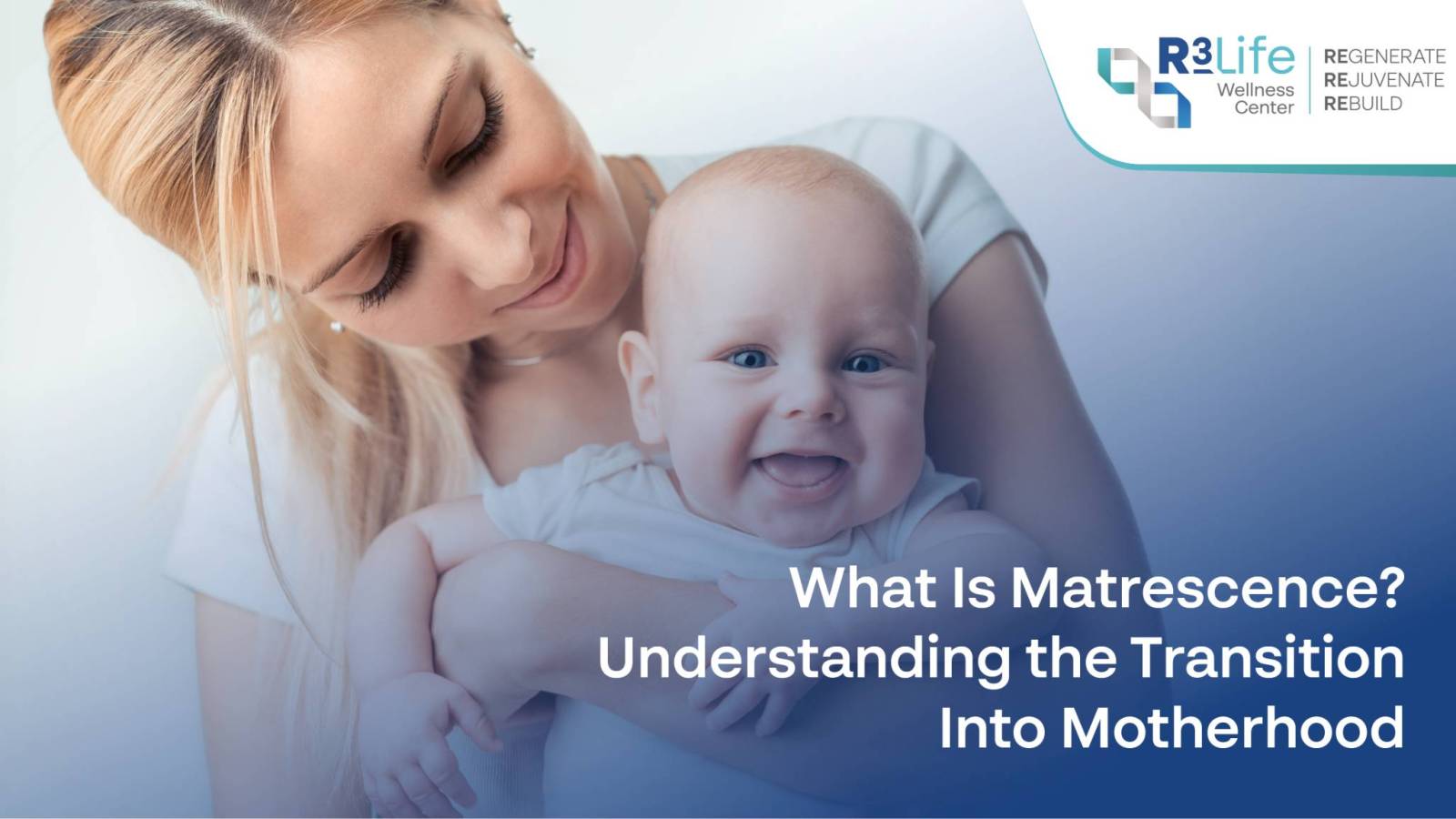
What Is Matrescence? Understanding the Transition Into Motherhood | R3 Life
What Is Matrescence? How Motherhood Changes More Than Your Body
5 Key Things to Know About Matrescence
- Matrescence is the transition into motherhood, involving changes in the body, emotions, identity, relationships, and everyday life.
- The experience can include happiness, personal growth, and challenges. It does not necessarily mean losing your sense of self.
- For some mothers, deeply loving their child can coexist with missing certain parts of life before motherhood.
- Postpartum self-care and health support should reflect each mother's individual needs, health, and circumstances.
- Persistent or severe sadness, anxiety, hopelessness, or emotional distress that interferes with daily life should be discussed with an appropriate healthcare or mental health professional.
Some mothers love their children deeply, yet occasionally miss the life they had before becoming a parent: sleeping through the night, leaving the house without preparing everything for someone else, or simply having a few hours without constantly checking the time.
Some may even feel guilty for having these thoughts, despite spending the entire day caring for their child and loving them wholeheartedly.
For other mothers, having a child brings a profound sense of happiness and fulfillment. Giving their time and energy to their child may feel completely natural, without a sense that something has been lost. The same mother may also experience motherhood differently at different stages of her life.
These experiences can all be part of matrescence, the transition into motherhood. The concept encompasses much more than exhaustion or missing your former self, and it does not suggest that every mother should experience motherhood in the same way.
What Is Matrescence?
Matrescence is a term introduced by medical anthropologist Dana Raphael in the 1970s to describe the process of becoming a mother.
In her 1975 work, Raphael distinguished between giving birth and gradually developing into the maternal role, suggesting that this transition should be understood through both biological and cultural perspectives. The concept does not imply that every mother is unprepared for motherhood or has difficulty accepting her new role.
More recently, Aurelie M. Athan expanded the concept in a 2024 academic paper, describing matrescence as a developmental process that may continue throughout a woman's life. It can involve physical and psychological changes as well as shifts in relationships, social roles, identity, and perspectives on life.
The concept can also encompass pathways to motherhood beyond giving birth, including adoption.
Importantly, matrescence is not a disease or medical diagnosis. It is a conceptual framework for understanding the complex transition into motherhood, and research surrounding the concept continues to evolve.
For some women, matrescence may involve discovering new meaning and happiness, changing priorities, or navigating new challenges. It does not necessarily involve feeling that you have lost your former identity.
“I Love My Child, So Why Do I Miss My Life Before Motherhood?”
Having a child does not automatically erase the needs, interests, and relationships you had before becoming a mother.
You may feel happy when your baby smiles while still missing your friends, career, relationship with your partner, hobbies, or simply having uninterrupted time alone. These feelings do not necessarily contradict each other.
Sometimes, the difficult part is feeling unable to talk about them.
A mother may worry that others will think she is not ready to have a child, or she may expect to hear, “Every mother goes through this.” As a result, saying “I'm fine” can sometimes hide days that feel much more difficult.
A 2020 systematic review of qualitative studies examining women's experiences after childbirth (Finlayson et al., 2020) highlighted the importance of adjusting to a new maternal role while navigating relationships and personal health.
Wanting support, rest, personal time, or a sense of connection with yourself is therefore not something that should automatically be dismissed as unimportant.

How Does Motherhood Change You Beyond Your Body?
Time and Personal Space
When much of your day revolves around caring for a child, seemingly simple things finishing a meal, meeting a friend, exercising, or spending time alone may require planning and support from someone else.
This is why telling a mother to “make time for yourself” may not be enough if nobody is helping create that time in the first place.
Identity and Relationships
Becoming a mother does not mean that your other identities disappear.
You may still be a partner, friend, professional, daughter, or someone with personal interests and ambitions, even if those parts of your life temporarily receive less attention.
Wanting to reconnect with things you enjoyed before having a child does not diminish your role as a mother.
Postpartum Body Changes and Body Image
Pregnancy, childbirth, breastfeeding, hormonal changes, and disrupted sleep can coincide with changes in the skin, hair, body shape, energy levels, and how you feel when looking in the mirror.
Some changes may gradually improve over time. However, symptoms that concern you should be discussed with a healthcare professional rather than simply accepted as something every mother has to tolerate.
What you see in the mirror may also represent only one part of what you are experiencing.
When a mother says, “I want some time to take care of myself,” she may be asking for rest, practical help, time alone, or an opportunity to reconnect with something she enjoys not necessarily a change in appearance.
The Pressure to “Get Your Pre-Baby Body Back”
After childbirth, mothers may hear questions such as:
- “Have you lost the baby weight yet?”
- “When are you going back to work?”
- “Why do you still look so tired?”
Yet the question they may actually want someone to ask is simply: “How are you doing?”
Images of seemingly energetic, glowing new mothers on social media can make it easy to compare your own recovery with someone else's.
But one photograph cannot tell you how much sleep that person had, whether she had help caring for her child, what her pregnancy or delivery was like, or what difficult days she may have experienced.
There is no reason your postpartum recovery has to follow someone else's timeline.
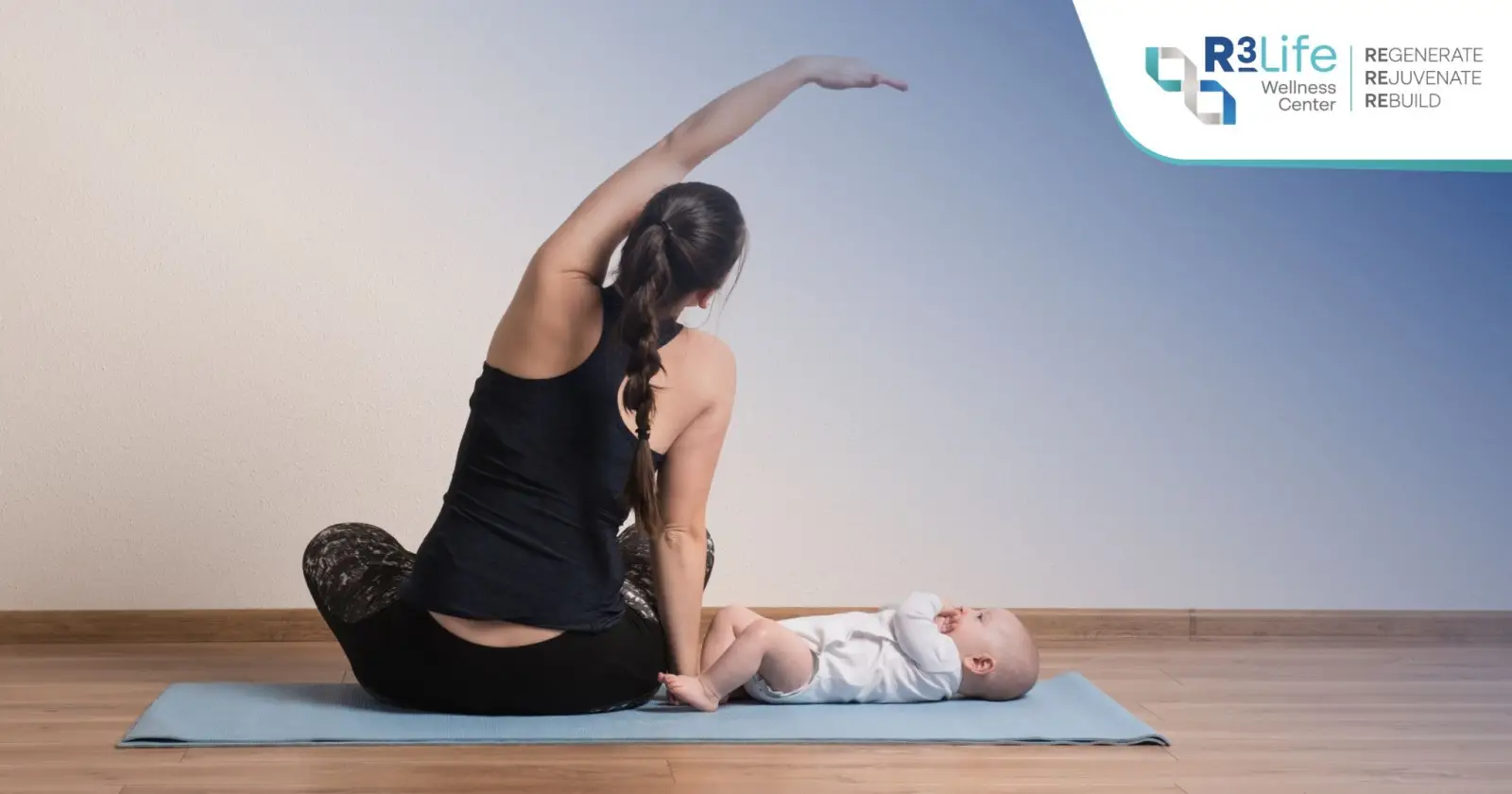
Some mothers want to exercise again. Some want to take better care of their skin. Others simply want more sleep or someone who will genuinely listen.
Postpartum self-care can begin with what you actually need rather than what you believe you should look like.
If skincare or postpartum aesthetic treatments are something you personally want to explore, they should remain your choice rather than an expectation. Your health, concerns, and treatment suitability should be discussed first, particularly if you are pregnant or breastfeeding.
Matrescence vs. Postpartum Depression: When Should You Seek Help?
Matrescence can help describe the transition into motherhood, but the term should never be used to explain away symptoms that require professional support.
If you experience persistent or worsening sadness, anxiety, hopelessness, or emotional distress particularly when these symptoms begin affecting your sleep, eating, relationships, ability to function, or daily life speak with an obstetrician, psychiatrist, psychologist, or qualified mental health professional.
If you have thoughts of harming yourself or someone else, seek emergency help immediately.
Seeking support is not a measure of whether you are a “good mother.” Your health matters too.
How to Start Taking Care of Yourself After Having a Baby
Your needs after becoming a mother may be different from what they were before.
Some days, you may need rest. On others, you may want to return to an activity you enjoy. Sometimes, you may simply want someone to listen without immediately telling you what you should do.
A useful place to start is with one simple question: “What do I need today?”
From there, consider telling your partner, family, friends, or support network what would genuinely help.
Self-care after childbirth does not have to be about returning to the life or body you had before pregnancy.
You are a mother, but you are also still an individual with your own physical and emotional needs. Both deserve attention.

If you have concerns about your physical health but are unsure where to begin, you can start by speaking with a physician at R3 Life Wellness Center in Bangkok. A physician can assess your health, listen to your concerns, and discuss options that may be appropriate for your individual situation.
Emotional distress or symptoms related to mental health should be discussed directly with an appropriate mental health professional.
Frequently Asked Questions About Matrescence
1. Is Matrescence the Same as Postpartum Depression?
No. Matrescence describes the broader transition into motherhood, while postpartum depression is a mental health condition that requires appropriate assessment and care.
A woman can experience matrescence and postpartum depression during the same period. If emotional symptoms become severe, persistent, distressing, or interfere with everyday life, professional assessment is recommended.
2. How Long Does Matrescence Last?
There is no fixed timeline for matrescence. A mother's identity, relationships, priorities, and experiences may continue changing when she returns to work, stops breastfeeding, has another child, or enters another stage of parenting. For this reason, matrescence is not necessarily limited to the first few weeks or months after childbirth.
3. Does Missing My Life Before Having a Baby Mean I Don't Love My Child Enough?
No. Missing certain parts of your previous life does not determine how much you love your child. Love for your child and nostalgia for aspects of your former life can exist at the same time.
You can talk about these feelings with someone you trust without waiting until you feel completely overwhelmed.
4. Can I Have Skincare or Aesthetic Treatments While Breastfeeding?
It depends on the specific treatment or product, any medications or active ingredients involved, and your individual health.
If you are considering aesthetic treatments while breastfeeding, tell your physician that you are breastfeeding before undergoing treatment so that they can assess whether the particular option is appropriate for you.
 Neurodegenerative Diseases: Types and Early Signs