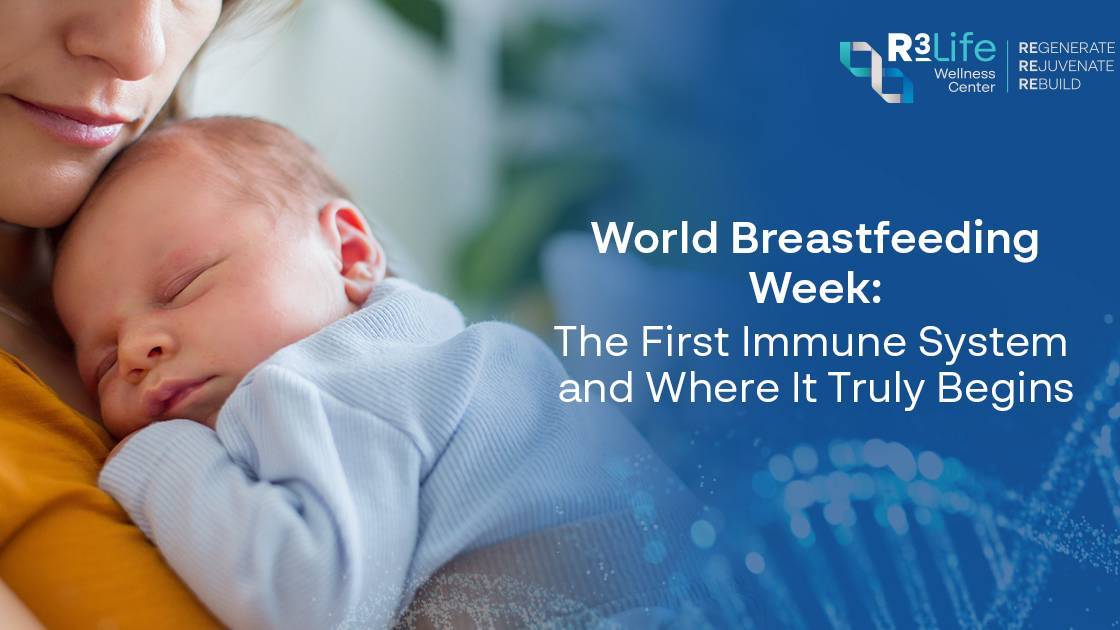
World Breastfeeding Week: The First Immune System and Where It Truly Begins
World Breastfeeding Week: The First Immune System and Where It Truly Begins
Breastfeeding: More Than Nutrition
World Breastfeeding Week: The First Immune System and Where It Truly Begins
The strongest futures begin at the very start of life.
During World Breastfeeding Week (1–7 August), the conversation often focuses on the importance of breast milk as a baby’s first source of nutrition. But beyond nourishment, breastfeeding plays a much deeper role:
It is a baby’s first immune system.
Breastfeeding: More Than Nutrition
Breast milk is a complex, living biological system. It contains antibodies, immune cells, enzymes, and prebiotics that help shape a newborn’s developing immune system.
These components support:
- Early protection against infections
- Development of a healthy gut microbiome
- Long-term immune balance
Rather than simply feeding a baby, breastfeeding helps train the body to respond, adapt, and defend itself from the very beginning.
Early-Life Health is a Continuum.

What breastfeeding delivers doesn’t exist in isolation.
It reflects a broader continuum of health:
- The mother’s condition before pregnancy
- Her health during pregnancy
- And the body’s ability to produce immune-supportive breast milk after birth
In other words, the quality of a baby’s first immune system is influenced by what comes before it.
Looking One Step Earlier: Maternal Health
As awareness of early-life health grows, more attention is being given to the role of maternal health—not just during pregnancy, but even before it begins.
A well-supported body can contribute to:
- Balanced immune function
- Stable internal environment
- Better physiological readiness for pregnancy and beyond
This doesn’t mean every individual needs the same level of intervention.
But it does highlight an important shift:
Preparation is not about doing more, it’s about understanding what your body needs.

When Understanding Becomes More Personal
For some individuals, general lifestyle and nutrition may be enough.
For others, a deeper understanding of internal health can provide additional clarity.
Today, medical tools allow us to explore aspects such as:
- Overall immune system activity
- Balance of different immune cell types
- Functional patterns that may not be visible through routine check-ups
Among these, certain immune cells including NK (Natural Killer) cells are being studied for their role in immune regulation. Their function is complex, and interpretation should always be guided medically.
These insights are not necessary for everyone. But for those seeking a more personalized approach, they can offer a more informed starting point.
A Preventive Perspective on Care
At R3 Life, early-life health is approached through a preventive and medically grounded lens.
This includes:
- Focusing on appropriate care rather than excessive intervention
- Using validated testing when relevant
- Supporting balance within the body’s natural systems
Advanced assessments and therapies may be considered in certain cases but always as part of a broader, individualized plan.
Because meaningful health outcomes are not built on assumptions, but on clarity and the right decisions at the right time.
Breastfeeding is often described as the beginning of a child’s health journey.
But in many ways, it is a continuation of what has already begun.
World Breastfeeding Week is not only a reminder of the value of breast milk but also of the importance of the foundation behind it.
Because the strongest futures are not only nurtured after birth, they are shaped from the very beginning.
 Health Tracking Anxiety: When Your Health Score Becomes Too Much | R3 Life Wellness