Eating Clean but Still Toxic? Understanding Pesticide Residue, Heavy Metals, and Medical Detox Solutions
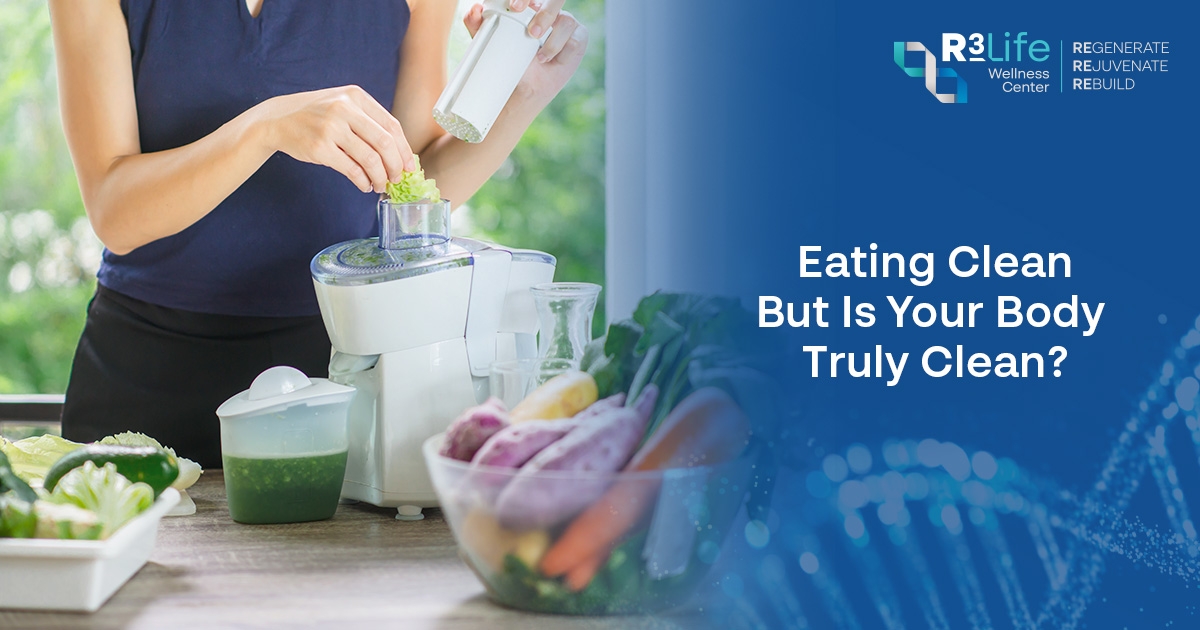
Eating Clean But Is Your Body Truly Clean?
When “Healthy Vegetables” May Not Be as Clean as You Think
Over the past few years, clean eating has become a popular lifestyle among health-conscious individuals. Fresh salads, raw vegetables, minimally processed foods, and cold-pressed juices all give us the feeling that we are taking serious care of our bodies.
Yet many people still experience chronic fatigue, dull skin, bloating, or frequent illness, even while maintaining a clean diet.
This raises an important question:
Is the issue really the food itself or the invisible substances that come with it?
According to a FAO & WHO Joint Report (2021), more than 70% of fruits and vegetables sold in conventional markets worldwide contain at least one detectable pesticide residue. While these residues may not cause immediate symptoms, long-term, low-dose exposure has been linked to disruptions in hormonal balance, immune function, and neurological health.
Clean Eating Does Not Always Mean Chemical-Free
Modern agriculture relies heavily on pesticides, chemical fertilizers, and growth enhancers. Even vegetables that appear fresh, vibrant, and thoroughly washed may still carry chemical residues, especially substances that are fat-soluble or absorbed into plant tissues.
Washing vegetables with plain water alone removes only about 20–30% of pesticide residues, particularly those commonly used in industrial farming (Environmental Health Perspectives, 2017).
In other words, looking clean does not always mean being clean.
How Chemical Residues Enter and Accumulate in the Body
When we consume vegetables or fruits containing chemical residues, these substances can enter the body through the digestive system and may accumulate over time in organs such as the liver, kidneys, and adipose tissue.
The effects are often subtle and long-term rather than immediate, and may manifest as:
- Chronic fatigue
- Allergies or sensitive skin
- Frequent headaches
- Digestive irregularities
- Hormonal imbalance
Environmental toxins are now recognized as a major contributing factor to chronic disease risk in modern populations (The Lancet Planetary Health, 2019).
.jpg)
Is Washing Vegetables with Water Enough?
Water effectively removes dirt and surface debris, but many chemical residues, especially those with lipid-like properties cannot be removed by water alone.
It is similar to trying to wash oil off your hands using only water: some residues simply remain.
How to Wash Vegetables More Effectively in the Modern World
1. Vegetable Cleaning Solutions
Specialized vegetable washing products are designed to:
- Break down chemical adhesion
- Remove residues more effectively than water alone
- Leave no harmful residues behind
They are particularly beneficial for individuals who regularly consume raw vegetables and salads.
2. Household Methods That Help to Some Extent
When specialized products are unavailable, traditional methods such as baking soda, vinegar, or salt solutions may help reduce certain residues.
Research published in the Journal of Agricultural and Food Chemistry (2018) found that baking soda solutions can reduce some pesticide residues by 60–80%, though they do not eliminate all chemical types.
What If You’ve Never Paid Attention Before?
A common concern arises:
“If I’ve been eating this way for years without knowing what has my body accumulated?”
Vegetables are not the only source of chemical exposure. Toxins also come from:
- Drinking water
- Air pollution
- Cosmetics and personal care products
- Food containers
- Heavy metals from the environment
Research shows that mineral imbalance and heavy metal accumulation are associated with fatigue, neurological symptoms, and weakened immune function (Biological Trace Element Research, 2020).
.jpg)
What Is Oligo Scan and What Can It Assess?
Oligo Scan is a non-invasive analytical technology designed to assess:
- Vitamin and mineral deficiencies or excesses
- Accumulation of certain heavy metals and environmental toxins
It analyzes more than 44 elements, providing an overview of the body’s toxic burden and mineral balance.
How Can the Results Be Used?
Oligo Scan results are not meant to create fear, but to provide actionable insight, helping individuals:
- Adjust diet and lifestyle more precisely
- Identify what to supplement or avoid
- Evaluate whether detoxification support may be appropriate
.jpg)
How Chelation Therapy Supports Heavy Metal Detoxification
Chelation Therapy has been used in medical practice for over 50 years. It involves the use of specific agents that bind to heavy metals such as lead, mercury, or cadmium and facilitate their removal through natural excretory pathways, primarily urine.
Studies published in the Journal of Medical Toxicology (2018) indicate that chelation therapy can significantly reduce heavy metal levels when conducted under medical supervision.
Eating Clean for Real: Prevention Plus Understanding Your Body
True clean eating goes beyond choosing healthy-looking foods. It involves:
- Preventive practices in food selection and washing
- Understanding what the body may be accumulating
- Supporting internal detoxification processes appropriatel
Conclusion: Clean Is Not a Trend It’s Awareness
Clean eating does not require fear or obsession. It begins with awareness and informed decision-making.
While environmental toxins cannot be completely avoided, early prevention, proper food handling, and personalized assessment tools such as Oligo Scan allow individuals to better understand their internal health and make meaningful adjustments.
Longevity and wellness are not about appearing clean on the outside but about creating a body that is resilient, balanced, and supported from within.
FAQ
-
Is clean eating really enough to detox the body from pesticides and chemicals?
Answer: Clean eating is an important foundation for health, but it does not always eliminate chemical exposure. Many fruits and vegetables may still contain pesticide residues, even when washed with water. Over time, low-level exposure from food, water, air, and daily products can accumulate in the body. True detoxification involves both preventive practices (such as proper food washing) and supporting the body’s natural detox systems, including the liver, kidneys, and mineral balance.
-
How can I know if my body has accumulated toxins or heavy metals?
Answer: Toxin or heavy metal accumulation often does not cause immediate symptoms. Common signs may include chronic fatigue, digestive issues, brain fog, hormonal imbalance, or frequent illness. Analytical tools such as Oligo Scan can help assess mineral balance and the presence of certain heavy metals, providing a clearer picture of the body’s internal burden and helping guide personalized lifestyle or wellness adjustments.
-
What is chelation therapy and when is it appropriate?
Answer: Chelation therapy is a medically supervised procedure that uses specific agents to bind certain heavy metals, such as lead or mercury, and facilitate their elimination through the body’s excretory system. It is not intended for everyone and should only be considered when there is evidence of heavy metal burden and under professional medical guidance. When used appropriately, it can support the body’s detoxification process as part of a broader preventive health approach.

 Beyond EEG: How Brain Wearable Technology Is Shaping the Future of Longevity