FaceAge: How AI Estimates Biological Age from Your Face and What It Could Mean for Longevity
FaceAge: How AI Estimates Biological Age from Your Face and What It Could Mean for Longevity
5 Key Takeaways
- FaceAge is an AI model developed to estimate an age-related biological signal from a facial photograph and study its relationship with health outcomes.
- Research has found associations between FaceAge, Face Aging Rate (FAR), and survival in patients with cancer, but these tools are not validated health assessments for the general public.
- Face Aging Rate moves the question from “How old might I appear?” to “How quickly is my AI-estimated facial age changing over time?”
- The bigger idea for longevity medicine is not simply looking younger, but understanding and tracking how aging-related signals change over time.
- At R3 Life Wellness Center in Bangkok, personalized healthy aging begins with physician-led assessment of the individual, not with chasing a single biological-age score or attempting to “reverse” aging.
Have you ever wondered why two people of the same chronological age can look and sometimes age very differently?
The answer may involve more than the number of years they have lived. Researchers are increasingly studying biological age, a concept used to describe how the body may be aging relative to chronological age.
Now, artificial intelligence is exploring whether part of that information might even be visible in the face.
In 2025, researchers including investigators from Mass General Brigham and Harvard Medical School published a study in The Lancet Digital Health introducing FaceAge, a deep-learning system designed to estimate biological age information from facial photographs and investigate its relationship with clinical outcomes in patients with cancer.
A year later, researchers extended the idea with Face Aging Rate (FAR) shifting attention from a single estimate of age toward something potentially more meaningful for the future of longevity research:
How quickly might an aging-related signal be changing over time?
The idea is fascinating. But it also needs to be understood carefully. FaceAge was developed and studied in specific research and clinical populations. It is not currently a diagnostic test or validated biological-age assessment for healthy individuals.
What Is FaceAge AI?
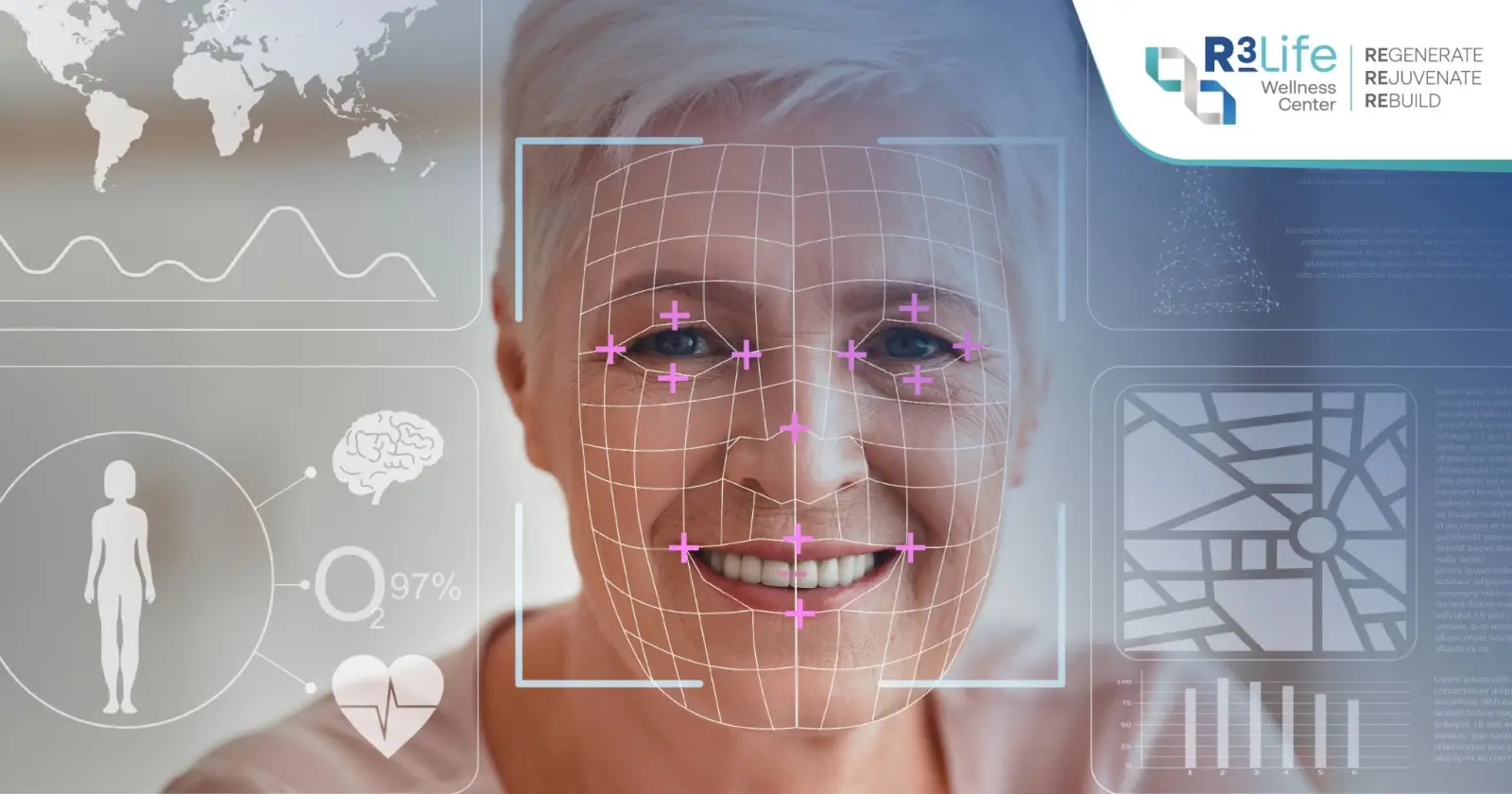
FaceAge is a deep-learning model that analyzes a facial photograph and produces an age estimate intended to capture information associated with biological aging.
The model was developed using facial images from more than 58,000 presumed healthy individuals aged 60 or older and subsequently evaluated using data from more than 6,000 patients with cancer in the United States and the Netherlands.
Researchers found that patients with cancer had a FaceAge approximately 4.8 years higher than their chronological age on average compared with a non-cancer reference group. Higher FaceAge was also associated with poorer overall survival in the populations studied.
This does not mean that looking older causes poorer health or a shorter life.
The research demonstrates an association and suggests that facial information may contain signals relevant to health and aging. It does not establish FaceAge as a screening tool for the general population.
What Does AI See Beyond Wrinkles?
One reason FaceAge is interesting is that an AI model does not necessarily interpret facial aging in the same way humans do.
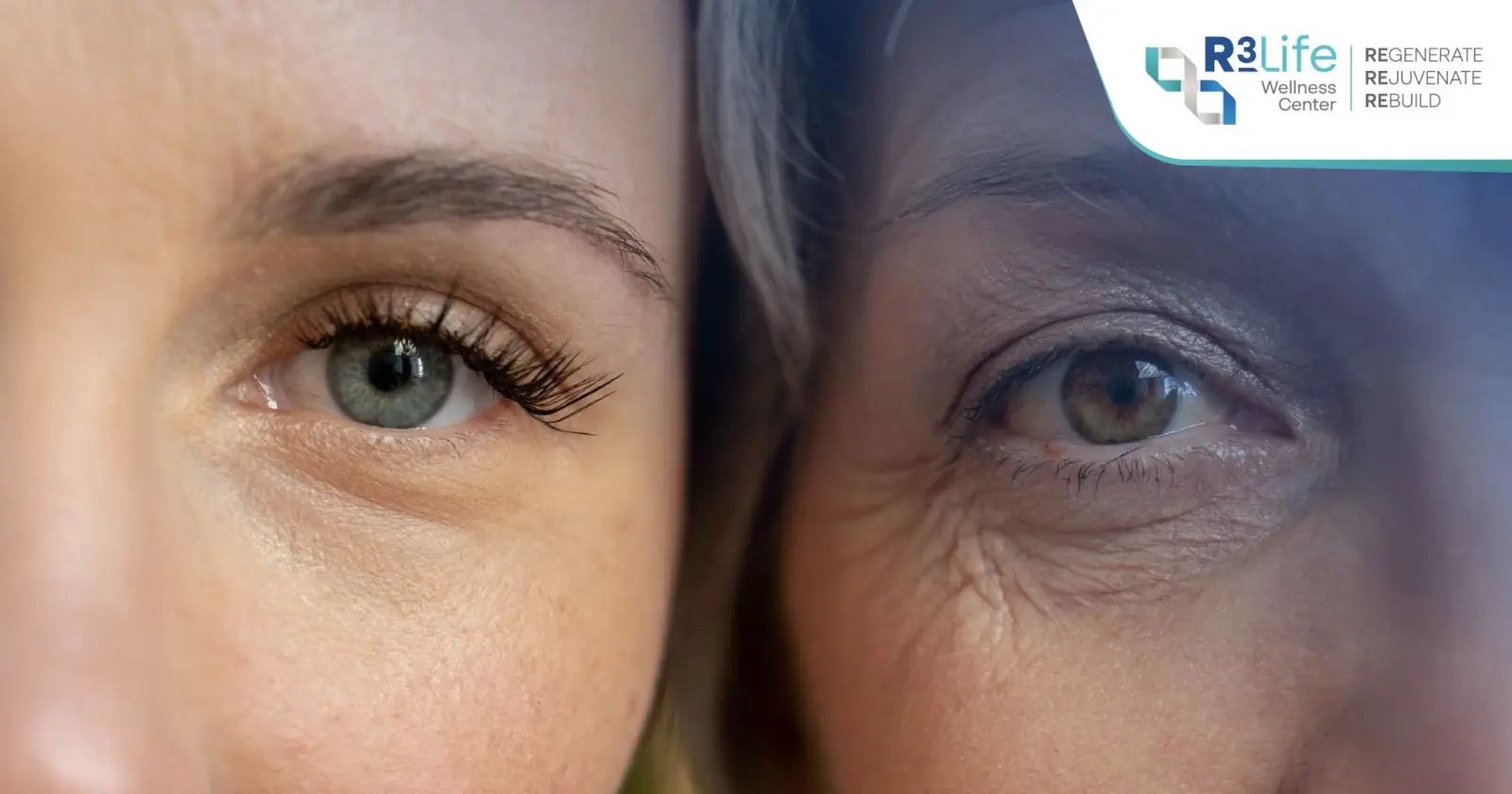
Features such as gray hair or baldness appeared to carry less weight than might be expected. Researchers instead highlighted patterns involving areas such as smile lines and the temporal region, where age-related differences may reflect changes in muscle and facial tissue volume.
This supports a broader understanding of facial aging: aging is not simply about wrinkles.
Changes can occur across multiple layers including skin quality, fat distribution, muscle, soft-tissue volume and facial structure.
But this should not be interpreted backwards. Making a face appear younger has not been shown to reduce biological age, improve survival or change the health outcomes studied in FaceAge research.
FaceAge vs. Face Aging Rate: From “How Old?” to “How Fast?”
In 2026, researchers introduced Face Aging Rate (FAR) in a Nature Communications study examining changes in FaceAge over time.
While FaceAge looks at one photograph, FAR compares photographs of the same individual taken at different times.
In simplified terms:
FAR = Change in FaceAge ÷ Actual time between photographs
If two chronological years pass while the FaceAge estimate increases by four years, for example, the FAR would be 2.
In a study involving 2,276 patients with cancer receiving radiation therapy, higher FAR was associated with poorer overall survival and provided additional prognostic information beyond a single FaceAge measurement.
However, FAR remains a research biomarker. There is currently no standardized FAR threshold for healthy individuals, and factors such as image quality, lighting, facial expression and the interval between photographs may affect the result.
So FAR should not become another number to obsess over.
Its more interesting contribution is the concept behind it:
Instead of asking only how old we are, what if we could better understand how quickly different aspects of our body are changing?
What Could FaceAge Mean for the Future of Longevity Medicine?
This is where FaceAge becomes relevant beyond facial appearance.
In longevity medicine and healthy aging, chronological age alone cannot fully describe an individual's health. Two people who are both 50 may have very different metabolic health, physical performance, body composition, lifestyle patterns and age-related changes.
FaceAge represents one example of a broader movement toward making aspects of biological aging more measurable and trackable over time.
In the future, researchers may be able to interpret facial information alongside other data such as blood biomarkers, metabolic health, lifestyle patterns and physical performance to create a more multidimensional view of an individual's aging trajectory.
But that future is not here yet.
FaceAge and FAR have primarily been studied in patients with cancer. Before they can be responsibly applied to healthy populations, further validation is needed across more diverse groups, together with standardized imaging methods and safeguards around accuracy, privacy and AI bias.
Importantly, there is no single measurement that can currently tell the complete story of how a person is aging.
From FaceAge Research to Personalized Healthy Aging
The most valuable lesson from FaceAge may therefore be less about the face itself and more about a change in perspective.
Healthy aging is not simply about trying to look younger or chasing the lowest possible biological-age score. It is about understanding what is changing, how quickly it is changing and what those changes may mean for the individual.
At R3 Life Wellness Center in Bangkok, this is also the principle behind our approach to personalized healthy aging.
Assessment begins with the individual rather than a single age number. Depending on a person's health context and goals, physicians may consider relevant health history, lifestyle, metabolic factors, laboratory findings and other age-related changes before discussing an individualized care plan.
The same principle applies when the concern is visible in the face.
Changes in skin quality, laxity, facial volume, fat distribution, muscle or structural support do not necessarily occur at the same rate or require the same approach in every person.
R3 Life does not currently use FaceAge or FAR as diagnostic tools, nor do we claim that an aesthetic or wellness treatment can lower FaceAge, reverse biological age or stop aging.
Instead, the connection lies in a shared principle:
Measure what can be meaningfully assessed. Understand the individual before intervening. And follow change over time rather than treating age as a single number.
For international patients living in Thailand or exploring longevity and healthy-aging care in Bangkok, a physician consultation can be a starting point for understanding which aspects of health or aging may actually be relevant to assess rather than beginning with a treatment simply because it is trending.
FAQ
1. What is the difference between FaceAge and Face Aging Rate (FAR)?
FaceAge estimates age-related information from a facial photograph taken at one point in time. FAR compares photographs taken at different times to estimate how quickly the FaceAge signal changed relative to the actual time that passed.
2. Can a facial photo really tell my biological age?
AI models such as FaceAge can identify facial patterns associated with aging, but FaceAge should not be interpreted as a complete measurement of whole-body biological age. Its clinical research has primarily involved patients with cancer.
3. Is FaceAge a biological-age test for healthy people?
Not currently. FaceAge and FAR remain research tools and have not been established as routine biological-age or health assessments for the general population.
4. Can aesthetic treatments reduce FaceAge or biological age?
Current research does not show that aesthetic treatments can directly lower FaceAge or biological age. Improving facial appearance should not be equated with reversing biological aging.
5. How is biological aging assessed in longevity medicine?
There is no single measurement that captures every aspect of biological aging. Depending on the clinical context, physicians and researchers may consider multiple forms of information, including health history, lifestyle, metabolic health, laboratory biomarkers and physical changes over time.

 HYROX Recovery: IV Drip Therapy, NAD+, Complete VitaMineral & BCAA for Faster Recovery