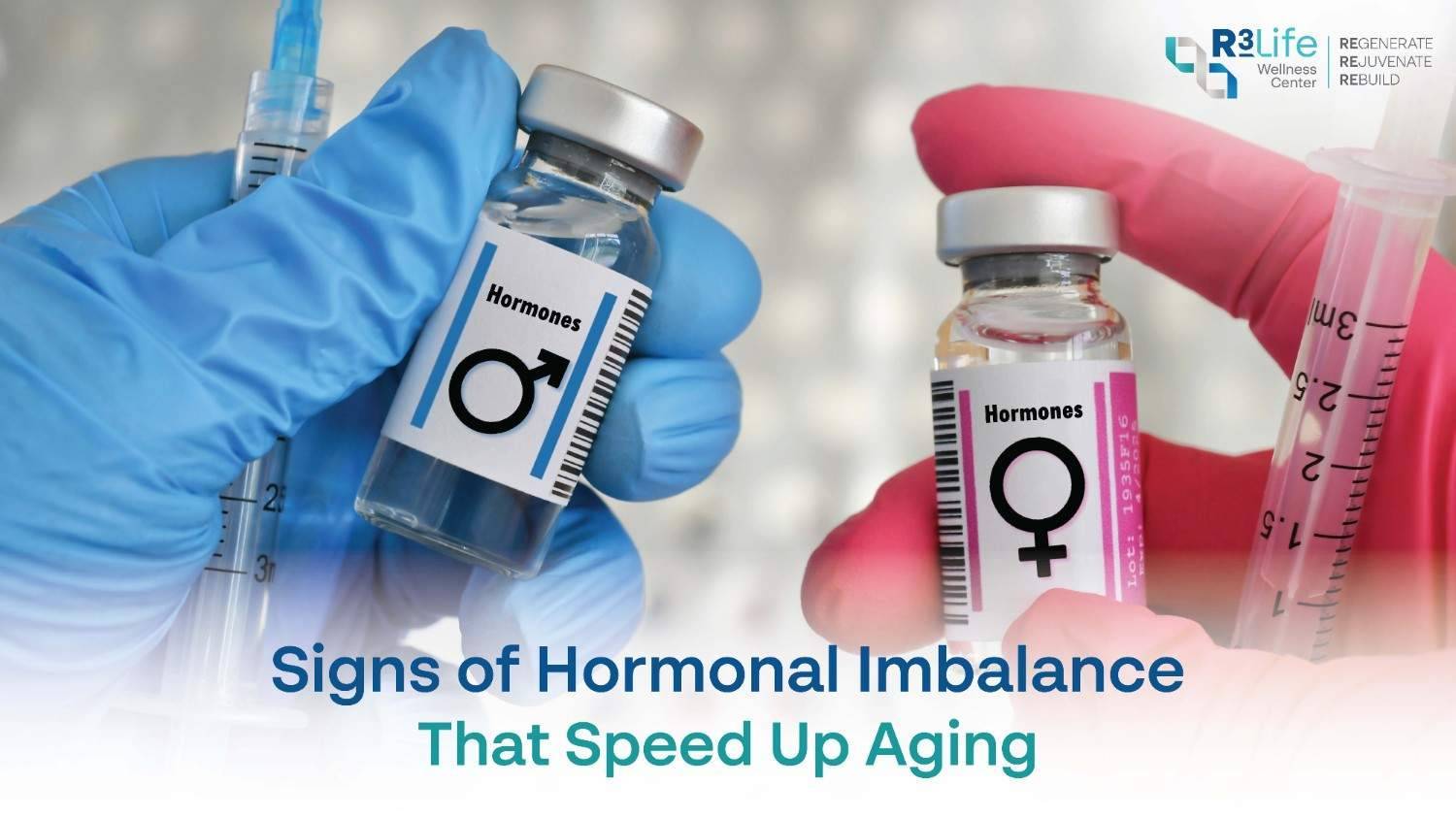
Signs of Hormonal Imbalance that Speeds Up Aging
Key Highlights
- Hormones regulate energy, mood, weight, sleep, skin, and reproductive health, and shifts often go unnoticed until symptoms accumulate.
- Common signs of hormonal imbalance include fatigue, weight gain, brain fog, mood changes, and changes in libido or sexual function.
- Estrogen, progesterone, testosterone, DHEA, and thyroid hormones are the key hormones to monitor with age.
- Comprehensive hormone testing is the foundation of any meaningful intervention, since symptoms alone aren't reliable diagnostics.
- R3 Life Wellness Center offers Premium Placenta IM (Female and Male), Testosterone Injection (Nebido), and personalized compounded supplements based on individual lab results.
Quick Summary: Hormones Do Far More Than You Think
Hormones regulate far more than reproduction. They direct energy, sleep, metabolic rate, mood, cognitive function, immune balance, and tissue repair. When their levels shift, the body's systems drift with them.
What makes hormonal imbalance such a quiet driver of aging is that the symptoms rarely look like "hormones." Fatigue, weight gain, brain fog, irritability, and poor sleep often read as normal aging, until you realize they're frequently the first signals of something more specific.
How Hormonal Decline Drives Biological Aging
What Hormones Actually Control in Your Body
Hormones are the body's chemical messengers, and they work through every major system. Among other functions, they:
- Set basal metabolic rate and energy production
- Regulate sleep and circadian rhythms
- Direct fat distribution and muscle maintenance
- Influence mood, focus, and stress resilience
- Maintain skin elasticity, hair quality, and bone density
- Govern reproductive and sexual function
The Link Between Hormonal Decline and Aging
How hormones affect aging is straightforward in mechanism. Estrogen, progesterone, testosterone, DHEA, and growth hormone all decline with age. As they fall, the body's capacity for tissue repair, metabolic efficiency, and cellular maintenance declines with them. The result: gradual fatigue, stubborn weight, restless sleep, and skin that ages faster than expected.
Signs Your Hormones May Be Out of Balance
Hormonal decline doesn't happen all at once. Studies show that testosterone in men falls around 1% per year starting in the third decade, DHEA (a natural steroid hormone produced by the adrenal glands) drops 2–3% per year in both sexes, and growth hormone declines 1–2% per year.
The shifts are gradual enough that most people don't recognize the symptoms like fatigue, weight gain, mood changes, sleep disruption, as hormonal until they've compounded for years. Recognizing the signs of hormonal imbalance early is what makes intervention possible before symptoms compound.
Physical Signs: Weight, Skin, Hair, and Energy
Common physical hormone imbalance symptoms include:
- Persistent fatigue that sleep doesn't fix
- Unexplained weight gain, particularly around the midsection
- Thinning hair or changes in hair texture
- Drier skin, slower wound healing, or new sensitivities
- Disrupted sleep patterns or waking unrefreshed
- Reduced muscle tone despite consistent activity
Cognitive Signs: Brain Fog, Mood, and Memory
Hormones strongly influence brain function. Imbalances often show up cognitively before they show up physically:
- Brain fog or difficulty focusing
- Memory lapses that feel out of character
- Mood swings, irritability, or low-grade anxiety
Sexual Health Signs Most People Don't Connect to Hormones
Sexual and reproductive symptoms are often the most directly hormone-driven, yet they're frequently dismissed:
- Reduced libido or sexual responsiveness
- Vaginal dryness or discomfort (women)
- Erectile changes or reduced morning erections (men)
- Irregular cycles or worsening PMS (women)
- Hot flashes, night sweats, or temperature regulation issues
The Key Hormones to Watch as You Age
Estrogen and Progesterone: Female Aging and Menopause
Female hormonal aging follows a distinct pattern. Estrogen and progesterone — which govern reproductive cycles but also affect bone density, skin collagen, mood, sleep, and cognition — remain relatively stable through the reproductive years, then drop relatively abruptly around menopause (average age 51 in most populations). This is why menopausal symptoms often arrive concentrated in a short window rather than spread thinly over years. Perimenopausal changes typically begin in the late 30s to mid-40s, sometimes producing symptoms long before menstrual cycles change.
Testosterone and DHEA: Male Vitality and Andropause
Male hormonal aging follows a different curve. Rather than a midlife cliff, men experience a gradual decline beginning as early as the third decade:
- Testosterone falls around 1% per year, with free testosterone (the biologically active form) declining roughly twice as fast
- DHEA, a precursor hormone for both androgen and estrogen production, drops 2–3% per year from age 30 onward
- By age 80, an estimated 40–50% of men have testosterone levels below the healthy young-adult range
Because the shift is gradual, symptoms like fatigue, declining muscle mass, low libido, and mood changes often go unrecognized as hormonal for years.
Thyroid Hormones: The Quiet Regulator
The thyroid sits behind nearly every metabolic process. Subclinical thyroid imbalance, where lab values sit at the edge of normal range, often produces fatigue, weight changes, and cognitive symptoms that mimic broader hormonal imbalance. It's frequently missed and worth ruling in or out.
What to Do When You Suspect Hormonal Imbalance
Start With Comprehensive Hormone Testing
Hormone levels can't be guessed from symptoms alone. Comprehensive testing, including sex hormones, thyroid panels, and adrenal markers, is the foundation of any meaningful intervention.
For Women: Hormone Support During Menopause
For women navigating perimenopause or menopause, R3 Life Wellness Center offers Premium Placenta IM Female, an intramuscular therapy that supports hormonal balance, skin health, and overall vitality.
For Men: Hormone Support During Andropause
For men experiencing andropause, R3 Life Wellness Center offers Premium Placenta IM Male, an intramuscular therapy designed to support male hormonal balance and vitality. Where testosterone replacement is clinically indicated, Nebido (a long-acting testosterone formulation) is also available under physician supervision.
Personalized Supplementation for Thyroid and Nutritional Gaps
Where thyroid imbalance, micronutrient deficiencies, or specific hormonal patterns are identified, R3 Life Wellness Center's compounding pharmacy can prepare personalized supplements tailored to lab results, addressing individual gaps rather than one-size-fits-all formulations.
Why Lifestyle Still Matters

Hormonal therapy works best when lifestyle foundations support it:
- Sleep, where most hormonal regulation actually happens
- Resistance training, which directly supports testosterone and growth hormone signaling
- Adequate protein to maintain muscle mass and metabolic rate
- Stress management, since chronic cortisol disrupts every other hormone
- Minimized alcohol, which interferes with hormone metabolism and sleep
Clinical interventions work best when layered on top of these foundations, not asked to compensate for their absence.
Frequently Asked Questions about Hormonal Imbalance and Aging
Q: Why do I get sick more often during rainy season?
A: The most common signs include persistent fatigue, unexplained weight gain, brain fog, mood changes, sleep disturbances, reduced libido, and changes in skin or hair quality. Because they overlap with general aging, they're often dismissed until they accumulate.
Q: At what age do hormones start declining?
A: Hormonal decline begins earlier than most people realize. Testosterone and DHEA in men typically start declining in the 30s. Female hormones can shift in the late 30s to early 40s, well before menopause. Thyroid imbalance can occur at any age.
Q: Is hormone replacement therapy safe?
A: Hormone replacement therapy is generally considered safe when prescribed based on comprehensive testing, monitored by a qualified physician, and tailored to individual needs. Risks and benefits depend on the hormone, the dose, the delivery method, and medical history. A consultation is the appropriate starting point.
Q: How long does it take to feel results from hormone therapy?
A: Timelines vary by hormone and individual. Some patients notice improvements in energy and mood within weeks; changes in body composition, skin quality, and sexual health often take three to six months. Consistency and follow-up testing are key.
Conclusion: Hormones Are the Missing Piece for Many People
For many people experiencing what they assume is normal aging, hormones are the missing piece. Recognizing the signs early, getting comprehensive testing, and addressing imbalances with the right combination of medical and lifestyle support can meaningfully shift how the next decade feels.
If you suspect hormonal imbalance is part of what you're experiencing, R3 Life Wellness Center offers a free consultation with comprehensive testing and personalized treatment planning. Visit r3lifewellness.com or contact us via WhatsApp at +66 88 689 8888.
 Stem Cell IV Infusion vs Oral Supplements: Which Works Better?