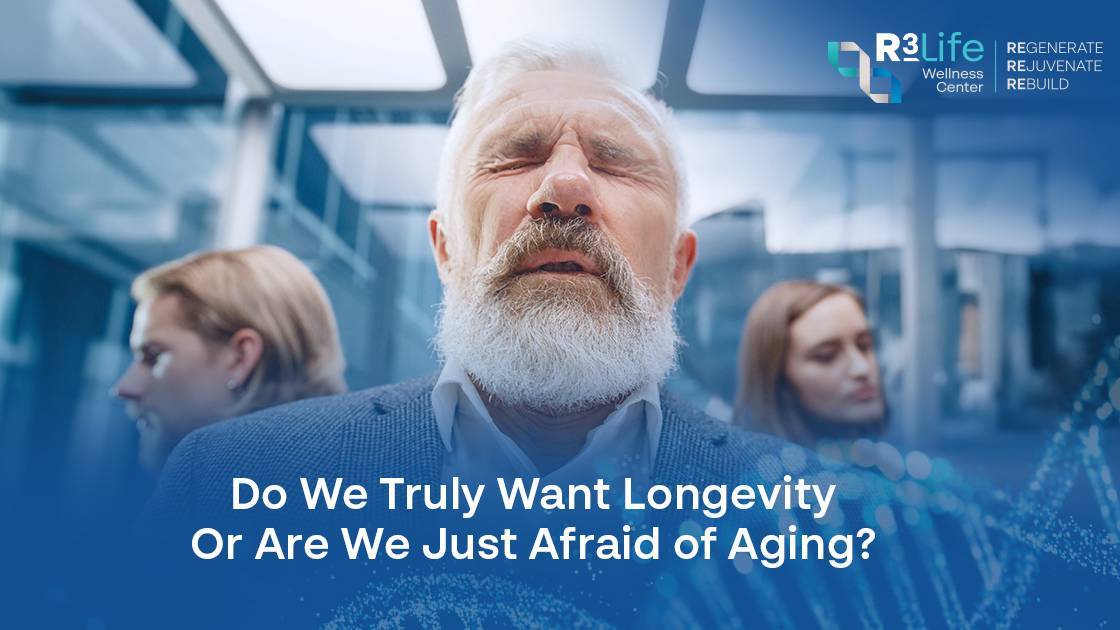
Do We Truly Want Longevity Or Are We Just Afraid of Aging?
The word longevity is becoming increasingly popular. We hear about anti-aging treatments, biohacking, healthy aging, and the longevity lifestyle everywhere.
But if we pause for a deeper question:
Do we truly want a long life or are we simply afraid of aging?
Because these are not the same thing.
Longevity means living longer with quality. Fear of aging reflects anxiety about losing something as we grow older.
And often, what drives people toward anti-aging medicine may not be a love of health — but an unspoken fear of decline.
What Is Longevity? More Than Just Living Longer
Longevity does not simply mean reaching 90 or 100 years old. It means healthy aging.
It means:
- Having sustainable energy
- Maintaining mental clarity
- Preserving mobility
- Avoiding early chronic disease
True longevity focuses on biological aging, not just chronological age.
Chronological age is how many years you’ve lived. Biological age reflects the real condition of your cells, metabolism, and vascular system.
A 45-year-old may have a biological age of 38.
B 35-year-old may have a biological age closer to 50.
What determines this?
- Metabolic health
- Chronic inflammation
- Stress load
- Sleep quality
- Lifestyle resilience
Modern longevity medicine increasingly focuses on reducing inflammaging (chronic low-grade inflammation associated with aging) and improving metabolic balance, rather than simply masking visible signs of aging.

Fear of Aging: What Are We Actually Afraid Of?
Fear of aging, sometimes called aging anxiety, goes far beyond wrinkles.
Often, we fear:
- Losing energy
- Losing relevance
- Losing independence
- Losing control
Psychological research shows that individuals with a negative aging mindset tend to have higher stress levels and poorer long-term health outcomes.
Chronic stress increases cortisol. Elevated cortisol contributes to systemic inflammation. Chronic inflammation accelerates cellular aging.
In other words, fear itself may biologically accelerate aging.
When we constantly fight aging, we may unknowingly stimulate the very processes we are trying to prevent.

Biological Aging vs Chronological Age
Chronological age is your birthday.
Biological aging reflects:
- Insulin resistance
- Chronic inflammation
- Oxidative stress
- Sleep disruption
- Accumulated stress burden
These factors accelerate cellular aging and increase the risk of age-related disease.
Healthy aging strategies aim to:
- Improve metabolic flexibility
- Reduce systemic inflammation
- Support nervous system regulation
- Optimize sleep architecture
- Maintain vascular health
Longevity is not about stopping time.
It is about slowing preventable decline.
Do We Want to Look Younger — Or Feel Stronger?
A question worth asking:
❓If no one could see you, would you still want better health?
❓If no one complimented your appearance, would you still invest in your body?
❓If your face looked youthful but your energy was low, would that feel like true vitality?
Sustainable anti-aging begins not with cosmetic correction but with reducing inflammation, supporting metabolic health, and prioritizing preventive medicine.
Longevity beauty is not about reversing age. It is about preserving function.

Longevity Begins With Mindset, Not Procedures
A true longevity lifestyle includes:
- Deep sleep quality
- Nervous system regulation
- Meaningful relationships
- Purpose and psychological resilience
- Ongoing metabolic optimization
Medical technology and regenerative treatments may support this journey, but they are tools. The foundation is mindset.
When we stop running away from aging and start moving toward strength, longevity becomes intentional.
It stops being a competition about who looks younger. It becomes a decision about how we want to live.
Frequently Asked Questions about Longevity
Q: What is the difference between longevity and simply living longer?
A: Longevity focuses on healthspan — the years lived with energy, clarity, mobility, and independence. Simply living longer without quality of life is a different outcome. True longevity prioritises healthy aging, not just lifespan extension.
Q: How is biological age different from chronological age?
A: Chronological age is the number of years since you were born. Biological age reflects the actual condition of your cells, metabolism, and vascular system, influenced by inflammation, sleep, stress, and lifestyle. Two people of the same chronological age can have very different biological ages.
Q: Can fear of aging actually make us age faster?
A: Research suggests a negative aging mindset is linked to higher stress, elevated cortisol, and systemic inflammation — all of which accelerate cellular aging. Shifting from fearing decline to focusing on long-term health optimization may support better biological outcomes.
Conclusion: Longevity Is About Quality, Not Just Years
Longevity is not merely about lifespan. It is about healthspan — the years lived with strength, clarity, and independence.
The real question is not: How afraid are you of aging?
But rather: How committed are you to long-term health optimization?
A long life without quality has little meaning. But a well-designed longevity strategy can help preserve vitality over time.
If you are exploring a longevity program, healthy aging plan, or preventive health strategy in Thailand, speaking with a physician experienced in regenerative and longevity medicine may be a meaningful starting point.
At R3 Life Wellness Center, consultations focus on understanding your metabolic health, inflammation markers, stress physiology, and long-term goals, because longevity is not about temporary intervention, but sustainable design.
Appointments can be arranged via Line OA @r3lifewellness or WhatsApp +66 88 689 8888.

 Your Personalized Health Journey with an Anti-Aging and Rejuvenation Medicine ABAARM American Board-Certified Doctor in Bangkok, Thailand