
Avoid Surgery! Fix Knee Osteoarthritis with Stem Cell Therapy

Knee Osteoarthritis marked by pain, stiffness, and reduced mobility due to cartilage breakdown significantly impairs daily life. Instead of relying solely on physical therapy or surgery, a modern alternative is here.
HIGHLIGHT
- Knee Osteoarthritis cartilage breakdown causing pain, stiffness, and restricted mobility.
- Stem Cell Therapy (MSCs) offer effective, non-surgical treatment.
- Improves joint function and mobility, reduces pain, minimizes downtime.
- Best for early to moderate knee degeneration.
Discover how to manage knee osteoarthritis without surgery using Stem Cell Therapy and Platelet-Rich Plasma (PRP). This advanced approach harnesses the body's natural healing to regenerate cartilage, leading to significant pain reduction and better joint function.
Understanding Joint Health and Common Issues
Knee osteoarthritis is a degenerative joint condition where cartilage gradually breaks down, causing bones to rub against each other. This progression leads to inflammation, knee pain, and structural changes that significantly impact daily activities.
Joint health refers to the proper functioning of the structures that connect bones, including cartilage, ligaments, and synovial fluid. Healthy joints allow smooth, pain-free movement essential for daily activities and maintaining quality of life. When knee osteoarthritis develops, the delicate balance is disrupted, resulting in chronic discomfort and reduced mobility.
Common joint health concerns include:
- Cartilage wear and deterioration
- Inflammation and stiffness
- Reduced range of motion
- Discomfort during movement
- Impact on daily activities
These issues can develop gradually due to various factors including age, activity level, genetics, and lifestyle choices.
Factors Affecting Joint Health
Age-Related Changes
Natural aging processes affect joint health through:
- Gradual cartilage thinning
- Decreased synovial fluid production
- Reduced tissue regeneration capacity
- Changes in bone density
Lifestyle Factors
Daily habits significantly impact joint health:
- Physical Activity: Regular exercise maintains joint flexibility but overuse can cause wear and trigger knee pain
- Body Weight: Excess weight increases pressure on weight-bearing joints
- Nutrition: Proper nutrition supports cartilage health and reduces inflammation
- Posture: Poor posture places uneven stress on joints
Risk Factors for Joint Problems
Certain factors increase the likelihood of joint health issues:
- Family history of joint problems
- Previous injuries or trauma
- Repetitive stress from work or sports
- Metabolic conditions affecting bone health

Signs Your Joints May Need Attention
Early recognition of joint health changes allows for proactive intervention:
Early Signs:
- Intermittent knee pain lasting for more than 6 months
- Cracking sound in the knee joint accompanied by pain
- Stiffness in the knee when held in one position for extended periods
- Sharp, stabbing pain in the knee
Progressive Symptoms:
- Persistent discomfort lasting several months
- Swelling or visible changes in joint appearance
- Difficulty with routine activities
- Impact on sleep or daily function
These symptoms warrant professional evaluation to determine appropriate care options for managing knee osteoarthritis.
Modern Approaches to Joint Health
Traditional Management Methods
Conventional approaches to joint health include:
- Physical therapy and exercise programs
- Anti-inflammatory medications
- Heat and cold therapy
- Lifestyle modifications
- Weight management
- Surgical interventions
- Steroid injections
Advanced Treatment Options for Knee Osteoarthritis
Modern regenerative medicine offers innovative approaches:
Stem Cell Therapy:
- Uses the body's natural healing mechanisms
- Promotes cartilage and cell regeneration and reducing knee pain
- Non-surgical approach with minimal downtime
- Addresses underlying tissue health rather than just symptoms
Platelet-Rich Plasma (PRP):
- Extracts growth factors from patient's own blood through specialized processing
- Stimulates natural repair processes
- Often combined with stem cell therapy
- Enhances tissue regeneration
How Stem Cell Therapy Supports Joint Health
Stem cell therapy for knee osteoarthritis utilizes Mesenchymal Stem Cells (MSCs) that can differentiate into various tissue types including cartilage, bone, and connective tissue. This innovative treatment directly targets the root cause of joint degeneration and chronic knee pain.
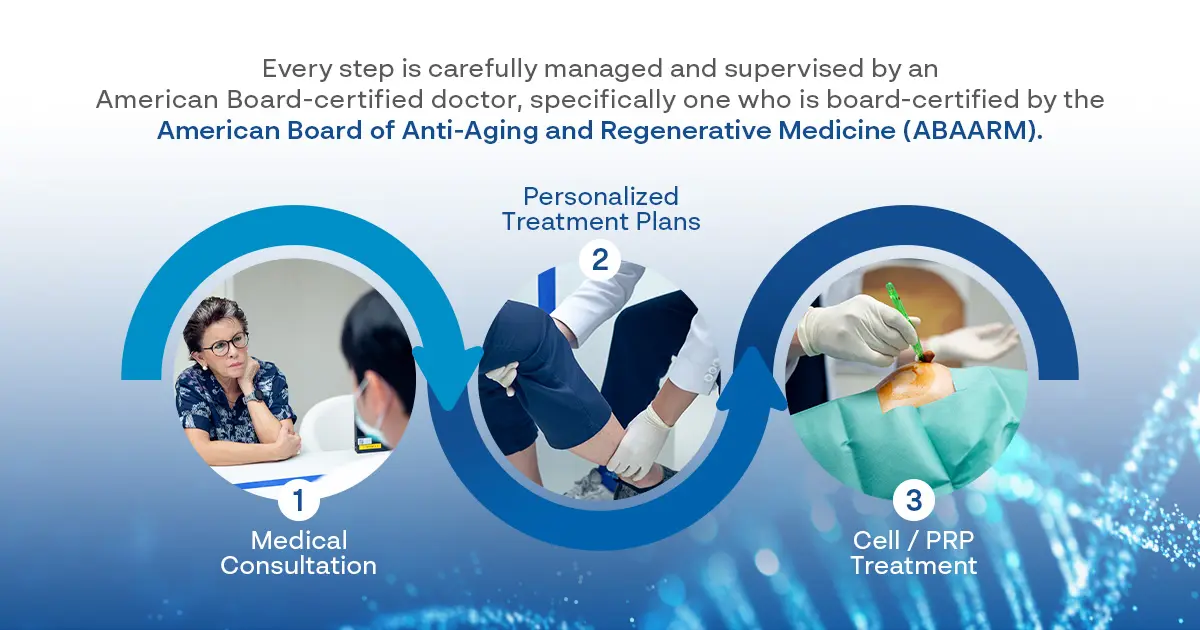
Treatment Process
Step 1: Medical Consultation
Comprehensive evaluation by ABAARM-certified doctors and professional nurses. We assess your knee condition, review medical history and imaging results (X-rays, MRI), and create a personalized treatment plan.
Step 2: Personalized Treatment Plans
Our doctor determines the optimal number of high-quality stem cells based on your specific condition. We use 10-15 million MSCs per knee to ensure the best outcomes.
Step 3: Cell/PRP Treatment
Minimally invasive procedure combining stem cells from umbilical cord tissue with PRP technology. The treatment takes approximately 1.5 hours with no anesthesia, no surgery, and minimal downtime.
Benefits of Stem Cell Therapy for Knee Osteoarthritis
Patients often experience:
-
Improved joint comfort and function
-
Enhanced mobility and flexibility
-
Reduced reliance on medications
-
Support for natural healing processes
-
Potential delay of more invasive procedures

Who May Benefit from Stem Cell Therapy
Stem cell therapy for joint health may be suitable for individuals experiencing:
- Early to moderate joint health concerns
- Discomfort affecting daily activities
- Reduced mobility or flexibility
- Desire to maintain active lifestyle
- Interest in regenerative treatment options
Ideal Candidates
The most suitable candidates typically:
- Have realistic expectations about treatment outcomes
- Are committed to following post-treatment care recommendations
- Maintain overall good health
- Seek alternatives to traditional management approaches
Stem Cell Treatment at R3 Life Wellness Center
R3 Life Wellness Center leads knee osteoarthritis treatment with high-standard services delivered by doctors certified by the American Board of Anti-Aging and Regenerative Medicine (ABAARM) and accredited by the Thai Stem Cell Therapy Association. With extensive experience treating knee osteoarthritis using stem cells, we have achieved consistently positive results for our patients.
All stem cells sourced from personally known donors. We place the utmost care right from the very first step. Selecting our donor mothers. Each donor is a young, healthy woman with a proven record of high-quality living, ensuring optimal well-being who received excellent pregnancy care, with comprehensive health screening and no COVID-19 vaccination or infection history. This careful selection process allows us to obtain high-quality MSCs with spindle-shaped cells using Xeno-free culture media,extracted from fresh cord tissue, cultured at P0 stage, stored at -196°C. , ensuring contamination-free, highest-quality cells. We partner with major stem cell banks, including the largest in Thailand and the #1 in Asia (ranked 4th globally), ensuring international quality and safety standards for all stem cell storage and handling.
Frequently Asked Questions
1. Is stem cell therapy safe for knee osteoarthritis concerns?
When performed by qualified medical professionals using proper protocols, stem cell therapy has a strong safety profile.
2. Can stem cell therapy be combined with other treatments?
Stem cell therapy often works well in combination with other approaches such as physical therapy, nutritional support, and lifestyle modifications. Your medical team will coordinate care to optimize outcomes.
3. What factors influence knee osteoarthritis treatment success?
Success factors include the patient's overall health, age, severity of joint issues, commitment to post-treatment care, and realistic expectations. Younger patients and those with earlier-stage concerns often experience more dramatic improvements.
4. How do I know if stem cell therapy is right for my situation?
A comprehensive evaluation by qualified medical professionals can help determine if stem cell therapy aligns with your health goals and circumstances. This assessment considers your medical history, current condition, and treatment objectives.
5. How can I book or ask questions?
You can contact us through the following channels:
📲 WhatsApp: +66 88 689 8888
📧 Email: [email protected]
Feel free to send us your MRI or health results (if available) or describe any concerns you may have about knee osteoarthritis or knee pain. Our doctor will review your information, provide a personalized consultation, and give you the cost details.
If you don’t have MRI or health results, that’s perfectly fine. For knee stem cell injections, we typically use 10–15 million stem cells per knee, and we’ll help you determine the best plan before your visit.
You can also let us know your preferred date and time to visit our Silom flagship clinic in Bangkok, Thailand.

 Anti-aging Before Your Cells Deteriorate: When Lifestyles Accelerate Aging!

 Colon Hydrotherapy for Bloating and Constipation: A Shortcut or a Long-Term Trap?

 Is Your Liver in Trouble? Signs of Failure & Pain Location